
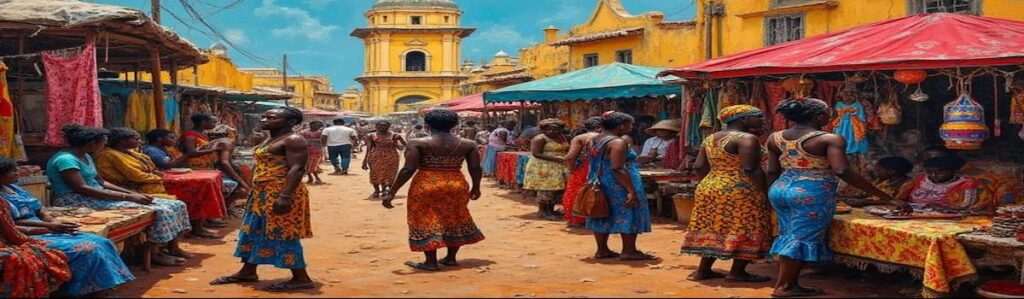
African business has evolved over millennia, reflecting the continent’s rich resources, innovative trade systems, and resilience in the face of global shifts. From ancient trade networks to modern entrepreneurial ecosystems, African commerce has shaped and been shaped by its diverse cultures and histories. This summary, crafted for The Black Pimpernel, explores the dynamic story of African business, highlighting its contributions to global economies and its enduring legacy.
Ancient Trade and Commerce
Africa’s business began with early human societies, where barter systems facilitated the exchange of goods like tools, livestock, and crops as early as 10,000 BCE. By 2000 BCE, sophisticated trade networks emerged. The Kingdom of Aksum (100–940 CE) in present-day Ethiopia thrived as a trading hub, exporting gold, ivory, and frankincense to the Roman Empire and India, using its own coinage, a hallmark of economic sophistication.
In West Africa, the Kingdom of Ghana (300–1100 CE) controlled the trans-Saharan gold and salt trade, amassing wealth that laid the foundation for later empires like Mali and Songhai. Under Mansa Musa, the Mali Empire (1235–1600 CE) became a global economic powerhouse, with Timbuktu as a centre of commerce and scholarship, trading gold, manuscripts, and textiles as far as Europe and the Middle East.
Medieval Trade Networks
Africa’s medieval period saw expansive trade systems. The Swahili Coast city-states, such as Kilwa and Mombasa, connected East Africa to Asia and the Middle East via the Indian Ocean, exporting ivory, timber, and enslaved people while importing porcelain and spices.
These cosmopolitan hubs fostered a merchant class and cultural exchange, evident in Swahili architecture and coinage. In West Africa, the Songhai Empire (15th–16th centuries) standardised weights and measures, facilitating trade across vast regions. Markets in cities like Gao and Djenné bustled with goods, from kola nuts to leatherwork, while the Akan of Ghana used intricate gold weights for commerce, blending artistry with economic precision.
Impact of the Slave Trade
The transatlantic slave trade (16th–19th centuries) profoundly disrupted African economies, forcibly removing an estimated 12–15 million people, weakening labour forces and destabilising societies. Coastal kingdoms like Dahomey and Oyo profited by trading captives for European goods, but the long-term economic toll was devastating, redirecting wealth to Europe and the Americas. The Indian Ocean slave trade similarly impacted East Africa. Despite this, African entrepreneurs adapted, with figures like Queen Nzinga of Angola leveraging trade to resist Portuguese encroachment.
Colonial Exploitation and Resistance
The “Scramble for Africa” (1880s–1914) saw European powers colonise the continent, exploiting resources like rubber, diamonds, and cocoa. Colonial economies prioritised cash crops and raw materials for European markets, often at the expense of local industries. Forced labour and taxation systems marginalised African entrepreneurs, yet resistance persisted. In Nigeria, market women like the Igbo organised protests against colonial taxes, while Ethiopian merchants under Emperor Menelik II maintained economic autonomy after defeating Italy at Adwa (1896). Informal markets and barter systems sustained local economies despite colonial constraints.
Post-Independence Economic Revival
The wave of independence in the 1950s and 1960s sparked efforts to rebuild African economies. Leaders like Ghana’s Kwame Nkrumah promoted industrialisation, though neo-colonialism and dependency on former colonial powers posed challenges. State-led enterprises, such as Nigeria’s oil industry, drove growth, but mismanagement and corruption often hindered progress. The 1980s and 1990s saw structural adjustment programs imposed by global institutions, which disrupted local businesses but also spurred private entrepreneurship. Informal economies, like Nigeria’s Alaba Market, became vital, with traders dealing in electronics and textiles.
Modern African Business
Today, Africa is a hub of economic innovation, driven by a youthful population and technological advancements. Lagos, Nairobi, and Johannesburg are centres of tech ecosystems, with startups like Nigeria’s Flutterwave and Kenya’s M-Pesa revolutionising fintech. The African Continental Free Trade Area (AfCFTA), launched in 2021, aims to boost intra-African trade, projected to increase by 52% by 2030. Sectors like agriculture, renewable energy, and e-commerce thrive, with entrepreneurs like Aliko Dangote, Africa’s richest person, leading conglomerates in cement and manufacturing. Challenges like infrastructure gaps and political instability persist, but African businesses are diversifying, with women entrepreneurs, such as Ethiopia’s Bethlehem Tilahun Alemu of soleRebels, gaining global recognition.
Global Impact and Future
African business influences global markets, from Nollywood’s film industry to the export of coffee and minerals. The diaspora fuels investment, with remittances reaching $96 billion in 2023. As Africa’s population is projected to reach 2.5 billion by 2050, its economic potential grows, with initiatives like AfCFTA fostering integration. The Black Pimpernel can showcase this legacy of innovation, from ancient trade empires to modern startups, celebrating Africa’s entrepreneurial spirit.