
Afrobeats: The Rhythmic Heart of Modern African Music
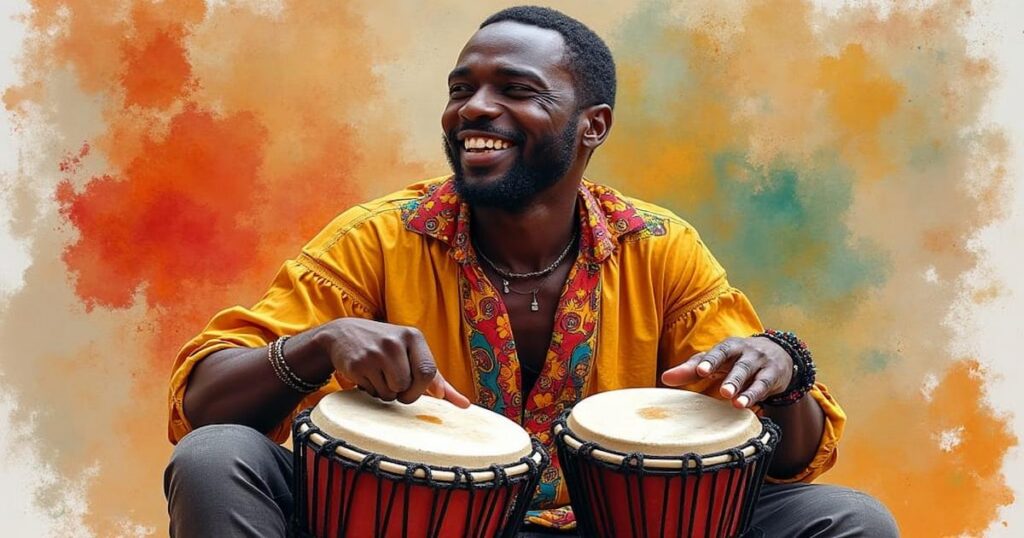
From the pulsating rhythms of West African djembe drums to the soulful, improvisational melodies of Ethiopian jazz, African music is a profound expression of cultural heritage, embodying the ancient Kemetic principles of Ma’at, balance, truth, and reciprocity.
These principles, rooted in the spiritual and moral framework of ancient Egypt, resonate deeply in African musical traditions, uniting communities, fostering morality, and inspiring healing through shared harmony.
This category explores how African music, with a focus on Afrobeats, reflects Ma’at’s timeless values, creating a vibrant tapestry of sound that connects the past with the present.

Ma’at, a foundational concept in ancient Egyptian philosophy, represents order, justice, and harmony in the universe. In African music, this balance is evident in the interplay of rhythm, melody, and community participation. The djembe drums of West Africa, for instance, are not just instruments but vessels of cultural memory. Played in communal settings, their polyrhythms mirror the reciprocity Ma’at demands, each drummer contributes to a collective sound, ensuring no voice overpowers another.
This balance fosters unity, as seen in traditional ceremonies where music accompanies rites of passage, from births to funerals, reinforcing social bonds and shared values.
Afrobeats, a modern genre born in Nigeria, carries forward this legacy of harmony. Emerging in the early 2000s, Afrobeats blends traditional African rhythms with global influences like hip-hop and dancehall, creating a sound that resonates worldwide.
Artists of today have propelled Afrobeats to global stages, yet its roots remain deeply communal. The genre’s infectious beats often carry lyrics that reflect truth, another pillar of Ma’at, addressing societal issues like inequality or corruption while celebrating joy and resilience.
Songs like Burna Boy’s “Ye” balance personal storytelling with universal themes, fostering a sense of shared humanity.
Reciprocity, the third principle of Ma’at, is embodied in how African music creates a dialogue between artist and audience. In Ethiopian jazz, pioneered by figures like Mulatu Astatke, the soulful melodies invite listeners into a reflective space, blending traditional pentatonic scales with Western jazz improvisation. This fusion mirrors Ma’at’s reciprocity, an exchange of cultural ideas that respects both heritage and innovation. At live performances, the call-and-response tradition, common across African music, ensures the audience is an active participant, clapping, singing, or dancing, thus completing the communal circle.
Today, Afrobeats artists continue this tradition, using their platforms to advocate for change while spreading joy. The healing power of music, another facet of Ma’at, is evident in its ability to uplift spirits and mend communal rifts, whether through the trance-like rhythms of a Senegalese mbalax dance or the soothing notes of a Malian kora.
In essence, African music, from its ancient drumbeats to the global rise of Afrobeats, is a living embodiment of Ma’at. It balances tradition with modernity, speaks truth through its lyrics, and fosters reciprocity through communal engagement, uniting people in joy, morality, and healing.