
Almoravids in the Sahara: The Visionary Legacy of ‘Abd Allāh ibn Yāsīn

In the vast, sun-scorched expanses of the 11th-century Sahara, a religious and political revolution took shape under the leadership of ‘Abd Allāh ibn Yāsīn, a Berber scholar whose vision reshaped North Africa and beyond.
As the founder of the Almoravid movement, Ibn Yāsīn ignited a dynamic force that unified nomadic tribes, transformed trade routes, and established an empire stretching from the Sahara to Spain.
His story is not just one of conquest but of cultural and religious transformation, rooted in the vibrant histories of the Global South.
By exploring Ibn Yāsīn’s life and legacy, we uncover a narrative that challenges Western-centric views of history and highlights the agency of African societies in shaping their destinies.
The Rise of a Visionary
Born around the early 11th century in Tamanart, in the Sous region of present-day Morocco, ‘Abd Allāh ibn Yāsīn hailed from the Jazūla, a sub-tribe of the Sanhāja Berbers.
A Maliki theologian trained under the scholar Wajjāj ibn Zallū al-Lamtī at the Dar al-Murābitīn (House of the Almoravids) in Aglu, Ibn Yāsīn was steeped in the rigorous legal and spiritual traditions of Sunni Islam.
His life took a pivotal turn in 1046 when Yahya ibn Ibrāhīm, a chief of the Gudāla, a Sanhāja tribe from the Adrar region (modern Mauritania), sought a teacher to deepen his people’s understanding of Islam.
The Sanhāja, only recently Islamicized, clung to pre-Islamic practices, prompting Wajjāj to send Ibn Yāsīn to guide them.
Ibn Yāsīn’s mission was ambitious: to instil an orthodox interpretation of Islam based on the Maliki school, emphasising strict adherence to Qur’anic principles and Shari’a law.
His approach was uncompromising, and he advocated for reforms in marriage, taxation, and criminal punishment. However, his stern demeanour initially met resistance.
The Gudāla, accustomed to their traditional ways, rejected his teachings, forcing Ibn Yāsīn to retreat. This setback could have ended his mission, but it birthed a movement instead.
The Almoravids: From Ribāṭ to Empire
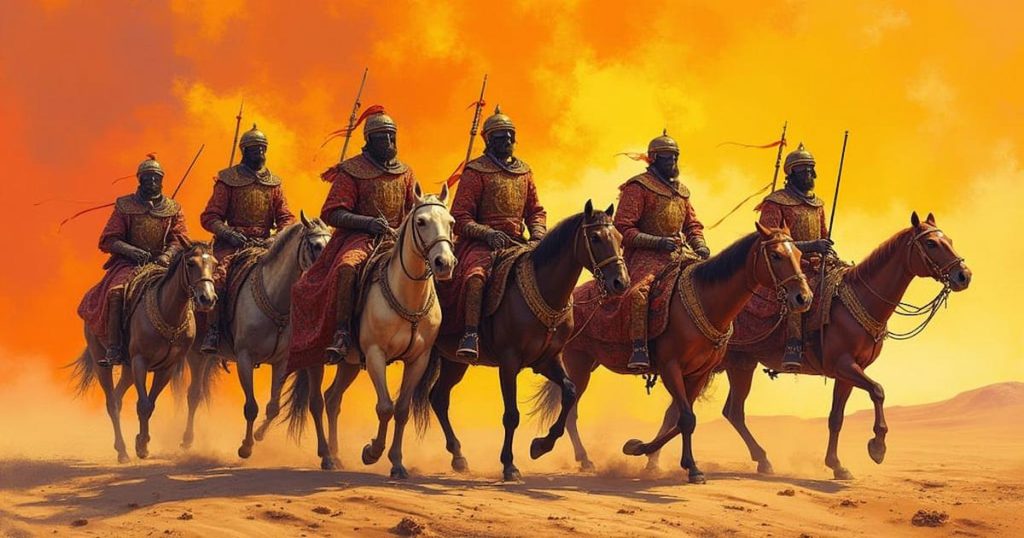
Undeterred, Ibn Yāsīn established a ribāṭ, a fortified retreat combining religious study and military discipline, possibly on an island in the Bay of Arguin. This ribāṭ, whose inhabitants were called al-Murābitūn (hence “Almoravids”), became the crucible for his vision.
Here, Ibn Yāsīn blended spiritual rigour with martial training, attracting followers from the Sanhāja tribes, particularly the Lamtūna, who saw in his teachings a path to unity and power.
The term “Almoravid” likely derives from the Qur’anic root rbt, meaning to wage jihad or perform good deeds. This reflects the movement’s dual focus on piety and action.
By the early 1050s, under the joint leadership of Ibn Yāsīn and Yahya ibn ‘Umar al-Lamtūnī, the Almoravids began their expansion. Motivated by a prolonged drought in Mauritania and a desire to control the lucrative trans-Saharan trade routes, they targeted key commercial hubs.
In 1054–55, they captured Sijilmasa in the north, a vital trade centre controlled by the rival Zanāta Berbers, and Aoudaghost in the south, wresting it from the Soninke of the Ghana Empire. These conquests secured the Almoravids’ dominance over the gold and salt trade, a cornerstone of medieval African economies.
Ibn Yāsīn’s leadership was both spiritual and strategic. He retained authority over religious and civil affairs, while military command was delegated to Yahya ibn ‘Umar and, after Yahya died in 1056, to his brother Abu Bakr ibn ‘Umar.
By 1058, the Almoravids had seized Sūs and Aghmat (near modern Marrakech), laying the foundation for their capital in 1062. Ibn Yāsīn’s insistence on Islamic law transformed governance, introducing a public treasury and the tithe (‘ushr), which funded further campaigns.
A Legacy of Unity and Conflict
Ibn Yāsīn’s vision extended beyond the Sahara. His campaigns targeted not only economic control but also religious reform. In 1059, while attempting to subjugate the Barghawāta, a Berber confederation on Morocco’s Atlantic coast accused of Islamic “heresy,” Ibn Yāsīn was killed in battle at Krifla, near present-day Rommani.
His death marked a turning point. However, the Almoravid movement continued under leaders like Abu Bakr and Yūsuf ibn Tāshfīn, who expanded the empire into western Algeria and Al-Andalus (Muslim Spain) by the late 11th century.
The Almoravids’ legacy is complex. They unified disparate Sanhāja tribes under a shared Islamic identity, challenging tribalism and fostering a sense of collective purpose.
Their control of trans-Saharan trade routes enriched the region, facilitating cultural and intellectual exchanges between sub-Saharan Africa, North Africa, and Europe. The establishment of Marrakech as a political and cultural hub underscores its enduring impact.
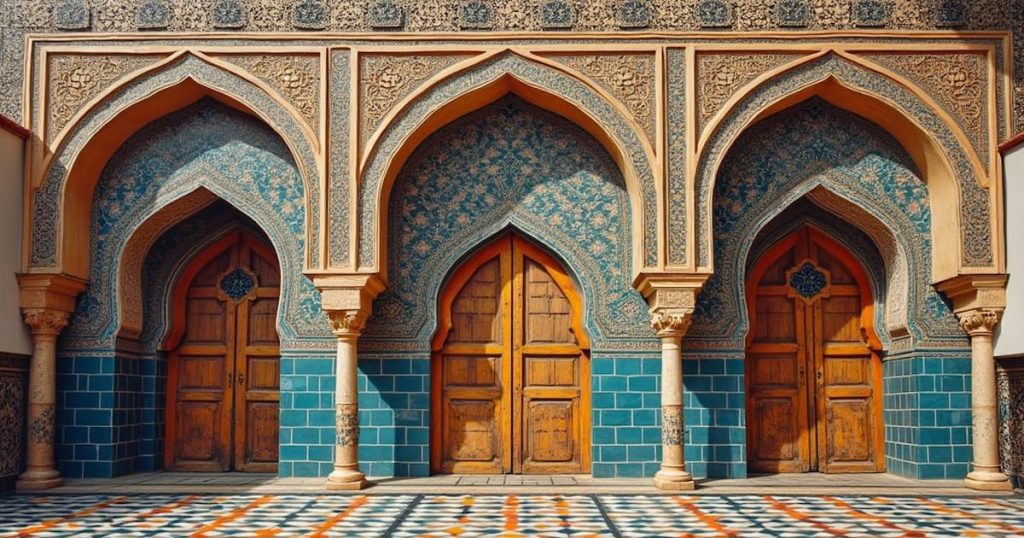
Moreover, their art and architecture, characterised by austere yet functional designs, reflected their puritanical ethos, distinct from the ornate styles of earlier Umayyad traditions.
Yet, the Almoravids’ strict interpretation of Islam and their military campaigns sparked resistance. The Gudāla’s initial rejection and the Barghawāta’s fierce opposition highlight the tension between imposed orthodoxy and local traditions.
Their conquests also disrupted existing power structures, such as the Ghana Empire, raising questions about the balance between religious zeal and economic ambition.
From a Global South perspective, the Almoravids represent African agency in shaping regional dynamics, but their legacy also invites scrutiny of how religious reform can unite and divide.
Reclaiming the Narrative
Western historical narratives often marginalise the Almoravids, framing them as peripheral to European or Middle Eastern histories.
This oversight ignores their role as architects of a transcontinental empire that bridged Africa and Europe. By centring Ibn Yāsīn’s story, we amplify the voices of the Global South, showcasing how African societies drove historical change through intellectual, religious, and economic innovation.
Ibn Yāsīn’s movement was not merely a reaction to external influences but a proactive effort to redefine identity and power in the Sahara.
His emphasis on Maliki Islam reflects a distinctly African adaptation of global Islamic traditions, tailored to the needs of nomadic Berber societies.
The Almoravids’ success in controlling trade routes underscores the economic sophistication of African polities, challenging stereotypes of pre-colonial Africa as isolated or underdeveloped.
A Hopeful Outlook
The story of ‘Abd Allāh ibn Yāsīn and the Almoravids offers lessons for today.
Their ability to unite diverse tribes under a shared vision speaks to the power of collective action in addressing modern challenges, from climate change to economic inequality.
Their focus on education and governance through the ribāṭ model highlights the role of knowledge in societal progress. Yet, their struggles with resistance remind us to balance reform with respect for local cultures.
For the Global South, the Almoravid legacy calls for reclaiming historical narratives and asserting agency in global discourses.
By studying figures like Ibn Yāsīn, we can inspire new generations to build inclusive, resilient societies that honour their heritage while embracing progress.
Once a crucible for his vision, the Sahara remains a testament to the enduring power of ideas to transform the world.
Sources:
Levtzion, N. “‘Abd Allah b. Yasin and the Almoravids,” in Studies in West African Islamic History, ed. J.R. Willis, 1979.
Norris, H.T. “New evidence on the life of ‘Abdallah b. Yasin and the origins of the Almoravid movement,” Journal of African History, 12.2 (1971).