
Imagine a vast, sun-drenched continent, its landscapes stretching from golden savannas to lush river valleys, where the story of humanity began. This is Africa, the cradle of humankind, a place where our earliest ancestors took their first steps, shaped tools, and dreamed under starlit skies. For those who may know little about Africa, here is an invitation to explore its profound role in human history. We’ll journey through the remarkable discoveries at sites like Jebel Irhoud, Omo Kibish, Herto, and Florisbad, which reveal that Africa is not just a continent but the heartbeat of our shared origins. With warmth and clarity, let’s uncover how these ancient fossils and tools tell the story of Homo sapiens—that’s us—and why Africa holds the key to understanding who we are.
Africa: The Birthplace of Humanity
Africa is a continent of breathtaking diversity, home to 54 countries, over 2,000 languages, and cultures as vibrant as its landscapes. But long before modern nations, Africa was where our species, Homo sapiens, emerged. Scientists agree that modern humans evolved in Africa, a conclusion drawn from fossils, tools, and genetic evidence. The term “Cradle of Humankind” often refers to specific regions in Africa where pivotal discoveries have been made, but it also symbolizes the entire continent’s role as humanity’s birthplace. Unlike the old idea of a single “Garden of Eden” in East Africa, new evidence shows our origins were a pan-African story, with early humans living, hunting, and evolving across the continent.
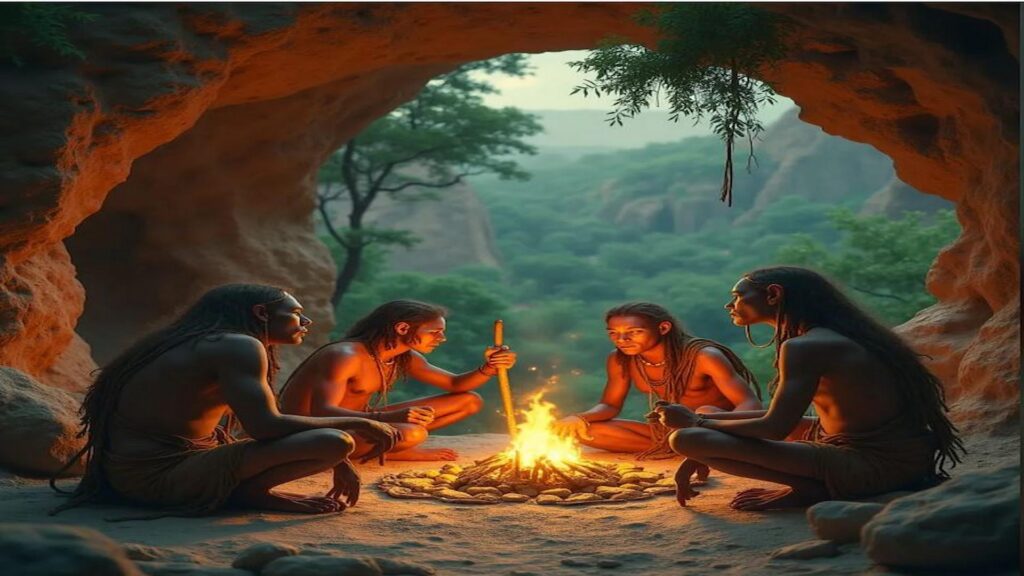
Picture Africa 300,000 years ago: the Sahara was not a desert but a green corridor of grasslands and lakes, connecting North, East, and South Africa. Early Homo sapiens roamed these lands, their faces looking much like ours, though their skulls were slightly different. They hunted gazelles, crafted stone tools, and built fires, leaving traces of their lives in the earth. Sites like Jebel Irhoud in Morocco, Omo Kibish and Herto in Ethiopia, and Florisbad in South Africa have given us glimpses of these ancestors, each discovery pushing back the timeline of our species and deepening our connection to Africa.
Jebel Irhoud: The Oldest Known Homo sapiens
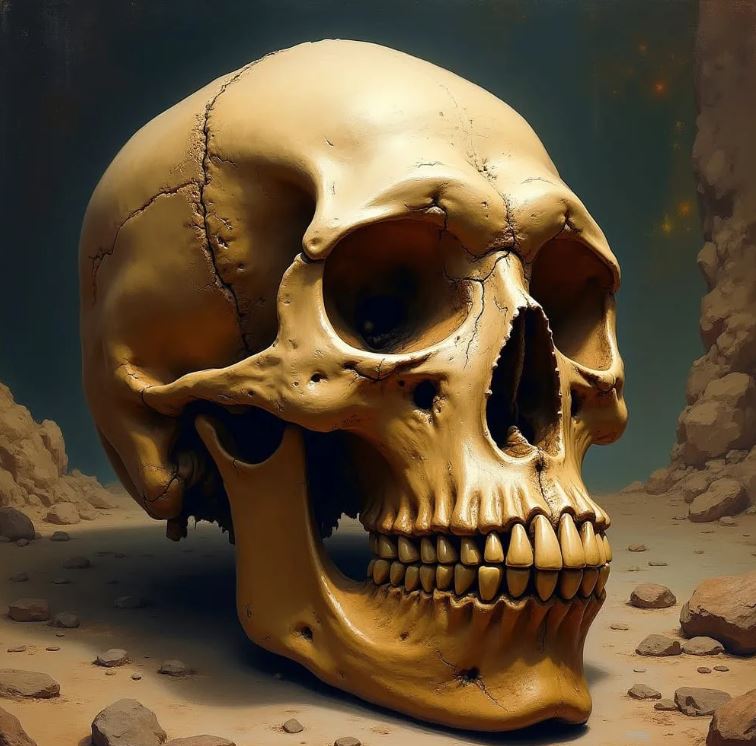
Let’s start in Morocco, at a rocky hill called Jebel Irhoud, about 100 kilometers west of Marrakech. In 1961, miners digging for barite stumbled upon a human skull, initially thought to be a 40,000-year-old Neanderthal. But in 2004, a team led by Jean-Jacques Hublin of the Max Planck Institute began re-excavating the site, uncovering skulls, jawbones, teeth, and tools from at least five individuals, including a child. Using advanced dating techniques, like thermoluminescence on heated flints, they found these remains were 300,000 to 350,000 years old—making them the oldest known Homo sapiens fossils.
The Jebel Irhoud people had faces remarkably like ours: short, flat, and modern-looking. But their braincases were longer and lower, more like earlier humans, suggesting their brains were still evolving toward the rounded shape we have today. They hunted gazelles, made Middle Stone Age tools, and used fire, showing behaviours we associate with modern humans.
These discoveries shattered the idea that Homo sapiens emerged only 200,000 years ago in East Africa. Instead, they point to a complex, continent-wide evolution, with North Africa playing a key role. As Hublin said, “The story of our species is not a simple one, it’s a pan-African process.”
For someone new to Africa, Jebel Irhoud is a reminder that Morocco, often seen as a land of markets and deserts, was once home to our earliest ancestors. Their tools, carried 50 kilometres from distant flint sources, show they were resourceful, planning ahead as they hunted and lived in a greener Sahara.
Omo Kibish: The Rift Valley’s Ancient Elders
Now, let’s travel to Ethiopia, in the Lower Omo Valley, where the Omo River winds through a rugged landscape. Between 1967 and 1974, a team led by Richard Leakey found fossilized bones at Omo Kibish, named Omo I and Omo II. These remains, discovered near the river’s edge, include braincases and fragmented bones from at least three individuals.
Initially dated to 130,000 years old, a 2022 study revised their age to about 233,000 years, making them some of the earliest Homo sapiens fossils. Omo I has a more modern, globular skull, while Omo II’s is longer and more archaic, showing the diversity among early humans even in one place. These people lived near a lake, likely fishing and hunting in a lush environment.
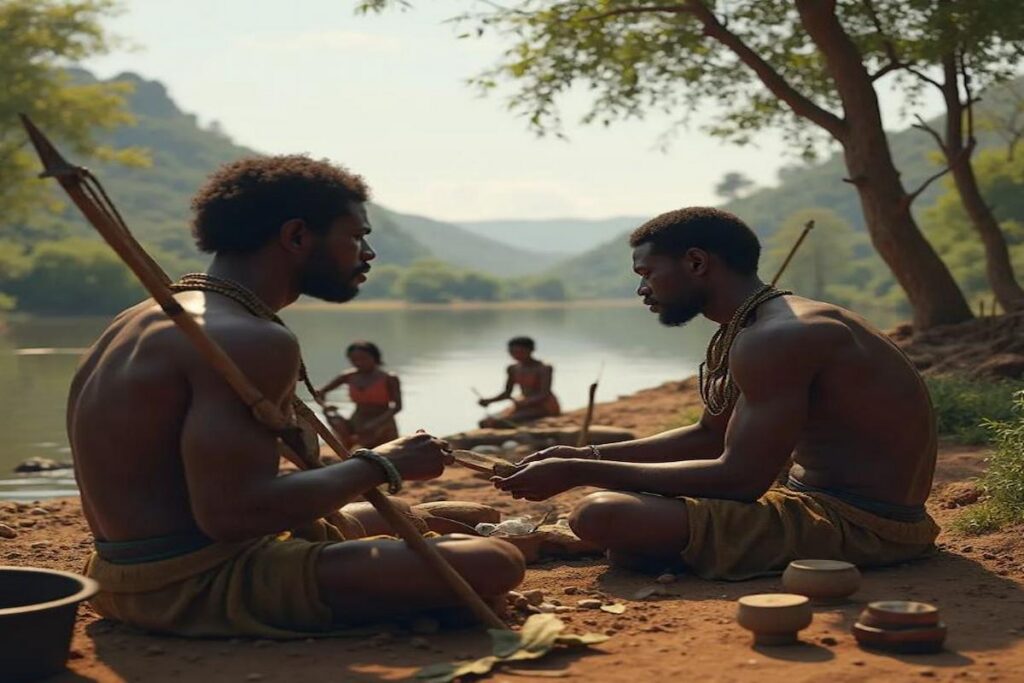
Their fossils, found kilometers apart, suggest a mobile group, perhaps following resources along the river. The Omo Kibish discoveries confirm East Africa’s importance in human evolution, but they also fit into the broader African story, connecting with sites like Jebel Irhoud.
Ethiopia, often called the “roof of Africa” for its highlands, is a land of ancient churches and vibrant markets today. But 233,000 years ago, it was a cradle for our species, where people with faces like ours began shaping the human story. The Omo fossils are a bridge to that past, showing how varied our ancestors were as they evolved.
Herto: A Family from Ethiopia’s Past
Still in Ethiopia, let’s visit Herto, in the Middle Awash region, where a team led by Tim White uncovered fossils in 1997. Dated to 160,000 to 154,000 years ago, the Herto remains include skulls of two adults and a child, about 6 to 7 years old, along with fragments of others. These fossils are more modern than Omo’s, with taller braincases and thinner cheekbones, though they still have some archaic traits.
The Herto people lived near a lake, butchering hippos and other animals with large stone tools, like cleavers, found at the site. Cut marks on animal bones and even on the human skulls suggest complex behaviors, possibly mortuary practices where the dead were honored or defleshed. The presence of snail shells and beach sand hints at a lakeside life, rich with resources.
What’s striking about Herto is the child’s skull, bearing manmade marks, a poignant reminder that these were families, not just fossils. They were named Homo sapiens idaltu (“elder” in the Afar language), though most scientists now see them as early Homo sapiens. For someone new to Africa, Herto shows Ethiopia’s deep human heritage, a place where our ancestors lived, loved, and mourned, much as we do today.
Florisbad: South Africa’s Early Contribution
Now, let’s head south to Florisbad, in South Africa’s Free State Province, where a partial cranium was found in 1932 by T.F. Dreyer. Dated to about 259,000 years ago, the Florisbad skull was once classified as Homo heidelbergensis, an earlier human species. But after the Jebel Irhoud discoveries, scientists like Jean-Jacques Hublin and Chris Stringer reclassified it as an early Homo sapiens, based on its modern traits, like a larger brain (1,400 cubic centimetres, bigger than modern averages).
The Florisbad individual lived in a region of open grasslands, likely hunting alongside Middle Stone Age tools, similar to those at Jebel Irhoud and Omo. Its mosaic of modern and archaic features—modern face, slightly archaic skull—supports the idea that Homo sapiens evolved gradually across Africa, not in one spot. South Africa, known today for its wildlife and cities like Cape Town, was a key player in this story, showing how southern populations contributed to our species’ origins.
African Multiregionalism: A Continent-Wide Story
These sites—Jebel Irhoud, Omo Kibish, Herto, and Florisbad—paint a picture of Homo sapiens emerging across Africa, a theory called “African multiregionalism.” Unlike the old idea of a single East African birthplace, this model suggests our ancestors were part of a large, interbreeding population that spread across the continent when the Sahara was green, 300,000 to 330,000 years ago. Fossils from Morocco to South Africa show a mix of modern and archaic traits, evolving at different rates: faces became modern first, while brains took longer to reach today’s shape.
Think of it like a tapestry woven across Africa. In Morocco, the Jebel Irhoud people had modern faces but archaic skulls. In Ethiopia, Omo I was more modern than Omo II, while Herto’s people were even closer to us. In South Africa, Florisbad’s skull hints at southern populations blending with others. Genetic studies support this, showing high diversity in African populations, with ancient lineages like mitochondrial haplogroups L0 and L1 rooted in the continent.
This pan-African process wasn’t tidy. Some groups, like those in North Africa, may have mixed with Neanderthals, while others in East and South Africa drove our species forward. The Sahara’s green phase allowed these groups to move and mix, creating a diverse, resilient population that eventually left Africa to populate the world.
Why These Discoveries Matter
For someone unfamiliar with Africa, these discoveries do more than rewrite history—they humanize it. The Jebel Irhoud people, hunting gazelles in a cave, were planners, carrying tools from afar. The Omo Kibish group, living by a river, were adaptable, thriving in a changing landscape. The Herto family, with their child’s marked skull, felt loss and ritual, just as we do. The Florisbad individual, with a brain larger than ours, was part of a southern story that shaped us all.
Africa’s role as the Cradle of Humankind challenges outdated views of the continent as “backward.” Long before pyramids or cities, African ancestors were innovating, using fire, and crafting tools that spread across the continent. Sites like Jebel Irhoud show North Africa’s deep human roots, while Omo and Herto highlight East Africa’s diversity. Florisbad proves the south was no backwater but a hub of evolution. Together, they show Africa as a vibrant, connected continent where our species was born.
Connecting to Africa Today
Today, Africa is home to over 1.4 billion people, from Morocco’s bustling souks to Ethiopia’s ancient churches, South Africa’s urban centers to Nigeria’s Nollywood. But its past is ever-present. The Timbuktu Manuscripts, tied to the Mali Empire, echo the intellectual legacy of our ancestors. Modern Africans carry the genetic diversity of those early Homo sapiens, a testament to the continent’s role as humanity’s cradle.
For those new to Africa, visiting its history can start small: read about Mansa Musa’s wealth, watch a documentary on Ethiopia’s rock-hewn churches, or explore South Africa’s fossil sites virtually. Each step connects you to the people of Jebel Irhoud, Omo, Herto, and Florisbad, who looked at the same stars we do, dreaming of a future that became us.
A Warm Invitation
Africa’s story is your story. The fossils of Jebel Irhoud, Omo Kibish, Herto, and Florisbad are your ancestors, their tools and fires the first sparks of human ingenuity. They didn’t live in one corner but roamed a continent, from Morocco’s hills to Ethiopia’s valleys, South Africa’s plains to beyond. Their legacy is Africa’s gift to the world: the dawn of Homo sapiens, woven across a vibrant land.
So, take a moment to feel the warmth of this truth: you are African by origin, tied to a continent of resilience and beauty. Let Jebel Irhoud’s ancient faces, Omo’s river dwellers, Herto’s lakeside family, and Florisbad’s lone skull remind you that we are all part of one human family, born in the heart of Africa, the Cradle of Humankind.
NOVA’s Dawn of Humanity (2015) documents the 2013 discovery of Homo naledi in South Africa’s Rising Star Cave. Lee Berger’s team uncovers 1,550+ fossils, revealing a hominin with ape-human traits. The film explores possible burial behaviour, reshaping human evolution theories.