
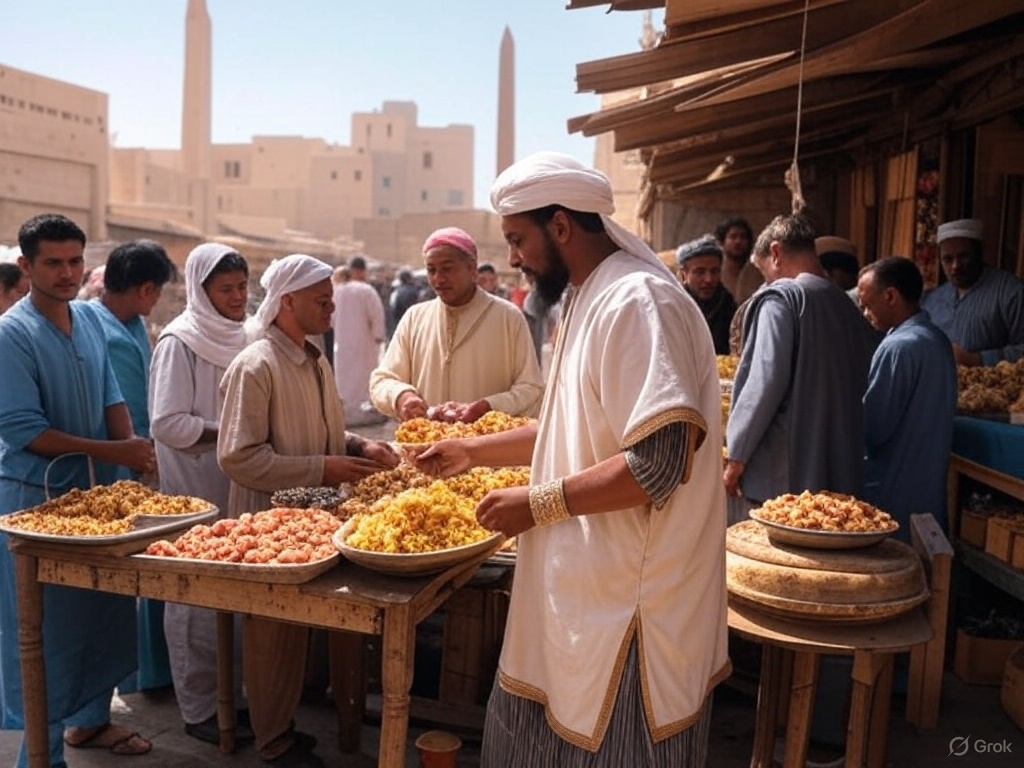
Picture a bustling port on the Red Sea, where ships laden with gold, ivory, and frankincense sail to distant empires, while caravans wind through fertile highlands carrying grains and exotic goods.
This is the Kingdom of Aksum, an ancient African civilisation that thrived from the 1st to 7th centuries CE in what is now northern Ethiopia and Eritrea. I’m proud to share the story of Aksum, a beacon of our continent’s ingenuity, resilience, and global influence.
For those new to African history, you will learn about Aksum’s geographic and economic power, painting a vivid picture of its vibrant markets, lush fields, and bustling trade routes. We’ll celebrate Africa’s cultural richness while acknowledging the challenges faced.
Aksum’s Geographic Advantage: A Crossroads of Continents
Imagine standing in the highlands of northern Ethiopia, where rolling green hills meet the azure waters of the Red Sea. This was Aksum’s heartland, centred around its capital, Aksum, a city of stone palaces and towering obelisks.
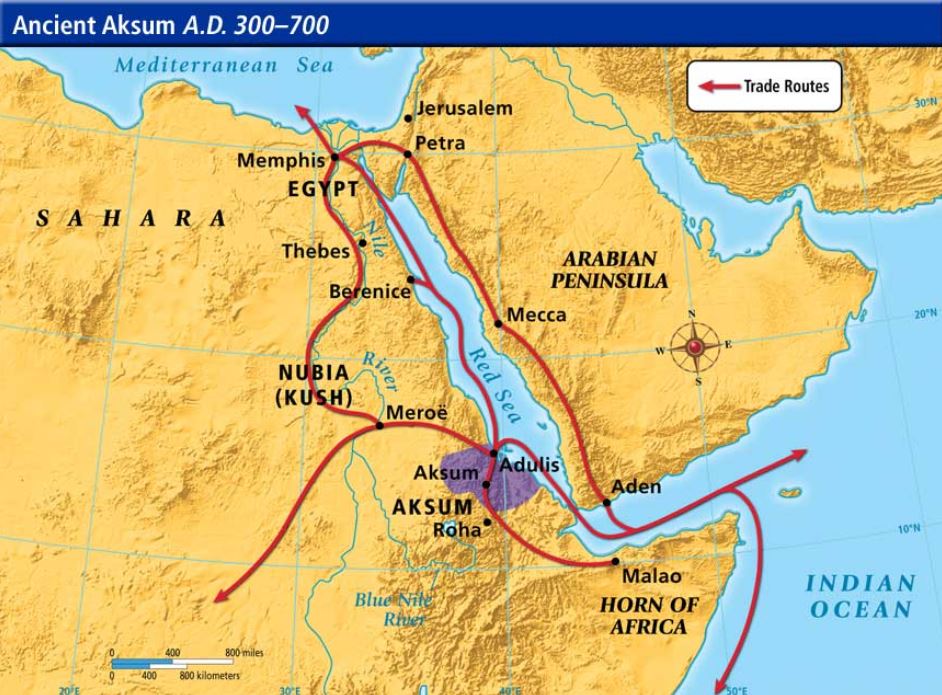
Its location was a geographic masterpiece, nestled in fertile plateaus yet close to the port of Adulis, a gateway to the world. The Red Sea connected Aksum to Arabia, Egypt, and the Mediterranean, while overland routes stretched to Sudan and beyond.
At its peak, Aksum’s territory spanned modern-day Eritrea, northern Ethiopia, western Yemen, southern Saudi Arabia, and parts of Sudan, making it a transcontinental power.
This strategic position made Aksum a crossroads of ancient trade. The Red Sea was a bustling highway for ships, especially after the 1st century CE, when sailors mastered monsoon winds to sail directly from Egypt to India.
Adulis, just 150 miles from Aksum, became a vibrant hub where African, Arabian, and Indian merchants mingled. Caravans from the interior brought goods to the port, while ships carried Aksum’s treasures to Rome, Persia, and China.
The highlands provided fertile soil and a temperate climate, unlike the arid deserts nearby, supporting a thriving agricultural base that fuelled this trade empire.
Aksum’s geography wasn’t just about location, it was a shield and a sword. The highlands offered natural defences against invaders, while control of coastal routes allowed Aksum to dominate maritime trade.
By outmanoeuvring rivals like the Kushite kingdom of Meroë, Aksum redirected trade from the Nile to the Red Sea, cementing its economic supremacy. This geographic edge, paired with visionary leadership, made Aksum one of the ancient world’s four great powers, as noted by the 3rd-century prophet Mani alongside Rome, Persia, and China.
Agricultural Foundations: The Breadbasket of Aksum
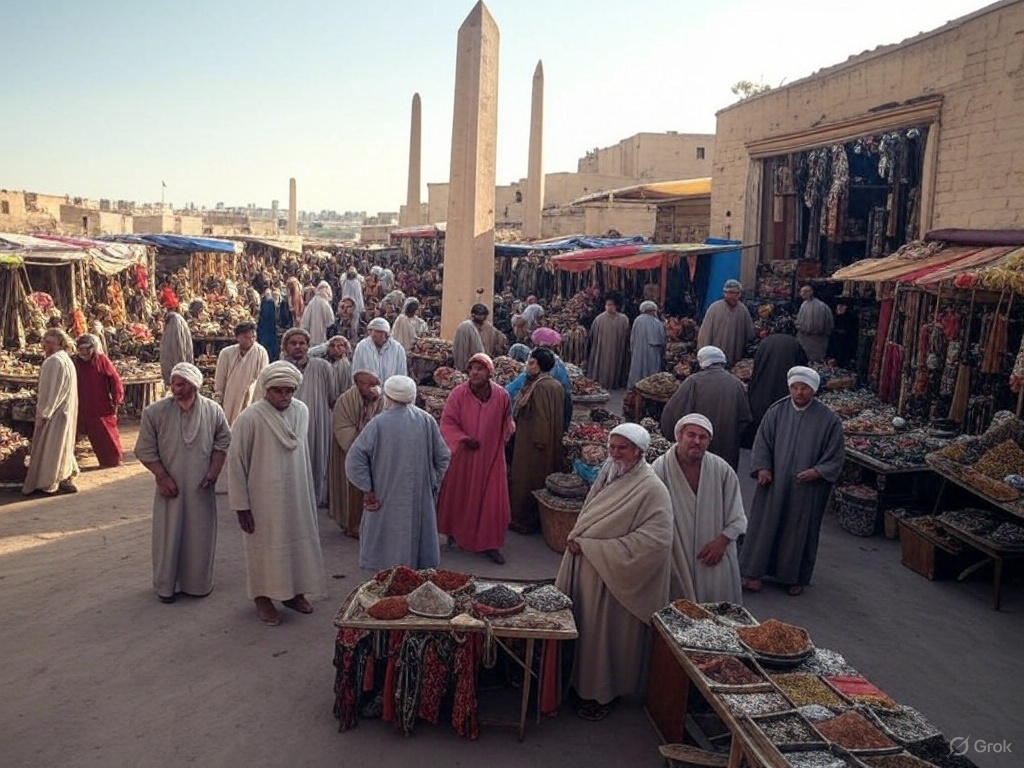
At the heart of Aksum’s wealth was its land, a patchwork of fertile fields that sustained its people and trade. The highlands, blessed with rich volcanic soil and reliable rainfall, produced bountiful harvests of wheat, barley, and teff, a tiny grain that remains Ethiopia’s staple today.
Farmers grew finger millet, sorghum, lentils, chickpeas, and oil crops like linseed and Guizotia abyssinica, ensuring food security and surplus for trade. Livestock, cattle, sheep, goats, grazed the hills, providing meat, milk, and leather, while oxen powered ploughs.
Aksumite farmers were innovators. They built terraces to prevent soil erosion, dug irrigation channels, and constructed dams to capture rainwater, turning rugged slopes into productive farmland.
These techniques, honed over centuries, allowed multiple harvests annually, supporting a growing population and urban centres like Aksum and Adulis. The surplus grains and livestock were traded locally and exported through Adulis, fetching luxury goods like silk and spices from India and Rome.
This agricultural prowess was more than economic, it was cultural pride. Markets buzzed with farmers bartering teff for salt, or herders trading cattle for imported wine. Festivals celebrated harvests, with communities dancing to drumbeats under acacia trees. Yet, Aksum’s prosperity rested on the labor of its people, many toiling under a feudal system where elites controlled land. This inequality, a shadow of Africa’s past, reminds us that even great kingdoms faced internal struggles.
Economic Power: The Trade Empire of Adulis
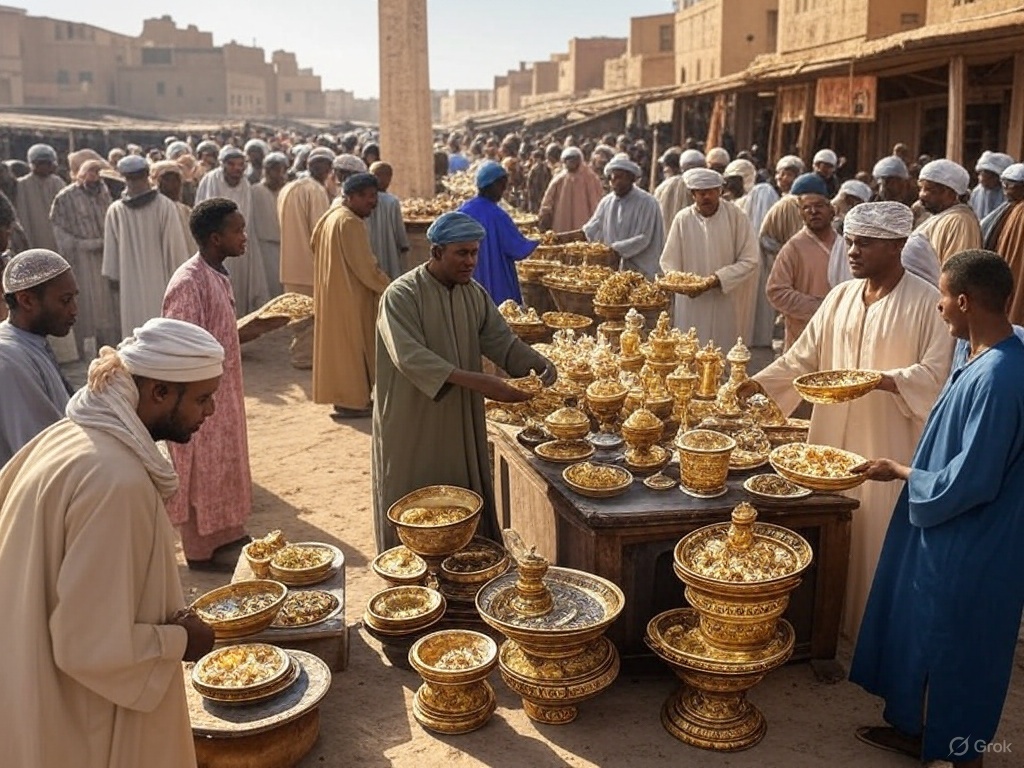
Aksum’s economy was a marvel, driven by its control of global trade routes. Adulis was the engine, a cosmopolitan port where merchants haggled in Greek, Arabic, and Ge’ez, Aksum’s language.
Ships docked with Indian spices, Chinese silk, and Roman glassware, while Aksum exported Africa’s treasures: ivory from elephants, gold from Nubian mines, frankincense and myrrh from aromatic trees, and emeralds prized by Roman elites. Exotic animals, elephants, rhinos, even leopards, were shipped for Rome’s arenas, and tortoise shells became luxury inlays.
The kingdom’s trade networks were vast, stretching from Spain to China. Aksumite merchants sailed to Sri Lanka, bartered in Yemen, and supplied Rome’s insatiable demand for incense used in temples. In return, Aksum imported iron for tools, wine for elites, and textiles for fashion. This exchange wasn’t just economic, it was cultural, bringing Buddhist art, Christian ideas, and Persian styles to Aksum’s courts, enriching its cosmopolitan identity.
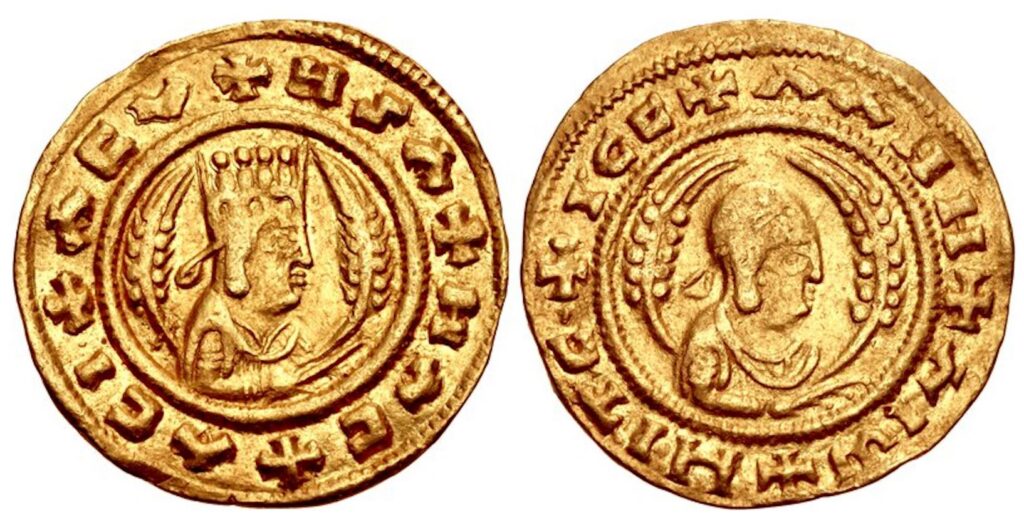
Aksum’s economic sophistication shone in its currency. Around the 3rd century CE, King Endubis introduced gold, silver, and bronze coins, inscribed in Ge’ez and Greek, a rarity in ancient Africa.
These coins, stamped with crosses after Aksum adopted Christianity in the 4th century, facilitated trade and projected power. A gold coin in a Roman market was a symbol of Aksum’s wealth, rivaling imperial mints. This market economy, blending barter and coinage, supported bustling bazaars where traders swapped stories as often as goods.
Strategies for Trade Dominance
Aksum’s rulers were master strategists, ensuring their trade routes thrived. A strong navy patrolled the Red Sea, fending off pirates and rival powers like Himyar in Yemen.
This naval might protected merchants sailing to India or Egypt, ensuring goods flowed safely. Aksum expanded into Kush’s former territories, securing overland routes to gold and ivory sources in Sudan. Inland, kings invested in roads and caravansaries, easing the flow of goods from remote villages to Adulis.
Economic policies were shrewd. Aksum levied tariffs on goods passing through Adulis, filling royal coffers. Trade agreements with Rome and Persia fostered mutual prosperity, while diplomatic missions, like King Kaleb’s campaigns in Yemen, secured strategic ports.
The kingdom’s adoption of Christianity under King Ezana (circa 330 CE) strengthened ties with the Byzantine Empire, opening new markets. These strategies made Aksum a linchpin in global commerce, its ports and markets alive with the chatter of a dozen languages.
Yet, maintaining this empire wasn’t easy. Aksum faced invasions from Beja nomads in Sudan, disrupting overland routes. The rise of Persian and later Islamic powers in the 7th century shifted trade routes, bypassing Aksum’s ports.
Environmental challenges, soil erosion and climate shifts, strained agriculture, and reducing surpluses. These struggles, common across Africa’s history, highlight the resilience of Aksum’s people, who adapted until the kingdom’s gradual decline by the 8th century.
Cultural and Social Impact of Wealth
Aksum’s economic power shaped its culture, reflecting Africa’s spirit of community and creativity. Wealth funded grand architecture, stone palaces, churches like Debre Damo, and stelae (obelisks) reaching 100 feet, symbols of royal might.
Artisans crafted gold jewellery, pottery, and crosses, blending African, Christian, and Hellenistic styles. Markets were social hubs, where farmers, traders, and priests shared stories over injera and honey wine, strengthening communal bonds.
This prosperity fostered education and religion. Aksum’s script, Ge’ez, preserved trade records and biblical texts, making it one of Africa’s earliest written languages.
Christianity, adopted in the 4th century, unified the kingdom, with monasteries training scholars who corresponded with Jerusalem. Yet, Aksum’s inclusivity shone, Jewish and pagan communities thrived alongside Christians, reflecting Africa’s tradition of coexistence.
However, wealth is concentrated among elites, leaving farmers and labourers with less. This inequality, a challenge across ancient empires, sparked tensions, yet Aksum’s festivals and shared faith mitigated divides. The kingdom’s legacy of unity and innovation inspires Africans today, reminding us of our ancestors’ ability to build greatness amid hardship.
Aksum in 2025: A Legacy of Pride
Geʽez: እግዚአብሔር አምላኬ በእርሱ አሸንፌ ነኝ
Transliteration: ʾEgziʾabhēr ʾamlākē bāʾrsu ʾashenfē nāñ
Translation: “By the Lord my God, I have triumphed.”
In 2025, Aksum’s legacy endures, a testament to Africa’s global influence. The ruins of Aksum, a UNESCO World Heritage Site, draw tourists to Ethiopia, where stelae and churches tell stories of ancient glory.
Ge’ez remains the liturgical language of the Ethiopian Orthodox Church, linking modern Africans to their past. Ethiopia’s coffee trade, rooted in Aksum’s agricultural prowess, fuels global markets, while cultural festivals like Timkat echo ancient celebrations.
Aksum’s story counters outdated narratives of Africa as “backwards.” It was a peer of Rome, trading gold for silk, minting coins, and shaping world religions.
Yet, its decline, due to environmental stress and geopolitical shifts, mirrors Africa’s colonial and post-colonial struggles. Today, as Africa rises through tech, art, and music, Aksum reminds us of our resilience, from ancient traders to modern entrepreneurs.
Africa’s Global Gift
For those new to African history, Aksum is an inviting entry point. Its bustling ports and fertile fields feel like a marketplace today, alive with diversity and ambition.
The rhythm of its trade, ivory for spices, faith for ideas, echoes Africa’s role in global exchange, from ancient times to now. Aksum’s story, like a griot’s tale, celebrates our prosperity while honouring the labor and struggles of our ancestors.
I see Aksum as our heritage of excellence. Its coins, churches, and trade routes show a continent that led the world, despite challenges. In 2025, as Africa’s youth innovate and our cultures shine, Aksum’s legacy urges us to tell our stories proudly. So, imagine holding an Aksumite coin, its cross gleaming, and feel the pulse of a kingdom that connected Africa to the world, a pulse that beats in us still.