
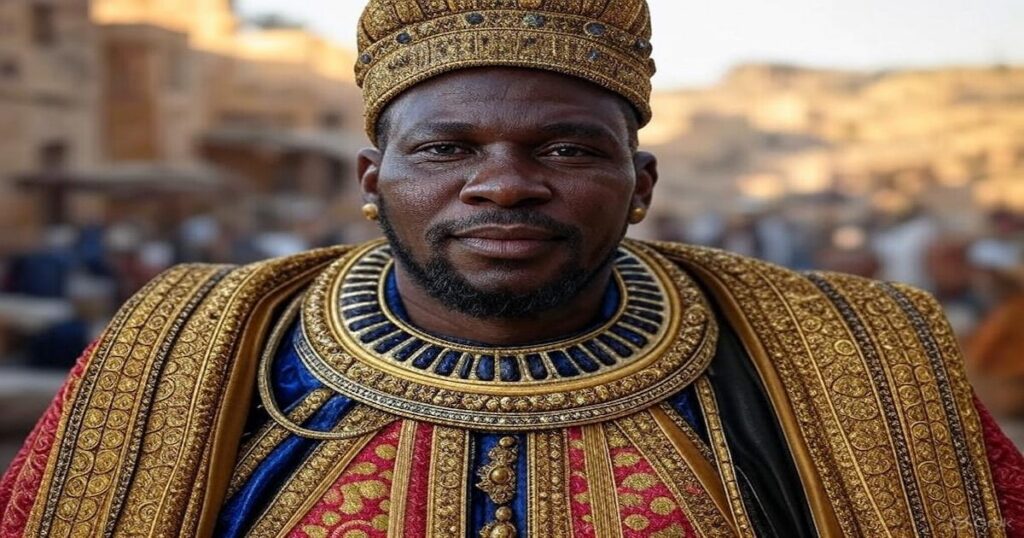
When you think of empires, your mind might jump to Rome, Persia, or the sprawling dynasties of China. But Africa, often sidelined in global history, was home to some of the most remarkable, innovative, and powerful empires the world has ever seen. These weren’t just kingdoms with a few villages; they were sophisticated societies with complex economies, vibrant cultures, and influence that stretched far beyond their borders.
We will be focusing on the Kingdom of Aksum, the Mali Empire, the Songhai Empire, and Great Zimbabwe to show you a side of Africa that’s rarely spoken about in mainstream media.
Those who are new to African history or not used to diving into heavy books, this is a journey through a continent that shaped the world in ways you might not expect.
Why African Empires Matter
Africa’s history is often misunderstood, reduced to stereotypes of poverty or tribalism, or viewed through the lens of colonialism. But long before European ships arrived, African empires were thriving hubs of trade, learning, and culture.
These societies weren’t isolated; they connected with Europe, Asia, and the Middle East, trading gold, salt, and ideas. Their cities rivaled those of medieval Europe, and their rulers wielded power that commanded respect across continents.
Understanding these empires isn’t just about correcting the record, it’s about recognizing Africa’s role as a global player, then and now. Let’s explore four empires that showcase Africa’s diversity and strength: Aksum in East Africa, Mali and Songhai in West Africa, and Great Zimbabwe in Southern Africa. Each tells a unique story of innovation, resilience, and legacy.
The Kingdom of Aksum (100–940 CE): The Crossroads of the World
Imagine a kingdom in what’s now Ethiopia and Eritrea, perched on the Horn of Africa, where trade routes from Rome, Persia, and India converged. That was Aksum, a powerhouse from roughly 100 to 940 CE. Aksum wasn’t just a middleman in global trade; it was a cultural and economic force that left a mark still visible today.
A Trading Giant: Aksum’s location by the Red Sea made it a linchpin in ancient trade. Its ports buzzed with merchants trading ivory, gold, and frankincense for silk, spices, and glass from as far as China.
Aksum even minted its gold coins, a rarity in the ancient world, stamped with the faces of its kings. These coins have been found as far away as India, proof of Aksum’s far-reaching influence.
Cultural and Religious Pioneer: Aksum wasn’t just about wealth; it was a cradle of ideas. Around 330 CE, King Ezana converted to Christianity, making Aksum one of the first Christian states in the world, long before most of Europe.
Massive stone obelisks, some over 100 feet tall, still stand in Aksum today, carved with intricate designs to honor kings and gods. The kingdom also developed Ge’ez, one of Africa’s first written languages, which is still used in Ethiopian churches.
Why It Fell: By the 10th century, Aksum’s power waned. Climate change may have hurt agriculture, and the rise of Islamic trade routes shifted commerce away from the Red Sea.
But Aksum’s legacy endures in Ethiopia’s Christian traditions and its role as a symbol of African sophistication. Aksum shows us an Africa that was globally connected, not isolated. It wasn’t a backwater; it was a beacon of trade and faith.
The Mali Empire (1235–1600 CE): The Land of Gold and Learning
Fast-forward to West Africa, where the Mali Empire rose in the 13th century, becoming one of the richest and most intellectually vibrant empires in history. Stretching across modern-day Mali, Senegal, Guinea, and Mauritania, Mali was a land of gold, scholars, and cities that awed travelers from afar.
The Golden King: Mali’s fame peaked under Mansa Musa, who ruled from 1312 to 1337 and is often called the richest person in history. Mali’s gold mines supplied half the world’s gold in the Middle Ages, and Musa’s wealth was legendary.
In 1324, he made a pilgrimage to Mecca, carrying so much gold that he crashed Egypt’s economy by giving it away. His journey wasn’t just a flex; it put Mali on the map, drawing scholars and traders to his empire.
Timbuktu: The World’s University: Mali’s city of Timbuktu was a global center of learning. It’s Sankore University attracted scholars from across Africa, the Middle East, and Europe, who studied math, astronomy, and Islamic law.
Libraries held thousands of manuscripts, some of which survive today, covering everything from poetry to medicine. Timbuktu wasn’t just a city; it was a symbol of African intellectual might.
A Sophisticated Society: Mali’s rulers, or mansas, governed a vast empire with a complex bureaucracy. They taxed trade routes that carried gold, salt, and slaves across the Sahara, ensuring stability and wealth. Griots, oral historians, preserved the empire’s stories, blending history with art in a tradition still alive in West Africa.
Decline and Legacy: By the 1600s, internal power struggles and invasions weakened Mali, paving the way for its successor, the Songhai Empire. But Mali’s legacy lives on in West Africa’s cultural traditions and the enduring fame of Timbuktu.
Mansa Musa’s name still echoes as a symbol of African wealth and wisdom. Mali teaches us that Africa wasn’t just rich in resources but in knowledge, challenging the idea that the continent lagged behind the world.
The Songhai Empire (1464–1591 CE): The Military and Cultural Titan
If Mali was the scholar, Songhai was the warrior. Rising in the 15th century in what’s now Niger, Nigeria, and Mali, Songhai became West Africa’s largest empire, blending military might with cultural brilliance.
A Military Machine: Songhai’s rise began under Sunni Ali, a brilliant general who ruled from 1464 to 1492. He conquered Timbuktu and Djenné, building an empire that stretched from the Atlantic to the Niger River.
His navy patrolled the Niger, and his cavalry dominated the savanna. Songhai’s army wasn’t just big; it was disciplined, with a chain of command that rivaled modern militaries.
Askia the Great: After Sunni Ali, Askia Muhammad (r. 1493–1528) took Songhai to new heights. A devout Muslim, he standardized weights and measures, boosted trade, and made Timbuktu a cultural hub again.
His pilgrimage to Mecca, less extravagant than Musa’s but equally impactful, strengthened ties with the Islamic world. Askia’s reforms made Songhai a model of governance, with provinces ruled by loyal governors.
Cultural Flourishing: Songhai’s cities were cosmopolitan, blending African traditions with Islamic influences. Djenné’s Great Mosque, a masterpiece of mud-brick architecture, still stands as a testament to the empire’s artistry. Scholars in Timbuktu wrote treatises on law and science, while traders connected Songhai to North Africa and beyond.
The Fall: Songhai’s end came in 1591, when Moroccan invaders, armed with guns, defeated its army at the Battle of Tondibi. The empire fractured, but its influence lingered in West Africa’s political and cultural traditions.
Songhai shows us an Africa that balanced strength and sophistication, proving the continent could produce empires as organized as any in Europe or Asia.
Great Zimbabwe (1100–1450 CE): The Stone City of the South
In Southern Africa, Great Zimbabwe stood as a testament to African ingenuity. Centered in modern-day Zimbabwe and southern Mozambique, this empire thrived from the 11th to 15th centuries, building stone cities that stunned later explorers.
A City of Stone: Great Zimbabwe’s capital, also called Great Zimbabwe, was a marvel. Its massive stone walls, built without mortar, enclosed palaces, markets, and homes.
The Great Enclosure, a circular complex, and the Conical Tower remain iconic symbols of African architecture. This wasn’t a small settlement; it housed up to 18,000 people, rivaling medieval London.
Trade and Wealth: Great Zimbabwe sat on gold and ivory trade routes linking Africa’s interior to the Indian Ocean. Merchants traded with Persia, India, and China, exchanging gold for porcelain and beads.
Archaeological finds, like Chinese ceramics, show the empire’s global reach. Cattle herding also fueled its economy, with wealth measured in herds.
Mystery and Misconception: Great Zimbabwe’s decline, likely due to overgrazing or trade shifts, left its ruins abandoned by the 15th century.
When Europeans found them in the 19th century, some refused to believe Africans built them, spinning myths of foreign origins. But archaeology confirms Great Zimbabwe was an African creation, tied to the Shona people’s traditions.
Legacy: Great Zimbabwe’s name lives on in the modern nation of Zimbabwe, and its ruins are a UNESCO World Heritage Site. It proves Southern Africa’s precolonial greatness, challenging narratives that downplay the region’s history.
Great Zimbabwe reminds us that Africa’s brilliance wasn’t confined to one region—it spanned the continent, from stone cities to golden empires.
What These Empires Teach Us
These four empires—Aksum, Mali, Songhai, and Great Zimbabwe—depict a dynamic, connected, and powerful Africa. They traded with the world, built monumental architecture, and fostered learning and culture.
Their rulers weren’t just warlords; they were administrators, diplomats, and patrons of the arts. Their cities, from Timbuktu to Great Zimbabwe, were as impressive as any in medieval Europe or Asia.
But their stories also challenge us to rethink Africa’s place in history. Why are these empires less known than Rome or the Mongols? Colonialism played a role, erasing or sidelining African achievements to justify exploitation.
Even today, stereotypes persist, painting Africa as a continent of chaos rather than creativity. These empires prove otherwise, showing a continent that shaped global trade, religion, and knowledge for centuries.
Why This Matters Today
The legacy of African empires isn’t just in ruins or manuscripts—it’s in the resilience of African cultures. The griots of Mali still sing of Mansa Musa.
Ethiopia’s churches trace their roots to Aksum. The Shona people honor Great Zimbabwe’s heritage. These empires remind us that Africa’s story is one of innovation and strength, not just struggle.
For those new to African history, this is an invitation to dig deeper. Visit Ethiopia’s obelisks, explore Timbuktu’s manuscripts online, or read about
Mansa Musa’s pilgrimage. Africa’s past isn’t a footnote; it’s a foundation of world history. By learning about these empires, you’re not just discovering Africa, you’re uncovering a richer, truer story of humanity.