
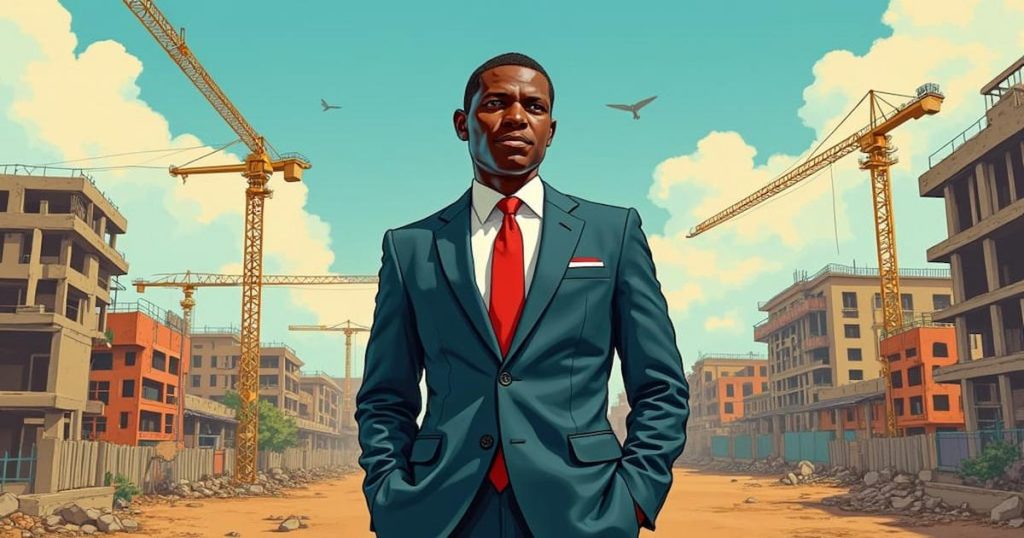
A critical look at Edgar Lungu’s legacy: infrastructure gains shadowed by debt and dependency.
Edgar Lungu’s Legacy: Infrastructure, Debt, and the Burden of Post-Colonial Power
When Edgar Chagwa Lungu, Zambia’s sixth president, died at 68 while receiving treatment in South Africa, his passing elicited words of condolence across party lines. President Hakainde Hichilema called it a “tragic loss for the nation.” Yet history demands a more rigorous postmortem, one that does not merely eulogise the man but interrogates the deeper structures of power that defined his rise and ultimate fall.
For Edgar Lungu was not just a president. He was a symptom of Africa’s post-independence struggle to assert sovereignty in a world rigged by debt, dependency, and imperial expectation.
The Rise of the Technocrat
Lungu ascended to power in 2015 after the death of President Michael Sata. A lawyer by training, Lungu was seen as a pragmatic successor who could maintain the Patriotic Front’s (PF) populist image. But where Sata thrived on combative charisma, Lungu governed as a technocrat-manager, delegating, outsourcing, and borrowing.
His tenure was marked by a frenzy of infrastructure expansion: roads, airports, health clinics. From Lusaka to Ndola, cranes and concrete gave the illusion of modernity. To the untrained eye, it was progress. But for the politically literate, it was the predictable playbook of China-financed development—glossy on the surface, hollow beneath.
The Debt that Built Zambia
Let us be clear: infrastructure is essential. Africa has suffered from centuries of infrastructural sabotage—colonial railroads built to extract minerals, not connect communities; post-independence neglect due to IMF-induced austerity. But what Lungu’s government built was not sovereignty—it was dependence in disguise.
Between 2015 and 2021, Zambia’s external debt ballooned from $4.8 billion to over $14 billion. The majority of this came from Chinese loans, often secured on opaque terms.
Lungu, like many African leaders desperate for visible achievements, traded long-term financial autonomy for short-term political gain. He joined the new league of “cement presidents” leaders who confuse concrete for liberation.
Zambia became the first African country to default on its sovereign debt during the COVID-19 pandemic. In return for these loans, the country was subjected to debt restructuring negotiations that placed economic policy in the hands of foreign technocrats. Under Lungu, Zambia did not merely build—it mortgaged its future.
Silencing Dissent, Hollowing Democracy
Lungu’s leadership also revealed the paradox of post-colonial democracy in Africa. While elections continued, the democratic culture deteriorated. Opposition parties, civil society, and journalists faced increasing repression. In 2021, Amnesty International described Zambia as a “country in crisis.” Protesters were brutalised; radio stations critical of the government were shut down. And yet the West remained largely silent—after all, Zambia was cooperating with lenders and maintaining a neoliberal macroeconomic framework. Herein lies the core hypocrisy: Western governments that cry “democracy” in Moscow and Harare are deaf when economic compliance is assured.
Lungu’s Return and the Temptation of Power
After losing the 2021 election to Hichilema, Lungu appeared ready to retire. But politics in Zambia, as in many African states, is not merely a public service—it is a survival mechanism. In 2023, Lungu declared his intention to contest the 2026 election, reigniting intra-party divisions and drawing a firm line from Zambia’s Constitutional Court, which ruled him ineligible due to his prior terms.
His re-entry was telling: in the context of dwindling political trust, economic despair, and the reawakening of regional power rivalries, Lungu sensed an opportunity. But death, the one arbiter immune to spin, intervened.
A Pawn in a Larger Game
To understand Lungu’s presidency is to understand the straitjacket worn by many Global South leaders. Zambia’s economic policy was not crafted in Lusaka but shaped in Washington, Beijing, and the boardrooms of multilateral institutions. Even the infrastructure boom—a hallmark of Lungu’s rule—was never a Zambian idea. It was the product of a global development orthodoxy that says “borrow to build,” regardless of future cost. Zambia under Lungu was never truly sovereign. It was, like many nations of the South, permitted to choose the flavour of its dependency—East or West.
The Irony of Eulogies
Now that Lungu is gone, tributes flood in. Leaders praise his dedication to “development” and “service.” Yet how many will mention the food insecurity, the currency depreciation, the joblessness that scarred Zambia during its final years? How many will confront the contradiction of a man who presided over massive borrowing while preaching fiscal discipline? The eulogies, like the roads he built, are polished but perilously thin.
But if Lungu is to be judged, he should not stand alone in the dock. The architects of his failure include the IMF, the World Bank, the Chinese Exim Bank, the Western rating agencies, and the capital flight merchants who continue to plunder African wealth through legal loopholes and illicit trade.
A Note on Uganda and the Return of the World Bank
In a parallel development, the World Bank announced it would resume lending to Uganda after a two-year freeze triggered by the country’s Anti-Homosexuality Act of 2023. The law, one of the harshest anti-LGBTQ statutes in the world, drew global condemnation and led the Bank to suspend new financing.
Now, in 2025, the Bank has reversed course. Why? Because Uganda implemented “safeguards” that allegedly protect vulnerable populations from harm. But let’s be honest: this is about geostrategy, not human rights.
Uganda remains critical to Western interests in East Africa. It hosts millions of refugees, borders conflict zones, and provides soldiers to AU missions. Most importantly, it has vast untapped oil reserves. As soon as “stability” was guaranteed and international headlines moved on, the World Bank returned—purse strings loosened, principles forgotten.
This hypocrisy is the rule, not the exception. Whether it is Uganda’s anti-LGBTQ laws, Egypt’s autocracy, or Rwanda’s interventionist militarism, the West tolerates anything if it secures economic alignment or regional control.
Final Thoughts: Lungu as Symbol
Edgar Lungu’s story is not merely Zambian—it is African. It is the story of how leaders with limited policy space are forced to choose between visible development and sustainable sovereignty. It is the tale of how the Global South is corralled by debt traps, lured by soft power, and punished when it defies orthodoxy.
Lungu was neither hero nor villain. He was a product of systems designed to constrain. His legacy, therefore, is a mirror—one that reflects Africa’s ongoing dilemma: how to govern when true independence has never been fully granted.
Let us mourn Lungu, yes, but let us also mourn the structural conditions that made his presidency a Faustian bargain. Let us question the global financial system that builds roads with one hand and repossesses nations with the other. Let us interrogate a world that celebrates “development” but fears African liberation.
For only by doing so can we ensure that the next generation of African leaders govern not as managers of borrowed wealth, but as architects of true self-determination.