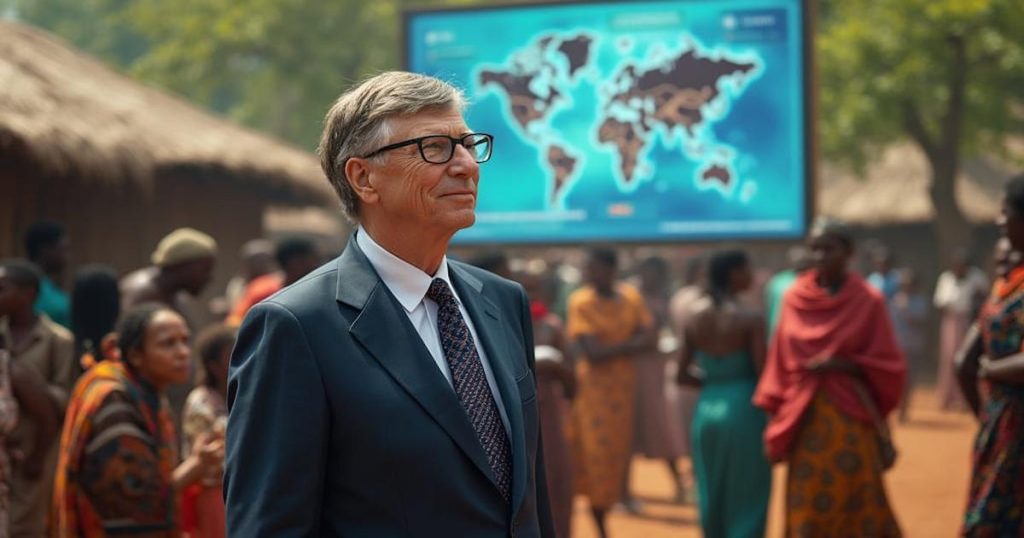
Bill Gates Africa AI Health Pledge: Empowering a New Generation of Innovators

Bill Gates Africa AI health pledge

Bill Gates’ Africa AI health pledge aims to empower young innovators to transform healthcare across the continent

In a landmark pledge that stunned the global development community, Bill Gates has committed to donating the majority of his estimated $200 billion fortune to support health systems in Africa, with a special emphasis on empowering young innovators to harness artificial intelligence (AI) for transformative change.

Hailed by many as a historic act of philanthropy, this announcement has also sparked deep discussions within the Global South about power, partnership, and the true meaning of technological independence.

The Pledge: Wealth Redistribution or Soft Power?

At the heart of Gates’ announcement is a vision: a digitally transformed Africa where AI tools assist in diagnostics, reduce maternal mortality, and predict disease outbreaks with precision. Yet, while Gates’ intentions may appear benevolent, we must question the deeper implications. Why now? And why Africa?

This is not merely about charity—it is about influence.

For decades, Western billionaires have played a disproportionate role in shaping health policy in the Global South, from vaccine distribution to data collection frameworks. Gates’ pledge may redistribute wealth, but it does not redistribute power. It risks reinforcing a techno-colonial model where Silicon Valley defines Africa’s priorities under the guise of generosity.

Africa’s Health Crisis: A Complex Legacy

Africa’s health challenges are not solely born from technological deficiency. They stem from a toxic cocktail of colonial underinvestment, brain drain, and post-independence structural adjustment programs imposed by Western financial institutions. Gates’ narrative, which frames AI as the singular panacea, oversimplifies these systemic wounds.

Healthcare across the continent suffers more from supply chain gaps, infrastructure decay, and the chronic undervaluing of local knowledge than from a lack of digital innovation. If AI is to help, it must be contextual, decolonised, and rooted in the specific cultural and historical realities of each nation.

The AI Opportunity: Innovation on African Terms

That said, Africa’s youth are its greatest strength. With over 60% of the continent under 25, the potential for a homegrown AI renaissance is immense. From Kigali to Lagos, and from Nairobi to Accra, young coders, scientists, and medics are already utilising AI to analyse disease data, triage patients, and bridge rural access gaps.

What Gates must understand—and support—is that these innovators do not need saving. They need resources without strings, respect without supervision, and infrastructure without ideological imposition.

Investments should prioritise:

  1. Decentralised AI labs across underserved regions.
  2. Open-access data platforms owned and controlled by African institutions.
  3. Ethics boards led by African scholars to guide responsible tech use.
  4. Indigenous language AI models to support communication in rural areas.

This is how real partnerships are built—not through top-down aid but horizontal solidarity.

The West’s Strategic Realignment

Let us not ignore the geopolitical subtext. As the West struggles to maintain influence in a rising multipolar world, Africa becomes the contested frontier for hearts, minds, and markets. China’s Belt and Road Initiative, Russia’s BRICS outreach, and India’s tech diplomacy all reflect this global pivot.

In this context, Gates’ pledge may function as a soft power manoeuvre, an effort to secure goodwill for Western liberalism under pressure. The danger here is subtle but real: the rebranding of Africa not as a site of partnership, but as a proving ground for Western AI tools and philanthropic experiments.

The Global South Responds: A New Ethic of Collaboration

Voices across the Global South must rise in response—not to reject the gift, but to redefine the terms.

We must demand:

  • Sovereign control over AI infrastructure funded by Western donors.
  • Transparent governance in how donations are allocated and evaluated.
  • Capacity building over dependency—tech transfer, not tech paternalism.
  • Inclusion of traditional medicine and local healing systems in AI models.

And most importantly, Africa must retain ownership of its data. No innovation is neutral, and every algorithm carries cultural assumptions. Let the training data be drawn from African lives—but let African minds shape what those algorithms do.

The African Renaissance Is Already Here

Gates may have opened his wallet, but Africa has already opened its mind.

Startups like mPharma in Ghana are digitising drug supply chains. Rwanda’s drone network delivers blood supplies to remote villages. In Nigeria, AI is being trained to detect malaria from microscope slides with astonishing accuracy.

These are not foreign interventions—they are African inventions. What is needed is not leadership from Seattle but partnership from Addis Ababa, Dakar, and Johannesburg.

Conclusion: More Than Money

Bill Gates’ gesture, while unprecedented in financial terms, will only matter if it marks a paradigm shift—from donor-led development to Afrocentric innovation.

If this is to be a new chapter, let it be written by African hands, in African code, guided by African ethics.

Let young Africans be more than recipients—they must be authors, architects, and arbiters of the future. Only then will AI in Africa not be a gift from above, but a movement from within.
Takealot.com: A Beacon of African Innovation and Prosperity

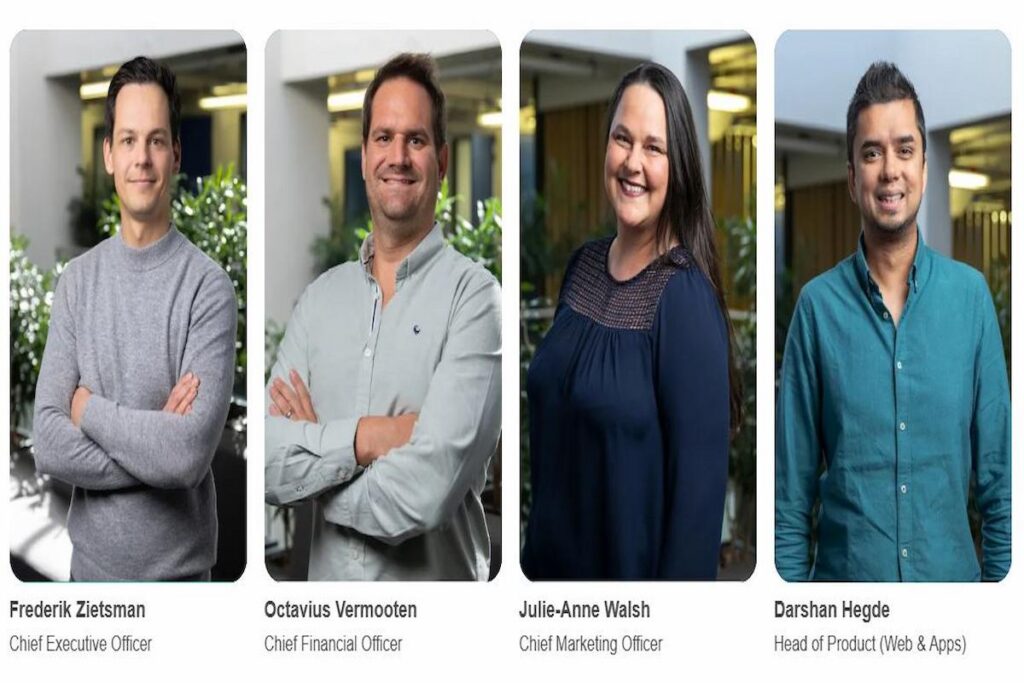
Takealot.com Management

If you’ve ever pictured Africa as a continent defined by struggle, poverty, instability, or underdevelopment, let me invite you to a different story, one that sparkles with possibility. Meet Takealot.com, South Africa’s largest online retailer, a homegrown success that’s rewriting what Africa can achieve.

Launched in 2011 in the vibrant city of Cape Town, Takealot started as a small e-commerce venture in a country where online shopping was a novelty. Today, it serves millions, employs thousands, and competes with global giants, all while navigating the unique challenges of an African market.

Its journey is a testament to resilience, innovation, and a customer-first mindset that’s transforming lives. We dive into Takealot’s story, from its humble beginnings to its market dominance and show how it embodies Africa’s potential for growth and modernity. By the end, you’ll see Africa not as a place of hardship, but as a land brimming with opportunity, where companies like Takealot are building a future that inspires the world. Let’s start this journey together.

The Birth of Takealot and Its African Roots

Imagine opening a shop in a small town with patchy roads, limited electricity, and customers who prefer cash over cards. That’s the kind of challenge

Takealot’s founders faced when they launched in South Africa. In June 2011, entrepreneurs Kim Reid and Willem van Biljon, backed by U.S.-based investment firm Tiger Global Management, acquired an existing e-commerce platform called Take2 and rebranded it as Takealot.com. Headquartered in Cape Town,

Takealot entered a market where e-commerce was barely a blip, internet access was limited, logistics were tricky due to South Africa’s vast geography, and many consumers were wary of buying online. Yet, Reid and van Biljon saw potential in South Africa’s growing middle class and their appetite for convenience. Their vision wasn’t to copy Western giants like Amazon but to create a platform tailored to local needs, offering everything from books to electronics with a focus on trust and accessibility.

This was no small feat. South Africa’s e-commerce sector was underdeveloped, with only 29% of consumers shopping online as late as 2020, according to Nielsen. But Takealot’s founders embraced the challenge, much like countless African entrepreneurs who turn obstacles into opportunities. They prioritised user-friendly interfaces, secure payments, and reliable delivery, building trust in a sceptical market.

Their decision to focus on South Africa, rather than chasing premature global expansion, mirrored the resourcefulness seen across the continent, where businesses thrive by understanding their communities. Takealot’s early days reflect Africa’s entrepreneurial spirit: bold, adaptive, and deeply rooted in solving local problems. For you, the reader, it’s a reminder that Africa isn’t just a place of challenges; it’s a cradle of innovation, where visionaries like Takealot’s founders see potential where others see barriers.

Key Milestones in Takealot’s Growth

Takealot’s rise from a startup to South Africa’s e-commerce leader is a story of smart moves and bold leaps, each milestone showcasing Africa’s capacity to build world-class businesses. Let’s walk through its journey chronologically. In 2014, Takealot merged with Kalahari.com, a major competitor owned by Naspers, South Africa’s media and tech giant.

This merger was a game-changer, combining Kalahari’s customer base and product range with Takealot’s tech-savvy platform, creating a one-stop shop for South Africans. That same year, Takealot acquired Mr Delivery, rebranded as Mr D Food, entering the booming on-demand food delivery market. This move showed Takealot’s ability to diversify, a trait of African businesses that adapt to changing consumer habits.

Also in 2014, Takealot expanded into fashion by acquiring Superbalist.com, targeting millennials with trendy apparel. Though it sold Superbalist in 2024 to a South African consortium led by Blank Canvas Capital to refocus on core operations, this acquisition highlighted Takealot’s knack for tapping into new markets.

In 2016, Takealot introduced same-day delivery in select areas, a feat that rivalled global standards and made online shopping more convenient in a country where logistics can be a nightmare.

By 2018, Naspers increased its stake to 96%, injecting funds to scale warehouses, delivery fleets, and technology. Each milestone tackled African-specific challenges, like building an in-house delivery network to navigate rural roads, proving that resilience and innovation can thrive here. For you, it’s like watching a local café grow into a national chain, overcoming every hurdle with grit and creativity. Takealot’s milestones aren’t just business wins; they’re proof that Africa can produce companies that rival the best in the world.

Takealot’s Operations and Impact on South Africa

Today, Takealot is a powerhouse, its operations a testament to the scale and influence an African company can achieve. Picture a bustling marketplace, not in a town square, but online, where millions shop for everything from laptops to groceries.

As of 2019, Takealot’s marketplace platform hosted over 2,500 third-party sellers, serving more than 1.8 million shoppers. It directly employs over 2,000 people and supports thousands more through its Takealot Delivery Team, a logistics network that delivers to urban centres and remote villages alike. This is no small achievement in a country with diverse terrain and infrastructure challenges.

Takealot’s innovations are equally impressive. In 2024, it invested $1 million in 54 robotic machines for its Johannesburg distribution centre, boosting efficiency and showing that African companies can embrace cutting-edge technology.

Financially, the Takealot Group reported an 85% year-on-year increase in Gross Merchandise Value (GMV) in the first half of 2022, reaching €346 million, outpacing many African peers like Jumia. Its marketplace empowers small businesses, letting local entrepreneurs reach nationwide customers, while its pickup points, over 100 by 2024, make shopping accessible even for those without home addresses.

For you, it’s like a hometown store that grows to serve an entire country, creating jobs and making life easier. Takealot has made South Africa a leader in African e-commerce, contributing billions to the GDP and challenging the idea that Africa can’t compete globally. Its success is a beacon of what’s possible when African ingenuity meets opportunity.

Facing Challenges and Global Competition

No success story is without hurdles, and Takealot’s ability to navigate them highlights African resilience. The e-commerce landscape grew fiercer in 2024 with global giants like Amazon and Chinese retailers Temu and Shein entering South Africa.

These competitors brought low prices and global infrastructure, increasing costs and pressure. Yet, Takealot remains the top e-commerce website in South Africa as of March 2025, with 62% of surveyed consumers recently shopping there, per Statista. How? By doubling down on local understanding. Its 2024 Personal Shopper initiative, hiring thousands to assist non-tech-savvy consumers in townships and rural areas, shows a commitment to inclusivity that global players struggle to match.

Financially, Takealot faced a $12 million loss in 2024, partly due to Superbalist’s disposal, but this was a strategic pivot to focus on profitable core businesses, Takealot.com and Mr D Food. Think of it as a family business streamlining to stay strong against new rivals. Takealot also launched TakealotMORE, a subscription offering unlimited free deliveries, enhancing customer loyalty.

These moves show that African companies can compete globally while staying rooted in their communities, countering the narrative that the continent is always outpaced by the West or Asia. Takealot’s resilience is a powerful reminder that Africa’s businesses can hold their own on the world stage.

Takealot as a Symbol of Africa’s Potential

Takealot’s journey is more than a business story; it’s a mirror of Africa’s own rise. Starting in a market with low e-commerce penetration and logistical nightmares, Takealot grew through innovation, determination, and a focus on its people. South Africa’s e-commerce sector, which Takealot helped shape, grew 29% to $3.96 billion in 2023 and is projected to hit 10% of total retail by 2026, per World Wide Worx.

This growth isn’t just numbers, it’s jobs, opportunities, and a new way of life for millions. Takealot’s success has inspired other African businesses, from Nigerian fintechs to Kenyan agritech start-ups, showing that the continent can produce leaders, not just followers.

Globally, Takealot’s impact is undeniable. Amazon’s 2024 entry into South Africa was spurred by the market potential Takealot helped create, as industry experts note. It’s like a small-town athlete making it to the Olympics, putting their hometown on the map.

Takealot’s story is one of many across Africa, where a young, tech-savvy population, over 60% under 25, is driving growth in tech, agriculture, and more. By employing thousands, empowering small businesses, and innovating relentlessly, Takealot challenges outdated stereotypes of Africa as a place of lack. Instead, it paints a picture of a continent on the rise, where companies are building a future that benefits Africans and inspires the world.

Conclusion

From its 2011 launch in Cape Town to its dominance as South Africa’s largest online retailer, Takealot.com has shown what Africa can achieve. Its milestones, the Kalahari merger, Mr D Food acquisition, and robotic warehouses, reflect a blend of ingenuity and resilience that thrives despite challenges.

Employing thousands, serving millions, and competing with global giants, Takealot is a beacon of African innovation, rooted in a commitment to its people. Its story invites you to let go of negative stereotypes and see Africa through a new lens: a place where challenges spark creativity, and businesses uplift communities while reaching for the stars.

Takealot is just one chapter in Africa’s bright future, with countless stories of success waiting to be discovered. Share this story, explore African businesses, or visit South Africa yourself, and help spread a vision of a continent defined not by its past struggles, but by its boundless potential.