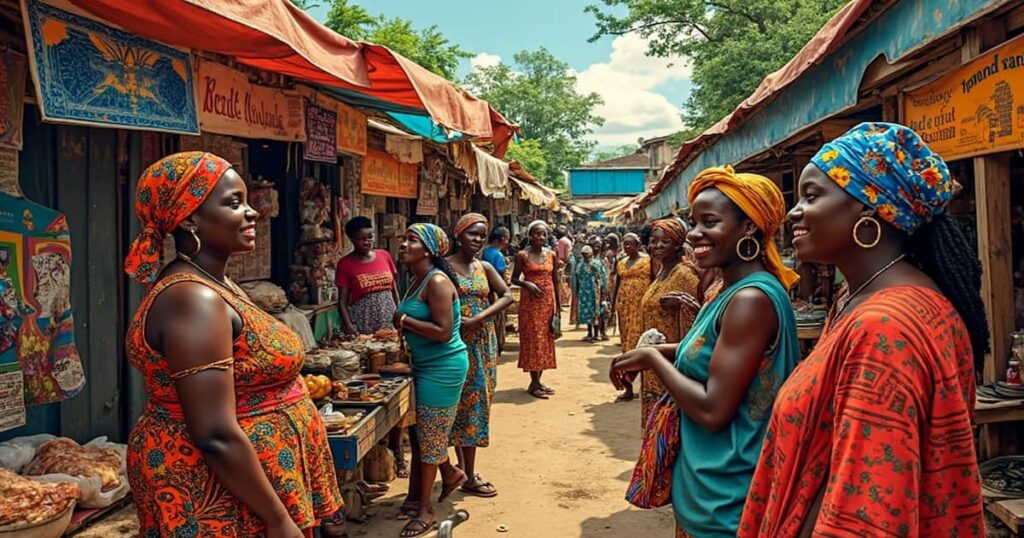
Africa’s diversity is reflected in its 3,000+ ethnic groups and 2,000+ languages, shaped by a rich history.
Africa, often referred to as the “cradle of humanity,” is a continent of unparalleled cultural and linguistic diversity.
Home to over 1.4 billion people across 54 countries, it boasts thousands of ethnic groups, languages, and cultural practices that have evolved over millennia. This diversity is rooted in Africa’s deep history, from ancient civilisations to colonial disruptions and modern nation-building.
By tracing the chronological development of Africa’s cultures and languages, we can better understand its rich tapestry and global influence. This blog explores the evolution of African cultural and linguistic diversity, from prehistoric origins to the present day, highlighting key periods and their impact on the continent’s identity.
Prehistoric Foundations: The Dawn of Diversity (Before 3000 BCE)
Africa’s cultural and linguistic diversity began with the emergence of early human societies. Archaeological evidence, such as fossils found in Ethiopia’s Omo Valley dating back 200,000 years, confirms Africa as the birthplace of Homo sapiens. These early communities, including hunter-gatherer groups like the San in Southern Africa and the Hadza in East Africa, developed distinct ways of life shaped by their environments. The San, for example, created intricate rock art and oral traditions, laying the foundation for cultural diversity.
Linguistic diversity also emerged early. Linguists estimate that proto-languages, ancestors of modern African language families, began forming as communities spread across diverse ecosystems, deserts, savannas, forests, and coasts. The four major language families, Niger-Congo, Afroasiatic, Nilo-Saharan, and Khoisan, likely originated during this period. Khoisan languages, characterised by click consonants, were spoken by Southern African hunter-gatherers, while proto-Niger-Congo languages emerged in West Africa, setting the stage for the Bantu migrations.
These early societies, though small, established unique cultural practices, from storytelling to spiritual beliefs tied to nature, which remain evident in modern African traditions.
Ancient Civilisations and Cultural Flourishing (3000 BCE–1000 CE)
By 3000 BCE, Africa saw the rise of complex societies that enriched its cultural and linguistic landscape. In Northeast Africa, the Kingdom of Aksum (modern-day Ethiopia and Eritrea) developed a sophisticated culture, blending indigenous practices with influences from trade across the Red Sea. Aksumites spoke Ge’ez, an Afroasiatic language, and their script became one of Africa’s earliest writing systems, used in religious texts like the Bible after the kingdom adopted Christianity in the 4th century CE. Aksum’s art, architecture, and coinage reflected a fusion of African, Arabian, and Greco-Roman elements, showcasing early cultural syncretism.
In West Africa, modern Nigeria’s Nok culture (circa 1000 BCE–300 CE) produced intricate terracotta sculptures, indicating advanced artistic traditions. The Nok likely spoke proto-Bantu languages, part of the Niger-Congo family, which spread as Bantu-speaking groups migrated across Central, East, and Southern Africa between 1000 BCE and 500 CE.
These migrations, driven by agricultural advancements like yam and sorghum cultivation, spread languages and cultural practices, such as ironworking and communal governance, across vast regions. By 500 CE, Bantu-speaking communities had established diverse societies, each adapting to local environments, from the Swahili coast to the Great Zimbabwe precursor societies.
North Africa’s ancient civilisations, like the Kingdom of Kemet (Egypt), also contributed to linguistic and cultural diversity. Egyptian hieroglyphs, an Afroasiatic writing system, recorded a rich art, religion, and governance culture.
Meanwhile, Berber-speaking communities in the Maghreb developed distinct pastoral and trading cultures, with Tamazight languages diversifying into dialects still spoken today. These early civilisations laid the groundwork for Africa’s mosaic of ethnic identities, with each group developing unique customs, from Egyptian mummification to Nok pottery.
The Rise of Empires and Trade Networks (1000 CE–1500 CE)
The medieval period saw the emergence of powerful African empires that further diversified cultural and linguistic landscapes through trade, conquest, and cultural exchange. In West Africa, the Ghana Empire (circa 300–1200 CE) thrived on the gold and salt trade, fostering a cosmopolitan culture among Mande-speaking peoples.
The empire’s capital, Kumbi Saleh, was a melting pot where Islamic influences from North Africa blended with indigenous animist beliefs, creating syncretic practices like the use of griots, or historians and musicians who preserved Mande history in song.
The Mali Empire (1235–1600 CE), succeeding Ghana, amplified this cultural fusion. Under rulers like Mansa Musa, Mali became a global learning centre in Timbuktu, where scholars wrote in Arabic and local languages like Songhay and Fulfulde.
The empire’s wealth attracted traders from the Middle East and Europe, spreading Islamic art, architecture, and literacy while reinforcing the Niger-Congo language family’s dominance in West Africa. The Songhai Empire (circa 1400–1591 CE) continued this legacy, with Songhai becoming a primary language alongside Hausa and Wolof.
In East Africa, the Swahili city-states (circa 800–1500 CE) emerged along the coast, blending Bantu languages with Arabic to create Kiswahili, a lingua franca of trade. Swahili culture, characterised by coral-stone architecture and poetry, reflected influences from Persia, India, and Arabia, driven by Indian Ocean trade. Meanwhile, in Southern Africa, the Kingdom of Mapungubwe (circa 1075–1220 CE) showcased advanced goldwork and trade with Asia, with Shona-speaking communities laying cultural foundations for the later Great Zimbabwe.
These empires and trade networks fostered linguistic diversity by spreading languages like Arabic, Kiswahili, and Hausa. At the same time, cultural practices, such as Mali’s epic poetry or Swahili’s dhow-building, reflected local adaptations. However, this period also saw tensions, as ethnic groups competed for resources, shaping distinct identities like the Yoruba in Nigeria or the Akan in Ghana.
Colonial Disruption and Cultural Resilience (1500 CE–1900 CE)
The arrival of European colonial powers in the 15th century profoundly impacted Africa’s cultural and linguistic diversity. The transatlantic slave trade (1500–1800) forcibly removed millions of Africans, primarily from West and Central Africa, disrupting communities and scattering languages like Yoruba, Igbo, and Kongo to the Americas.
This diaspora created new African-influenced cultures abroad, but in Africa, it weakened ethnic groups and eroded oral traditions as communities were decimated.
By the 19th century, colonial partition under the 1884 Berlin Conference carved Africa into arbitrary borders, often splitting ethnic groups and languages. For example, the Ewe people were divided between British-controlled Gold Coast (Ghana) and German-controlled Togoland, complicating cultural cohesion. Colonial powers imposed European languages—English, French, Portuguese, and German—as administrative tools, marginalising indigenous languages. Dutch and British colonisation in South Africa introduced Afrikaans, a creole language, while suppressing Khoisan and Nguni languages like Xhosa and Zulu.
Despite these disruptions, African cultures showed resilience. Secret societies, like the Poro and Sande among the Mende in Sierra Leone, preserved traditional knowledge. Resistance movements, such as the Zulu under Shaka (early 1800s), reinforced cultural pride through military and social organisation.
In West Africa, the Sokoto Caliphate (1804–1903) unified Hausa and Fulani peoples under Islamic governance, promoting Hausa as a literary language while maintaining ethnic diversity. Similarly, the Asante Empire in Ghana preserved Akan culture through oral histories and kente cloth, even under British pressure.
Colonialism also introduced Christianity, which blended with indigenous beliefs to create syncretic religions, like the Aladura churches among the Yoruba. These adaptations ensured that cultural practices, from music to dance, endured, even as colonial languages began reshaping linguistic landscapes.
Post-Colonial Revival and Challenges (1900 CE–2000 CE)
The 20th century marked Africa’s struggle for independence and efforts to reclaim cultural and linguistic identity. As countries gained independence, Ghana in 1957, Nigeria in 1960, and others through the 1960s, leaders like Kwame Nkrumah and Jomo Kenyatta emphasised cultural revival. Pan-Africanism, championed by figures like W.E.B. Du Bois, promoted unity among Africa’s diverse ethnic groups, celebrating shared heritage through festivals like FESMAN (1966) in Senegal.
However, colonial legacies posed challenges. Newly independent nations inherited artificial borders, leading to ethnic conflicts, such as the Nigerian Civil War (1967–1970) between Igbo, Yoruba, and Hausa groups. Linguistic diversity complicated nation-building, as governments often adopted colonial languages—English in Nigeria, French in Senegal—as official languages to unify diverse populations. These marginalised indigenous languages, with only a few, like Kiswahili in Tanzania and Kenya, have gained official status.
Cultural revival efforts flourished despite these challenges. In Nigeria, the Yoruba-language theatre of Hubert Ogunde popularised indigenous storytelling, while in Senegal, Léopold Sédar Senghor’s Négritude movement celebrated African art and identity. Music genres like highlife in Ghana, jùjú in Nigeria, and mbalax in Senegal blended traditional rhythms with modern influences, showcasing cultural dynamism. Meanwhile, languages like Amharic in Ethiopia and Zulu in South Africa were standardised for education, preserving linguistic diversity.
Globalisation introduced new influences, from Hollywood to Nollywood, Nigeria’s booming film industry, which promoted Yoruba, Hausa, and Igbo languages. However, urbanisation and migration threatened smaller languages, like those of the Khoisan, with some facing extinction. By 2000, UNESCO estimated that Africa had over 2,000 languages, but many were endangered due to globalisation and dominant national languages.
Modern Africa: Celebrating and Preserving Diversity (2000 CE–Present)
Today, Africa’s cultural and linguistic diversity is both celebrated and challenged in a globalised world. The continent is home to over 3,000 ethnic groups and an estimated 2,000–3,000 languages, roughly one-third of the world’s total. Nigeria alone has over 500 languages, including Yoruba, Hausa, and Igbo, while Ethiopia’s 80+ ethnic groups speak languages from the Afroasiatic and Nilo-Saharan families. Kiswahili, now an official language of the African Union, is spoken by over 150 million people, reflecting Africa’s linguistic influence.
Cultural festivals, like Nigeria’s Durbar and South Africa’s Reed Dance, showcase ethnic traditions, from Hausa horsemanship to Zulu beadwork. Digital platforms have amplified African voices, with musicians like Burna Boy (Nigeria) and Black Coffee (South Africa) blending Afrobeat and amapiano with global sounds. Nollywood, producing over 2,500 films annually, promotes languages like Yoruba and pidgin English, while social media platforms like X highlight cultural pride, with users sharing traditional recipes or dances.
Yet, challenges persist. Urbanisation and education systems favouring English, French, or Arabic threaten smaller languages, with UNESCO reporting that half of Africa’s languages could vanish by 2100. Efforts like South Africa’s 11 official languages policy, including Xhosa and Sesotho, aim to preserve linguistic diversity, but implementation is uneven. Cultural homogenization, driven by global media, also risks diluting traditions, though initiatives like Ghana’s “Year of Return” (2019) have revitalised diaspora connections to African heritage.
Technology offers hope for preservation. Apps like Twi Teacher (for Ghana’s Akan language) and digital dictionaries for languages like Shona and Wolof support language learning. Organisations like the African Language Materials Archive digitise oral traditions, while universities in Kenya and South Africa develop curricula in indigenous languages. Meanwhile, cultural exchanges, such as Nigeria’s collaboration with Brazil to promote Yoruba culture, highlight Africa’s global influence.
Conclusion: A Tapestry of Resilience
Africa’s cultural and linguistic diversity is a testament to its resilience through millennia of change. From prehistoric hunter-gatherers to ancient empires, medieval trade networks, colonial disruptions, and modern globalisation, the continent has woven a complex tapestry of over 3,000 ethnic groups and 2,000 languages. Each period—marked by innovation, adaptation, and resistance—has enriched this diversity, from Aksum’s Ge’ez script to Nollywood’s cinematic storytelling. While challenges like language loss and cultural homogenization persist, Africa’s commitment to celebrating its heritage through festivals, education, and technology ensures its legacy endures. As the continent navigates the 21st century, its diverse cultures and languages remain a vibrant gift to the world, reflecting a history of unity in diversity.