Àjé Unveiled: Decoding Power, Resistance, and Continuity in Africana Literature and Culture

Àjé-unveiled

Àjé Unveiled: Exploring Power, Resistance, and Continuity in Africana Literature and Culture

In the vibrant tapestry of Yoruba cosmology, there exists a spiritual force both feared and revered, whispered in oríkì and encoded in symbols that transcend time and place: Àjé.

To approach Àjé is to enter a sacred epistemology where language, spirit, and matter merge. More than a concept, Àjé is a cosmic principle, a biological potency, and a cultural inheritance that guides Africana identity and resistance.

This blog explores the multifaceted role of Àjé as a dynamic force in Africana literature and culture, illuminating how it shapes narratives of power, continuity, and liberation.

Defining Àjé in Yoruba Cosmology In Yoruba tradition, Àjé refers both to an esoteric power and to the individuals, predominantly women, who possess this force.

As Deidre Badejo explains, “Àjé is neither good nor evil; it is a neutral force, a sacred essence embedded in the cosmic fabric.” Its root is tied to the womb, the source of life and continuity.

Àjé manifests biologically, spiritually, and cosmologically: it is carried in bloodlines, accessed through initiation, and sustained through spiritual discipline.

Unlike Western notions of individualistic power, Àjé is communal and paradoxical. It is the power to heal and to destroy, to nurture and to punish. It resides in the unseen yet is profoundly felt.

The Yoruba believe that those who bear Àjé (known as the “Ayé”) serve as guardians of moral and spiritual equilibrium.

Àjé vs Western “Witchcraft”

The conflation of Àjé with witchcraft is a legacy of colonial violence and patriarchal reinterpretation.

Darlene Clark Hine and Oyèwùmì Akíntòyè have noted how European missionaries and administrators misunderstood Àjé, branding its manifestations as demonic. Yvonne Chireau and Stephanie Mitchem describe this as the weaponisation of Western fear: powerful African women were made suspect, their spiritual authority demonised.

Yoruba traditions, however, distinguish between Àjé and malevolent sorcery. The latter seeks personal gain through harm; the former safeguards balance. As Diedre Badejo clarifies, “To call Àjé ‘witchcraft’ is to erase its function as a mechanism of justice and continuity.”

Paradox and Holism:

Creation, Destruction, Justice, and Balance Àjé embodies what Cheikh Anta Diop described as “harmonious dualism”. It is not a binary but a cyclical force: Àjé creates and destroys as the universe requires.

It is a divine balancing scale, rewarding justice and correcting imbalance. As Wande Abimbola notes, “Àjé operates beyond morality as defined by humans; it is cosmic necessity.” This holistic vision situates Àjé as an ethical power: to wield it is to accept responsibility.

It punishes greed, colonial overreach, and spiritual pollution. In this way, Àjé becomes the spiritual axis around which justice spins.

Mythic Origins: Odùduwà and Ìyàmi Òsòròngà

The origins of Àjé are deeply embedded in Yoruba creation myths. Odùduwà, the progenitor of the Yoruba people, brought the sacred powers of Àjé with him to the earth. Yet the central figure of Àjé power is Ìyàmi Òsòròngà, the Great Mother of Mystery.

The Ìyàmi, literally meaning “My Mothers”, are a collective of powerful female spirits who dwell at the edge of human understanding. These are the ancestral embodiments of Àjé, who fly as birds, traverse the crossroads, and commune in sacred groves.

Henry Drewal describes their presence as “an aesthetic of the unseen”, acting upon the world with silent authority.

Orature and the Power of the Word:

Ìtàn and Oríkì Yoruba oral tradition is the sacred archive where Àjé finds voice. Ìtàn (stories) and oríkì (praise poetry) preserve the narratives of Ìyàmi and encode knowledge of Àjé.

Language here is not decorative but generative: to speak is to shape reality. In oríkì to Ìyàmi Òsòròngà, we hear of her dwelling in the cotton tree, her feathers that command wind, and her power to summon justice unseen.

These utterances are not mere performances; they are ritual acts that transmit ancestral power and moral vision.

The Bearers of Àjé: Healers, Judges, and Teachers

The bearers of Àjé—often women, but also initiated men—exhibit spiritual authority, clairvoyance, and communion with nature.

They heal through herbs, protect through incantation, and punish through divine decree. In precolonial Yoruba societies, these individuals often formed councils that advised kings, sanctioned warfare, and mediated justice.

As Diedre Badejo explains, “To possess Àjé is to carry the future.” These are the wombs of destiny, the keepers of the ancestral codes.

Àjé Across the Diaspora: Continuity in Change

Though the slave trade scattered African bodies, it did not scatter the spirit of Àjé.

In the Maroon resistance of Queen Nanny in Jamaica, we witness Àjé in motion. Nanny called the wind, vanished into mist, and read the intentions of her enemies. Her powers, encoded in Obeah, reflect the migratory wisdom of Àjé.

In New Orleans, Marie Laveau channelled Àjé through Vodou. A healer, seer, and community pillar, she used ritual and resistance to safeguard African survival. These women embody Àjé as a living tradition, proving its adaptability and continuity.

The Symbols of Àjé:

Womb, Birds, Crossroads, and Colour Symbols in Yoruba cosmology are keys to deeper knowledge. The womb represents the generative power of Àjé, the sacred site of creation. Birds, especially owls and vultures, symbolise the ability of Àjé to traverse realms and enact divine justice.

The crossroads reflect choice, transformation, and spiritual thresholds. Red represents vitality and sacrifice, white purity and spirit, and black mystery and wisdom. These colours encode the multidimensional nature of Àjé as creator, destroyer, and guide.

Cultural and Political Resistance: Àjé as Decolonial Power

Àjé stands at the forefront of Africana resistance to Eurocentric and patriarchal epistemologies.

In its refusal to be simplified, demonised, or silenced, Àjé functions as a cultural counterspell. By elevating women, balancing gender energies, and preserving ancestral justice, Àjé models what Diop called “African humanism”. It reclaims the sacred feminine and redefines power not as domination but as reciprocity.

Àjé and Africana Identity: To understand

Àjé is to understand the essence of Africana spirituality: interconnectedness, cyclical time, and moral reciprocity. It links the living to the ancestors, the visible to the invisible, and the body to the cosmos.

Àjé refuses fragmentation. It is unity. This unity powers Africana creativity. Whether in Toni Morrison’s Beloved, Nnedi Okorafor’s Who Fears Death, or the rituals of contemporary African feminists, Àjé re-emerges as a sacred blueprint for liberation.

Contemporary Relevance: Gender, Race, and Identity

In today’s battles over gender justice, racial sovereignty, and cultural erasure, Àjé offers a radical paradigm. It resists binaries. It honours feminine power. It decolonises the sacred. For African-descended people seeking to heal generational wounds, Àjé is a compass.

Movements such as #BlackLivesMatter and African spiritual reclamation reflect Àjé’s resurgence. It is invoked in art, scholarship, and protest. It reminds us that justice is not vengeance but restoration.

Towards a Decolonial Literary Lens

Academia has long treated African spiritual systems as superstition. But as scholars like Henry Drewal, Diedre Badejo, and Wande Abimbola show, Àjé is epistemology. It is a theory. It is a critique. To analyse Africana literature without it is to miss the heartbeat of the text.

Future literary criticism must integrate Àjé not as a metaphor but as a method. It must listen to oríkì, honour the sacred, and accept paradox. Only then can we begin to understand the Africana imagination. — Conclusion: The Sacred Blueprint Àjé is more than a spiritual force. It is an ancestral blueprint of survival, balance, and rebirth.

It shapes the stories we tell, the identities we claim, and the futures we fight for. To honour Àjé is to honour the mothers, the mysteries, and the memories that refuse to die. Let it be known: Àjé is alive. And in its flight, we find our freedom.

Celebrating the Vibrancy of African Traditional Attire: A Cultural Journey

African Traditional Attire

African traditional attire weaves a vibrant tapestry of culture, identity, and artistry across the continent.

African Distinctive Traditional Attire: A Tapestry of Culture, Identity, and Artistry

Africa, a continent of unparalleled diversity, is home to thousands of ethnic groups, each with its unique cultural heritage, traditions, and sartorial expressions. African traditional attire is more than just clothing; it is a vibrant canvas that tells stories of African history, identity, spirituality, and social status. This blog explores the significance, styles, materials, and contemporary influence of African traditional attire, celebrating its role in preserving heritage and shaping global African fashion.

From the intricate beadwork of the Maasai to the colourful Kente cloth of the Ashanti, African traditional attire weaves a vibrant tapestry of culture, identity, and artistry across the continent, reflecting the diverse heritage celebrated throughout African history, art, and fashion movements. This blog explores the significance, styles, materials, and contemporary influence of African traditional attire, celebrating its role in preserving heritage and inspiring modern African designers.

The Cultural Significance of African Traditional Attire

Traditional attire in Africa is deeply symbolic, serving as a visual language that communicates identity, status, and belonging. Clothing often conveys messages about a person’s tribe, marital status, age, or role within the community. For instance, among the Yoruba of Nigeria, specific colours and patterns in aso-oke fabric may signify a celebratory occasion like a wedding or a solemn event like a funeral. Similarly, the Zulu people of South Africa use beaded patterns to encode messages about love, fertility, or social standing.

For instance, among the Yoruba of Nigeria, specific colours and patterns in aso-oke fabric may signify a celebratory occasion like a wedding or a solemn event like a funeral. Similarly, the Zulu people of South Africa use beaded patterns to encode messages about love, fertility, or social standing.

Beyond personal expression, traditional attire is a marker of cultural pride. In many African societies, wearing traditional clothing during ceremonies, festivals, or rites of passage reinforces communal bonds and honours ancestral traditions. For example, during the Reed Dance ceremony in Eswatini, young women wear colourful beaded skirts and sashes, symbolising purity and cultural unity. These garments are not merely decorative but are imbued with spiritual and historical significance.

For example, during the Reed Dance ceremony in Eswatini, young women wear colourful beaded skirts and sashes, symbolising purity and cultural unity. These garments are not merely decorative but are imbued with spiritual and historical significance.

Traditional attire also serves as a form of resistance and resilience. During colonial eras, many African communities preserved their cultural identities through clothing, defying attempts to erase their heritage. Today, traditional attire continues to be a powerful statement of decolonisation and self-affirmation, especially in the face of globalisation and Western fashion influences.

Regional Diversity in African Traditional Attire

Africa’s vastness encompasses a multitude of climates, histories, and cultural practices, resulting in a stunning variety of traditional clothing. Below, we explore some iconic styles from different regions of the continent, each deeply rooted in its local heritage, identity, and expression of cultural pride.

West Africa: Vibrant Fabrics and Regal Elegance

West Africa is renowned for its bold, colourful textiles and elaborate designs. One of the most iconic fabrics is kente, originating from the Ashanti people of Ghana. Kente is a handwoven cloth made from silk and cotton, featuring intricate geometric patterns in vibrant hues like red, gold, green, and blue. Each colour and pattern carries specific meanings; for example, gold represents wealth and fertility, while green symbolises growth and renewal. Traditionally, kente was reserved for royalty and significant occasions, but today it is worn widely and has become a global symbol of African pride.

Ghana, Kente is also referred to as “Nwentoma” which simply means woven cloth.

This treasured fabric is not just an emblem of Ghanaian royalty, but a profound expression of West African craftsmanship. The weaving of kente involves age-old techniques passed down through generations, rooted in the cultural legacy of the Ashanti Kingdom. As it evolves in contemporary fashion, kente remains a vital symbol in festivals, weddings, and diasporic identity, playing a key role in the global celebration of African heritage. Its popularity has inspired artists and designers, solidifying its place in both traditional attire and modern design movements.

In Nigeria, the aso-oke fabric, woven by the Yoruba, is a staple for ceremonial wear.

This luxurious textile, often seen at weddings and festivals, is a hallmark of Nigerian cultural identity. The fabric is used to create traditional garments like the flowing agbada for men and the intricate gele headwraps for women—both of which serve as expressions of beauty, respect, and status. Aso-oke continues to influence global fashion trends, with modern designers incorporating it into high-end collections that elevate African aesthetics and promote pride in indigenous craftsmanship across the diaspora.

Nigerias’ the aso-oke fabric

Another notable West African attire is the boubou, a loose-fitting robe worn across the region, particularly in Senegal and Mali.

The grand boubou, known for its flowing elegance and detailed embroidery, is a staple of West African fashion and a symbol of status and refinement. In Senegal, the boubou is worn with pride during religious festivals and formal gatherings, while in Mali, it often reflects the wearer’s age, gender, and regional origin. As with many traditional garments, the boubou has inspired modern Afrocentric designs, bridging heritage and contemporary style in both local and global fashion scenes.

Senegals’ boubou attire

Malis’ boubou attire

East Africa: Beadwork and Pastoral Elegance

East African traditional attire often uses natural materials and intricate adornments.

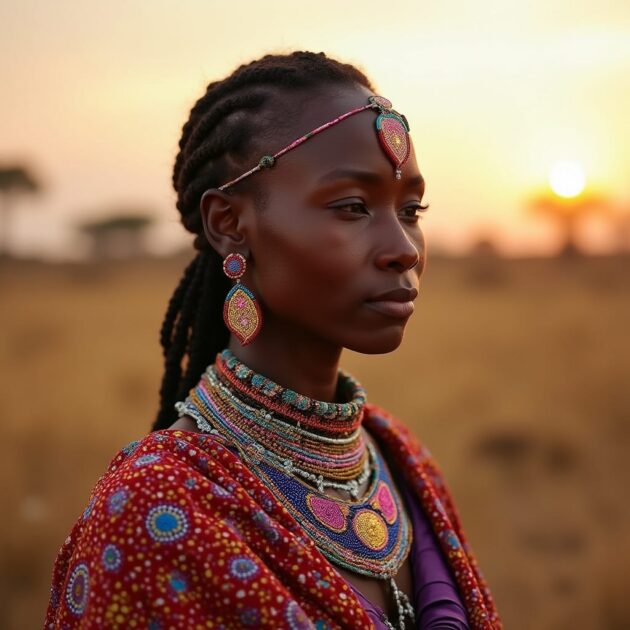
The Maasai of Kenya and Tanzania are instantly recognisable for their vibrant red shukas (cloaks) and elaborate beadwork. The red colour symbolises courage and protection, while the beads—carefully crafted by women—encode social meaning about age, marital status, and tribal identity. A Maasai bride may wear a richly adorned headdress and layers of beaded necklaces, each element narrating her passage into a new phase of life.

A semi-nomadic pastoralist community the Maasai traditional dress

In the Maasai community, every girl traditionally learns beadwork, a practice steeped in cultural importance and responsibility. This art form is not merely decorative—it is a vital expression of identity, storytelling, and generational knowledge. The colours and patterns used in Maasai beadwork communicate deep symbolic meaning, often conveying social roles or emotional messages. Beadwork is also worn during ceremonies such as initiations, weddings, and rites of passage, reinforcing communal bonds through shared visual language.

In Uganda, the gomesi or busuuti is a traditional dress worn by Baganda women. This floor-length, brightly colored garment with puffed sleeves and a sash is both elegant and practical, tailored for the region’s warm climate. The gomesi is typically worn during cultural ceremonies such as weddings, funerals, and introductions, symbolizing respect and tradition. Often paired with a headscarf, the gomesi is a visible marker of Ugandan heritage and pride. Its vibrant appearance and structured design highlight the fashion aesthetics of East Africa while its ceremonial use underscores the importance of ritual and community in African society.

Traditional wear for Baganda

A gomesi, is a traditional Ugandan women’s dress.

In Ethiopia, the netela and shamma are traditional white cotton shawls worn by both men and women.

These garments, adorned with colorful woven borders called tibeb, are draped over the shoulders during religious ceremonies and cultural events. The simplicity of the white fabric contrasted with the intricate embroidery reflects Ethiopia’s rich textile heritage and the spiritual purity often associated with Ethiopian Orthodox traditions. These timeless pieces echo the enduring influence of ancient civilizations and maintain their relevance in contemporary African fashion and identity.

Traditional clothing from Ethiopia

Southern Africa: Regal Skins and Beaded Splendour

In Southern Africa, traditional attire often incorporates animal hides, beads, and vibrant fabrics. Among the Zulu people of South Africa, clothing varies by occasion and social role. For women, the isidwaba, a pleated leather skirt, is worn by married women, often paired with beaded aprons and headbands. Men may wear the ibheshu, a leather garment covering the lower body during cultural ceremonies. Beadwork is central to Zulu attire, with specific colours and patterns conveying messages—white beads symbolising purity, and blue representing loyalty. These garments represent not just dress, but a deeply symbolic language of identity rooted in ancestral values and spiritual continuity.

For women, the isidwaba, a pleated leather skirt, is worn by married women, often paired with beaded aprons and headbands. Men may wear ibheshu, a leather garment covering the lower body, during cultural ceremonies. Beadwork is central to Zulu attire, with specific colours and patterns conveying messages; for instance, white beads symbolise purity, while blue beads represent loyalty.

An isidwaba is a traditional leather skirt worn by married Zulu women in South Africa. An ibheshu, made from animal hides, is a traditional garment worn by Zulu men.

In Eswatini, the emahiya is a traditional wrap worn by women, featuring bold patterns and vibrant colours. During the annual Reed Dance, young women don beaded skirts and sashes, showcasing the intricate artistry of Swazi craftsmanship and reinforcing their cultural values. In Botswana, the Herero dress—influenced by Victorian missionaries—is a voluminous gown with long sleeves and a headscarf shaped like cow horns, reflecting the community’s pastoral heritage and historical adaptation. These garments continue to evolve as modern symbols of heritage preservation and social pride, particularly among youth reclaiming indigenous identity through fashion.

North Africa: Flowing Robes and Ornate Embroidery

North African traditional attire is heavily influenced by Arab, Berber, and Islamic cultures. In Morocco, the djellaba is a long, loose-fitting robe worn by both men and women. Made from cotton or wool, the djellaba often features a pointed hood and intricate embroidery, showcasing the region’s rich design heritage. For special occasions, Moroccan women may wear a kaftan—a robe decorated with sequins and beads—which has gained global popularity for its elegance. In Egypt, the galabeya is a staple garment in rural areas, worn with turbans or headscarves. Meanwhile, in Tunisia and Algeria, the jellaba also reflects Berber influences, often featuring vibrant colours and geometric embroidery tied to local traditions.

For special occasions, Moroccan women may wear a kaftan, a richly decorated robe adorned with embroidery, sequins, and beads. The kaftan has gained global popularity for its elegance and versatility.

In Egypt, traditional attire includes the galabeya, a long, flowing robe worn by men and women in rural areas. For women, the galabeya may be paired with a headscarf, while men often wear it with a turban or cap.

The jellaba of Tunisia and Algeria shares similarities with the Moroccan djellaba, often featuring vibrant colours and geometric patterns inspired by Berber designs.

Central Africa: Woven Raffia and Symbolic Prints

Central African attire often incorporates natural materials like raffia and bark cloth. Among the Kuba people of the Democratic Republic of Congo, Kuba cloth is a masterpiece of textile art. Made from woven raffia, the fabric is dyed and embroidered with geometric patterns and worn during ceremonies. Women wear wraparound skirts called ntshak, paired with beaded belts and jewelry. In Cameroon, the toghu fabric—embroidered with vibrant thread on black cotton—is a mark of prestige and royal identity among the Bamileke people, especially during community events and funerals.

Materials and Craftsmanship

The materials used in African traditional attire reflect the continent’s natural resources and artisanal skills.

Textiles like cotton, silk, and wool are often handwoven on traditional looms. In West Africa, adire (tie-dye cloth) and bogolan (mud cloth) from Mali showcase intricate dyeing techniques. Adire, created by Yoruba women, features indigo patterns made through resist-dyeing, while bogolan uses fermented mud to craft earthy, geometric designs.

Beadwork is another hallmark of African attire, especially in East and Southern Africa. Beads—crafted from glass, bone, or seeds—are meticulously strung into necklaces, bracelets, and clothing embellishments. Leather and animal hides are widely used in pastoral communities such as the Zulu and Maasai for garments like skirts and cloaks.

Raffia, derived from palm trees, is essential in Central African textiles, while bark cloth, made from tree bark, is used by the Baganda of Uganda. These sustainable materials reflect a long-standing tradition of ecological harmony in African craftsmanship.

Contemporary Influence and Global Impact

African traditional attire has transcended borders, influencing global fashion and pop culture. Designers like Lisa Folawiyo in Nigeria and Laduma Ngxokolo in South Africa have reimagined traditional fabrics like ankara and Xhosa beadwork for contemporary fashion runways. The vibrant prints of Ankara and Kente have inspired international brands, appearing in everything from haute couture to streetwear.

The rise of Afrocentric fashion has empowered diaspora communities to reconnect with their roots. Events like Africa Fashion Week and the popularity of headwraps in the U.S. and Europe showcase the global appeal of African aesthetics. Celebrities like Beyoncé and Rihanna have embraced African-inspired designs, amplifying their cultural relevance.

However, the commercialisation of traditional attire raises concerns about cultural appropriation. When non-African designers adopt sacred patterns without acknowledging their origins, they risk diluting cultural meaning. Ethical fashion advocates urge recognition of African artisans and support for local creators to ensure cultural preservation and economic empowerment.

Preservation and Challenges

Preserving African traditional attire requires balancing tradition with modernity. As urbanisation and globalisation increase, many younger generations gravitate toward Western clothing, threatening the survival of indigenous craftsmanship. To counter this, initiatives such as textile cooperatives and fashion schools in countries like Ghana and Nigeria are teaching weaving, dyeing, and beading techniques to a new generation of artisans.

Climate change presents another challenge, impacting the availability of natural resources such as cotton and raffia. In response, many communities are adopting sustainable practices like organic farming and eco-friendly dyeing to preserve their textile traditions while protecting the environment.

Conclusion

African traditional attire is a testament to the continent’s cultural richness and artistic ingenuity. From the regal kente of Ghana to the beaded splendour of the Maasai, these garments are more than fashion—they are living expressions of history, identity, and resilience.

As African designers and global advocates continue to celebrate these traditions, traditional attire remains a powerful symbol of cultural pride and a bridge between past and future. Whether worn in a village ceremony or on a Paris runway, African traditional attire continues to captivate and inspire, reminding the world of the continent’s enduring legacy.

Celebrating the Vibrant Heritage of African Music and Dance

African Dance

African music and dance, vibrant and diverse, weave stories and rhythms, shaping culture and identity

Africa, a continent of unparalleled cultural diversity, is home to a vibrant and intricate tapestry of music and dance traditions that have shaped its identity for centuries. With over 54 countries, thousands of ethnic groups, and countless languages, African music and dance are as diverse as the people who create them.

These art forms are not merely entertainment; they are deeply rooted in the social, spiritual, and political fabric of African societies. From the rhythmic drumming of West Africa to the intricate footwork of Southern African dances, these traditions tell stories of history, community, resistance, and celebration. This blog explores the rich heritage of African music and dance, their cultural significance, their evolution, and their global influence.

The Cultural Significance of African Music and Dance

In African societies, music and dance are inseparable from daily life. They serve as vehicles for storytelling, preserving history, and passing down traditions across generations. Unlike Western traditions, where music and dance are often performed for entertainment or artistic expression, these art forms are deeply functional in Africa.

They accompany rituals, ceremonies, and rites of passage, such as births, initiations, weddings, and funerals. They also play a role in community bonding, spiritual worship, and even political expression.

Music and dance in Africa are communal activities. They bring people together, fostering a sense of unity and shared identity.

For example, among the Yoruba people of Nigeria, music and dance are integral to festivals honouring deities like Sango, the god of thunder. Drummers, singers, and dancers perform in unison, creating a collective experience that strengthens community ties.

Similarly, the Maasai of Kenya and Tanzania use their iconic jumping dance, known as Adumu, during warrior initiation ceremonies, symbolising strength and agility.

Rhythm is the heartbeat of African music and dance.

Polyrhythms, multiple rhythms played simultaneously, are a hallmark of many African musical traditions.

These complex rhythmic patterns, often created by drums, are not just musical but also communicative. In many cultures, drums are considered sacred instruments that convey messages, summon spirits, or mark significant events.

The djembe, a goblet-shaped drum from West Africa, is one such instrument, widely used in Mali, Guinea, and Senegal to accompany dances and rituals.

Regional Diversity in African Music and Dance

Africa’s vastness contributes to its incredible diversity in musical and dance styles. Each region has developed unique traditions influenced by geography, history, and cultural exchange. Below is an overview of some key regional traditions.

West Africa: The Pulse of Drumming and Griot Traditions

West Africa is renowned for its drumming traditions and the role of griots, oral historians and musicians who preserve the history of their people through song. The griot tradition, found among the Mandinka, Wolof, and other ethnic groups, is a cornerstone of West African culture.

Griots, often accompanied by the kora (a 21-stringed harp-lute), sing epic tales of kings, warriors, and ancestors. Their music is both a historical record and a form of social commentary.

Dance in West Africa is equally dynamic, often characterised by vigorous movements and intricate footwork. The Sabar dance of Senegal, performed to the rapid rhythms of the sabar drum, is a prime example.

Dancers move with precision, their bodies responding to the drum’s call-and-response patterns. Similarly, the Kpanlogo dance of Ghana’s Ga people blends traditional rhythms with modern influences, reflecting the region’s history of cultural fusion.

East Africa: Melodic Harmonies and Ritual Dances

East African music and dance are marked by melodic instruments and communal participation. In Kenya and Tanzania, the taarab music of the Swahili coast blends African, Arab, and Indian influences, featuring instruments like the oud and violin.

Taarab performances often accompany weddings and social gatherings, with singers delivering poetic lyrics about love and life.

The Maasai’s Adumu dance, mentioned earlier, is a striking example of East African dance. Performed by young warriors, it involves high jumps and synchronised movements, showcasing physical prowess and group cohesion. In Uganda, the Amaggunju dance, traditionally performed for the Buganda kings, uses rapid footwork and expressive gestures to tell stories of royal lineage.

Southern Africa: Polyphony and Liberation Movements

Southern African music is known for its rich vocal harmonies and polyphonic singing. The mbube style, popularised globally by groups like Ladysmith Black Mambazo, features layered vocals that create a hauntingly beautiful sound. This style, originating among the Zulu people of South Africa, has roots in both sacred and secular traditions.

Dance in Southern Africa often reflects historical and political contexts. The gumboot dance, born in South Africa’s mining communities during the apartheid era, is a powerful example. Miners, restricted from speaking, used rhythmic stomping and slapping of their boots to communicate. Today, gumboot dancing is a celebrated art form, symbolising resilience and creativity in the face of oppression.

Central Africa: The Forest’s Rhythmic Pulse

Central African music and dance are deeply tied to the region’s lush rainforests and spiritual traditions.

The Baka people of Cameroon and Gabon, for instance, use polyphonic singing and percussion to accompany their forest rituals.

Their music, often performed during hunting or healing ceremonies, mimics the sounds of the natural world.

The Makosa dance from Cameroon, popularised in the 20th century, blends traditional rhythms with modern influences like jazz and rumba.

It’s fluid, hip-shaking movements have made it a staple in African dance halls and a precursor to global styles like soukous.

North Africa: The Influence of Arab and Berber Traditions

North African music and dance reflect a blend of indigenous Berber, Arab, and Mediterranean influences. In Morocco, the Gnawa music tradition combines spiritual chants with hypnotic rhythms, often performed during healing rituals. The accompanying dance, characterised by acrobatic movements and trance-like states, is believed to connect participants with spiritual forces.

In Egypt, the tanoura dance, a Sufi whirling dance, is both a spiritual and artistic expression. Dancers spin continuously, their colourful skirts creating mesmerising patterns, symbolising the soul’s journey toward divine unity.

Instruments: The Soul of African Music

African music is defined by its instruments, which vary widely across regions but share a common role in storytelling and ritual.

Drums, such as the djembe, talking drum, and ngoma, are central to many traditions, serving as both musical and communicative tools.

The talking drum, used by the Yoruba and Hausa people, can mimic human speech through variations in pitch and rhythm.

Stringed instruments like the kora and ngoni are prevalent in West Africa, offering melodic accompaniment to vocal performances.

The mbira, or thumb piano, is a staple in Southern African music, particularly among the Shona people of Zimbabwe.

Its delicate, resonant tones are often used in spiritual ceremonies to invoke ancestors.

Wind and percussion instruments, such as the balafon (a wooden xylophone) and shekere (a beaded gourd rattle), add texture to African music.

These instruments are often crafted from natural materials, reflecting the deep connection between African cultures and their environment.

The Role of Dance in African Societies

Dance in Africa is more than a physical act; it is a language of expression, communication, and identity.

Each dance has a specific purpose, whether to celebrate, mourn, or mark a transition.

For example, the Kuku dance of the Susu people in Guinea is performed during harvest festivals to give thanks for abundance, while the Bikutsi dance of Cameroon’s Beti people is a lively celebration of femininity and community.

Dances are often gender-specific, with movements reflecting social roles. Among the Dogon people of Mali, men perform the Dama dance to honour the dead, using elaborate masks and stilts to represent spiritual beings.

Women, meanwhile, may perform dances like the Eswe of the Bamileke in Cameroon, which celebrates fertility and motherhood.

Call-and-response, a key feature of African music, extends to dance. Dancers respond to the rhythms and calls of drummers or singers, creating a dynamic interplay.

This interaction is evident in the Agbadza dance of the Ewe people in Ghana and Togo, where dancers’ movements mirror the drum’s intricate patterns.

Evolution and Modernisation

While African music and dance are deeply traditional, they are not static. Over time, they have evolved through contact with other cultures, colonisation, and globalisation.

The transatlantic slave trade, for instance, carried African rhythms and movements to the Americas, giving rise to genres like jazz, blues, samba, and salsa.

In Brazil, the capoeira dance, a martial art disguised as dance, reflects the resilience of enslaved Africans who preserved their culture under oppression.

In the 20th century, African music began to incorporate Western instruments and styles.

Highlife in Ghana and Nigeria blended traditional rhythms with jazz and brass bands, while Afrobeat, pioneered by Fela Kuti, fused African percussion with funk and political lyrics.

Today, genres like Afrobeats (distinct from Afrobeat) dominate global charts, with artists like Burna Boy and Wizkid blending African rhythms with pop, hip-hop, and electronic music.

Dance has also modernised. Urban dance styles like Azonto from Ghana and Kuduro from Angola have gained international popularity, driven by social media and music videos.

These dances retain traditional elements, such as rhythmic precision and storytelling, while embracing contemporary influences.

Global Influence and Challenges

African music and dance have left an indelible mark on the world. From the syncopated rhythms of jazz to the hip-shaking moves of reggaeton, African traditions have shaped global culture.

Festivals like WOMAD (World of Music, Arts and Dance) and performances by groups like the Soweto Gospel Choir have brought African artistry to international audiences.

However, these traditions face challenges. Globalisation and urbanisation threaten indigenous practices, as younger generations gravitate toward modern genres.

Preservation efforts, such as cultural festivals and education programs, are crucial to maintaining these traditions.

Additionally, the commercialisation of African music can sometimes strip it of its cultural context, reducing sacred rituals to mere entertainment.

Conclusion


The rich tradition of African music and dance is a testament to the continent’s cultural depth and resilience.

These art forms are more than aesthetic expressions; they are the lifeblood of African societies, carrying the weight of history, spirituality, and community.

From the polyrhythms of West African drums to the soulful harmonies of Southern African choirs, African music and dance continue to captivate and inspire. As they evolve and spread globally, they remind us of the power of culture to connect, heal, and celebrate the human spirit. By honouring and preserving these traditions, we ensure that the heartbeat of Africa continues to resonate for generations to come.

The Vibrant Diversity of African Cultures and Languages

Vibrant Diversity

Africa’s diversity is reflected in its 3,000+ ethnic groups and 2,000+ languages, shaped by a rich history.

Africa, often referred to as the “cradle of humanity,” is a continent of unparalleled cultural and linguistic diversity.

Home to over 1.4 billion people across 54 countries, it boasts thousands of ethnic groups, languages, and cultural practices that have evolved over millennia. This diversity is rooted in Africa’s deep history, from ancient civilisations to colonial disruptions and modern nation-building.

By tracing the chronological development of Africa’s cultures and languages, we can better understand its rich tapestry and global influence. This blog explores the evolution of African cultural and linguistic diversity, from prehistoric origins to the present day, highlighting key periods and their impact on the continent’s identity.

Prehistoric Foundations: The Dawn of Diversity (Before 3000 BCE)

Africa’s cultural and linguistic diversity began with the emergence of early human societies. Archaeological evidence, such as fossils found in Ethiopia’s Omo Valley dating back 200,000 years, confirms Africa as the birthplace of Homo sapiens. These early communities, including hunter-gatherer groups like the San in Southern Africa and the Hadza in East Africa, developed distinct ways of life shaped by their environments. The San, for example, created intricate rock art and oral traditions, laying the foundation for cultural diversity.

Linguistic diversity also emerged early. Linguists estimate that proto-languages, ancestors of modern African language families, began forming as communities spread across diverse ecosystems, deserts, savannas, forests, and coasts. The four major language families, Niger-Congo, Afroasiatic, Nilo-Saharan, and Khoisan, likely originated during this period. Khoisan languages, characterised by click consonants, were spoken by Southern African hunter-gatherers, while proto-Niger-Congo languages emerged in West Africa, setting the stage for the Bantu migrations.

These early societies, though small, established unique cultural practices, from storytelling to spiritual beliefs tied to nature, which remain evident in modern African traditions.

Ancient Civilisations and Cultural Flourishing (3000 BCE–1000 CE)

By 3000 BCE, Africa saw the rise of complex societies that enriched its cultural and linguistic landscape. In Northeast Africa, the Kingdom of Aksum (modern-day Ethiopia and Eritrea) developed a sophisticated culture, blending indigenous practices with influences from trade across the Red Sea. Aksumites spoke Ge’ez, an Afroasiatic language, and their script became one of Africa’s earliest writing systems, used in religious texts like the Bible after the kingdom adopted Christianity in the 4th century CE. Aksum’s art, architecture, and coinage reflected a fusion of African, Arabian, and Greco-Roman elements, showcasing early cultural syncretism.

In West Africa, modern Nigeria’s Nok culture (circa 1000 BCE–300 CE) produced intricate terracotta sculptures, indicating advanced artistic traditions. The Nok likely spoke proto-Bantu languages, part of the Niger-Congo family, which spread as Bantu-speaking groups migrated across Central, East, and Southern Africa between 1000 BCE and 500 CE.

These migrations, driven by agricultural advancements like yam and sorghum cultivation, spread languages and cultural practices, such as ironworking and communal governance, across vast regions. By 500 CE, Bantu-speaking communities had established diverse societies, each adapting to local environments, from the Swahili coast to the Great Zimbabwe precursor societies.
North Africa’s ancient civilisations, like the Kingdom of Kemet (Egypt), also contributed to linguistic and cultural diversity. Egyptian hieroglyphs, an Afroasiatic writing system, recorded a rich art, religion, and governance culture.

Meanwhile, Berber-speaking communities in the Maghreb developed distinct pastoral and trading cultures, with Tamazight languages diversifying into dialects still spoken today. These early civilisations laid the groundwork for Africa’s mosaic of ethnic identities, with each group developing unique customs, from Egyptian mummification to Nok pottery.

The Rise of Empires and Trade Networks (1000 CE–1500 CE)

The medieval period saw the emergence of powerful African empires that further diversified cultural and linguistic landscapes through trade, conquest, and cultural exchange. In West Africa, the Ghana Empire (circa 300–1200 CE) thrived on the gold and salt trade, fostering a cosmopolitan culture among Mande-speaking peoples.

The empire’s capital, Kumbi Saleh, was a melting pot where Islamic influences from North Africa blended with indigenous animist beliefs, creating syncretic practices like the use of griots, or historians and musicians who preserved Mande history in song.

The Mali Empire (1235–1600 CE), succeeding Ghana, amplified this cultural fusion. Under rulers like Mansa Musa, Mali became a global learning centre in Timbuktu, where scholars wrote in Arabic and local languages like Songhay and Fulfulde.

The empire’s wealth attracted traders from the Middle East and Europe, spreading Islamic art, architecture, and literacy while reinforcing the Niger-Congo language family’s dominance in West Africa. The Songhai Empire (circa 1400–1591 CE) continued this legacy, with Songhai becoming a primary language alongside Hausa and Wolof.

In East Africa, the Swahili city-states (circa 800–1500 CE) emerged along the coast, blending Bantu languages with Arabic to create Kiswahili, a lingua franca of trade. Swahili culture, characterised by coral-stone architecture and poetry, reflected influences from Persia, India, and Arabia, driven by Indian Ocean trade. Meanwhile, in Southern Africa, the Kingdom of Mapungubwe (circa 1075–1220 CE) showcased advanced goldwork and trade with Asia, with Shona-speaking communities laying cultural foundations for the later Great Zimbabwe.

These empires and trade networks fostered linguistic diversity by spreading languages like Arabic, Kiswahili, and Hausa. At the same time, cultural practices, such as Mali’s epic poetry or Swahili’s dhow-building, reflected local adaptations. However, this period also saw tensions, as ethnic groups competed for resources, shaping distinct identities like the Yoruba in Nigeria or the Akan in Ghana.

Colonial Disruption and Cultural Resilience (1500 CE–1900 CE)

The arrival of European colonial powers in the 15th century profoundly impacted Africa’s cultural and linguistic diversity. The transatlantic slave trade (1500–1800) forcibly removed millions of Africans, primarily from West and Central Africa, disrupting communities and scattering languages like Yoruba, Igbo, and Kongo to the Americas.

This diaspora created new African-influenced cultures abroad, but in Africa, it weakened ethnic groups and eroded oral traditions as communities were decimated.

By the 19th century, colonial partition under the 1884 Berlin Conference carved Africa into arbitrary borders, often splitting ethnic groups and languages. For example, the Ewe people were divided between British-controlled Gold Coast (Ghana) and German-controlled Togoland, complicating cultural cohesion. Colonial powers imposed European languages—English, French, Portuguese, and German—as administrative tools, marginalising indigenous languages. Dutch and British colonisation in South Africa introduced Afrikaans, a creole language, while suppressing Khoisan and Nguni languages like Xhosa and Zulu.

Despite these disruptions, African cultures showed resilience. Secret societies, like the Poro and Sande among the Mende in Sierra Leone, preserved traditional knowledge. Resistance movements, such as the Zulu under Shaka (early 1800s), reinforced cultural pride through military and social organisation.

In West Africa, the Sokoto Caliphate (1804–1903) unified Hausa and Fulani peoples under Islamic governance, promoting Hausa as a literary language while maintaining ethnic diversity. Similarly, the Asante Empire in Ghana preserved Akan culture through oral histories and kente cloth, even under British pressure.

Colonialism also introduced Christianity, which blended with indigenous beliefs to create syncretic religions, like the Aladura churches among the Yoruba. These adaptations ensured that cultural practices, from music to dance, endured, even as colonial languages began reshaping linguistic landscapes.

Post-Colonial Revival and Challenges (1900 CE–2000 CE)

The 20th century marked Africa’s struggle for independence and efforts to reclaim cultural and linguistic identity. As countries gained independence, Ghana in 1957, Nigeria in 1960, and others through the 1960s, leaders like Kwame Nkrumah and Jomo Kenyatta emphasised cultural revival. Pan-Africanism, championed by figures like W.E.B. Du Bois, promoted unity among Africa’s diverse ethnic groups, celebrating shared heritage through festivals like FESMAN (1966) in Senegal.

However, colonial legacies posed challenges. Newly independent nations inherited artificial borders, leading to ethnic conflicts, such as the Nigerian Civil War (1967–1970) between Igbo, Yoruba, and Hausa groups. Linguistic diversity complicated nation-building, as governments often adopted colonial languages—English in Nigeria, French in Senegal—as official languages to unify diverse populations. These marginalised indigenous languages, with only a few, like Kiswahili in Tanzania and Kenya, have gained official status.

Cultural revival efforts flourished despite these challenges. In Nigeria, the Yoruba-language theatre of Hubert Ogunde popularised indigenous storytelling, while in Senegal, Léopold Sédar Senghor’s Négritude movement celebrated African art and identity. Music genres like highlife in Ghana, jùjú in Nigeria, and mbalax in Senegal blended traditional rhythms with modern influences, showcasing cultural dynamism. Meanwhile, languages like Amharic in Ethiopia and Zulu in South Africa were standardised for education, preserving linguistic diversity.

Globalisation introduced new influences, from Hollywood to Nollywood, Nigeria’s booming film industry, which promoted Yoruba, Hausa, and Igbo languages. However, urbanisation and migration threatened smaller languages, like those of the Khoisan, with some facing extinction. By 2000, UNESCO estimated that Africa had over 2,000 languages, but many were endangered due to globalisation and dominant national languages.

Modern Africa: Celebrating and Preserving Diversity (2000 CE–Present)

Today, Africa’s cultural and linguistic diversity is both celebrated and challenged in a globalised world. The continent is home to over 3,000 ethnic groups and an estimated 2,000–3,000 languages, roughly one-third of the world’s total. Nigeria alone has over 500 languages, including Yoruba, Hausa, and Igbo, while Ethiopia’s 80+ ethnic groups speak languages from the Afroasiatic and Nilo-Saharan families. Kiswahili, now an official language of the African Union, is spoken by over 150 million people, reflecting Africa’s linguistic influence.

Cultural festivals, like Nigeria’s Durbar and South Africa’s Reed Dance, showcase ethnic traditions, from Hausa horsemanship to Zulu beadwork. Digital platforms have amplified African voices, with musicians like Burna Boy (Nigeria) and Black Coffee (South Africa) blending Afrobeat and amapiano with global sounds. Nollywood, producing over 2,500 films annually, promotes languages like Yoruba and pidgin English, while social media platforms like X highlight cultural pride, with users sharing traditional recipes or dances.

Yet, challenges persist. Urbanisation and education systems favouring English, French, or Arabic threaten smaller languages, with UNESCO reporting that half of Africa’s languages could vanish by 2100. Efforts like South Africa’s 11 official languages policy, including Xhosa and Sesotho, aim to preserve linguistic diversity, but implementation is uneven. Cultural homogenization, driven by global media, also risks diluting traditions, though initiatives like Ghana’s “Year of Return” (2019) have revitalised diaspora connections to African heritage.

Technology offers hope for preservation. Apps like Twi Teacher (for Ghana’s Akan language) and digital dictionaries for languages like Shona and Wolof support language learning. Organisations like the African Language Materials Archive digitise oral traditions, while universities in Kenya and South Africa develop curricula in indigenous languages. Meanwhile, cultural exchanges, such as Nigeria’s collaboration with Brazil to promote Yoruba culture, highlight Africa’s global influence.

Conclusion: A Tapestry of Resilience

Africa’s cultural and linguistic diversity is a testament to its resilience through millennia of change. From prehistoric hunter-gatherers to ancient empires, medieval trade networks, colonial disruptions, and modern globalisation, the continent has woven a complex tapestry of over 3,000 ethnic groups and 2,000 languages. Each period—marked by innovation, adaptation, and resistance—has enriched this diversity, from Aksum’s Ge’ez script to Nollywood’s cinematic storytelling. While challenges like language loss and cultural homogenization persist, Africa’s commitment to celebrating its heritage through festivals, education, and technology ensures its legacy endures. As the continent navigates the 21st century, its diverse cultures and languages remain a vibrant gift to the world, reflecting a history of unity in diversity.

The Ghanaian Empire: A Journey Through the Land of Gold

Ghana Empire

Welcome, dear reader, to a story of wealth, power, and resilience—a tale of the Ghanaian Empire, one of West Africa’s greatest medieval kingdoms. Known as Wagadou to its people, this empire shone brightly from around the 3rd to the 13th century, earning fame as the “Land of Gold.” Its story is not just about riches but about the ingenuity, strength, and spirit of the Soninke people who built a legacy that echoes today. Let’s embark on this journey together, exploring the crucial moments that made Ghana an empire, from its humble beginnings to its eventual decline. Whether you’re new to history or a seasoned explorer, I’ll guide you gently through this vibrant chapter of the past.

The Seeds of an Empire: Origins of Ghana (c. 3rd Century CE)

Imagine a vast, sun-drenched savannah in West Africa, where the Senegal and Niger rivers carve paths through grasslands. This is where the Ghanaian Empire, or Wagadou, began, in what is now southeastern Mauritania, western Mali, and eastern Senegal. The Soninke people, a Mande-speaking group, were the heart of this land. They were farmers, herders, and skilled ironworkers, living in a region blessed with fertile soil and abundant resources.

The name “Ghana” didn’t refer to the modern country of Ghana but came from the Soninke word for “warrior king.” The empire’s true name, Wagadou, meant “Land of Herds,” reflecting the Soninke’s pastoral roots. According to oral traditions, the empire’s story began with a legendary figure, Dinga Cisse, a warrior who united Soninke clans around the 3rd century CE. While the exact date is uncertain, archaeological evidence suggests complex societies thrived here as early as 1600 BCE, with ironworking and trade laying the groundwork for what would become an empire.

A crucial moment came with the introduction of the camel to the western Sahara around the 3rd century CE. Camels revolutionised trade, allowing goods to cross the harsh desert more efficiently. The Soninke, strategically positioned between the Sahara to the north and gold-rich forests to the south, seized this opportunity. They began trading gold, ivory, and salt with North African merchants, setting the stage for Ghana’s rise. This early mastery of trade was the first spark that would ignite the empire’s greatness.

The Rise of a Trading Power (c. 6th–8th Century)

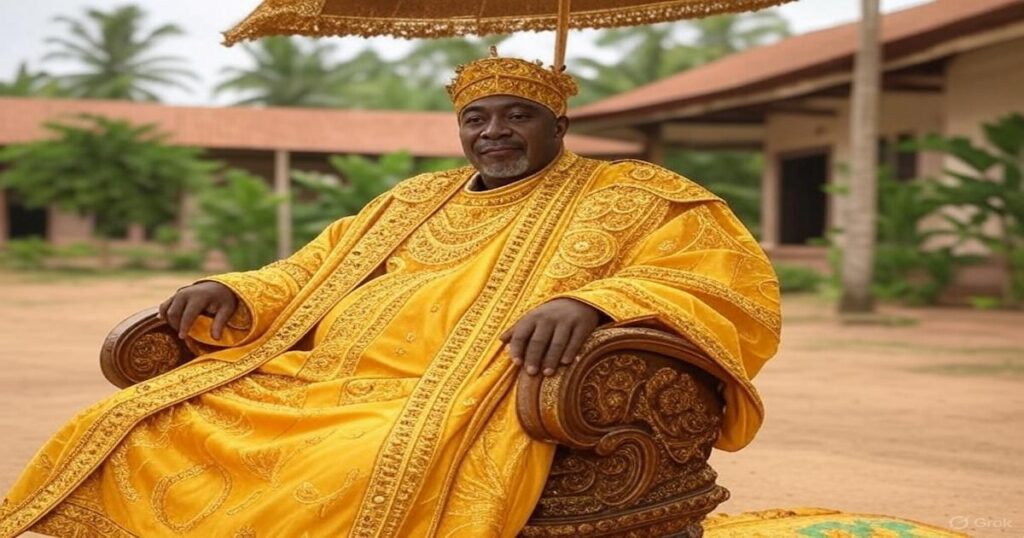
By the 6th century, Ghana was no longer just a collection of villages—it was becoming a centralised state. The Soninke united under strong leaders, forming a kingdom that controlled key trade routes. This was a pivotal moment: the shift from local chiefdoms to a structured monarchy. The king, or “Ghana,” held both political and spiritual power, seen as a divine ruler who ensured prosperity.

The empire’s wealth grew from its control of the trans-Saharan trade. Gold, mined in southern forests by independent kingdoms, flowed through Ghana’s markets. The kings cleverly monopolised gold nuggets, leaving gold dust for traders, which ensured their wealth while keeping trade vibrant. Salt, vital for preserving food, came from the Sahara, and Ghana’s position made it the perfect middleman. Ivory, kola nuts, and even enslaved people were also traded, linking West Africa to North Africa, the Middle East, and Europe.

Another key moment was the establishment of Koumbi Saleh as the capital, likely by the 8th century. This bustling city, located about 200 miles north of modern Bamako, Mali, was a marvel. It had two towns: one for Muslim traders with mosques and scholars, and another for the king and his court. Al-Bakri, an 11th-century Arab geographer, described Koumbi Saleh as a thriving hub with wells, irrigated fields, and a population possibly exceeding 20,000. The city’s dual structure welcomed diverse cultures, fostering trade and ideas. This cosmopolitan spirit was a cornerstone of Ghana’s power.

The Golden Age: Prosperity and Power (8th–11th Century)

The 8th to 11th centuries were Ghana’s golden age, a time when the empire shone brightest. This period was marked by economic prosperity, military strength, and political sophistication, cementing Ghana’s status as a true empire. Let’s explore the crucial moments that defined this era.

Control of Trans-Saharan Trade

The trans-Saharan trade was the lifeblood of Ghana’s wealth. Caravans of camels, carrying gold and salt across the Sahara, made the empire a vital link between sub-Saharan Africa and the Mediterranean world. The kings imposed taxes on every load passing through their territory, filling royal coffers. They also controlled key markets like Awdaghust, a northern trade hub, ensuring their dominance.

A significant moment came in the 8th century when Arab geographers, like Ibrahim al-Fazari, began calling Ghana the “Land of Gold.” This reputation spread, drawing more traders and boosting the empire’s influence. The kings’ monopoly on gold nuggets ensured they amassed immense wealth, with legends claiming their dogs wore golden collars and their horses slept on plush carpets. While these tales may be exaggerated, they reflect Ghana’s extraordinary prosperity.

Sophisticated Governance

Ghana’s political system was another key to its success. The king ruled as an absolute monarch, supported by a council of advisors, including military leaders and religious figures. Provinces were governed by local rulers who paid tribute to the king, blending centralised control with local autonomy. This system allowed Ghana to manage a vast territory, from the Sahara’s edge to the forests of the south.

The empire’s administration was remarkably advanced. Officials collected taxes, enforced laws, and maintained order. The king’s court was a centre of justice, where disputes were settled, and loyalty was rewarded. This governance structure, described by Al-Bakri, showed Ghana’s ability to unite diverse peoples under one rule, a hallmark of a great empire.

Military Might

A powerful military was essential for protecting trade routes and expanding territory. Al-Bakri claimed the king could field an army of 200,000, including elite cavalry armed with iron weapons. While this number may be inflated, it highlights Ghana’s military strength. The cavalry, with swift horses, allowed rapid responses to threats and conquests of neighbouring states.

A crucial moment was Ghana’s annexation of smaller polities, creating a confederated empire. Tributary states paid taxes and provided soldiers, strengthening Ghana’s reach. The military also defended against nomadic raiders, like the Sanhaja Berbers, ensuring trade routes remained open. This combination of economic control, governance, and military power made Ghana a dominant force in West Africa.

Cultural and Religious Harmony

Ghana’s rulers followed traditional Soninke beliefs, centred on ancestor worship and spiritual rituals. However, the empire welcomed Muslim traders from North Africa, who brought Islam and new ideas. By the 8th century, Islam began influencing the elite, though the kings never fully converted. Koumbi Saleh’s Muslim town, with its mosques and scholars, coexisted peacefully with the royal town, creating a cultural melting pot.

This religious tolerance was a defining moment. It fostered trade with Muslim North Africa and attracted scholars who spread knowledge. The empire’s ability to balance traditional beliefs with Islamic influences strengthened its diplomatic ties and enriched its culture, making it a beacon of learning and commerce.

Challenges on the Horizon (Late 11th Century)

Even at its peak, Ghana faced challenges that foreshadowed its decline. The late 11th century brought external pressures and internal strains, testing the empire’s resilience. Let’s look at the pivotal moments that marked the beginning of Ghana’s struggles.

The Almoravid Invasion (1076 CE)

In 1076, the Almoravids, a Muslim Berber confederation from North Africa, launched a holy war against Ghana. Led by Abu Bakr, they sought to spread Islam and control trade routes. They captured Awdaghust in 1054 and sacked Koumbi Saleh in 1076, disrupting the empire’s heart. This invasion was a turning point, weakening Ghana’s grip on trade and shaking its prestige.

The Almoravids’ rule over Ghana was brief, but their impact was lasting. Their flocks overgrazed farmlands, contributing to desertification, and their interference disrupted trade networks. The invasion exposed Ghana’s vulnerability to external forces, planting seeds of decline.

Environmental and Economic Shifts

The environment also played a role. The Sahel region, where Ghana thrived, was prone to droughts. By the late 11th century, reduced rainfall strained agriculture, which supported the empire’s population. Overgrazing by nomadic herders, including the Almoravids, worsened land degradation, making it harder to sustain Koumbi Saleh’s large population.

At the same time, new trade routes began bypassing Ghana. The rise of eastern routes, controlled by emerging powers like the Sosso, diverted commerce away from Koumbi Saleh. These economic shifts eroded Ghana’s wealth, challenging its dominance.

The Decline of Ghana (12th–13th Century)

The 12th century saw Ghana’s gradual decline, as internal divisions and external pressures took their toll. The empire, once a towering giant, began to crumble. Here are the crucial moments that marked its fall.

Internal Conflicts and Rebellions

The Almoravid invasion weakened Ghana’s unity, encouraging subject peoples to rebel. The Susu, a group under Ghana’s rule, broke free in the late 12th century, seizing Koumbi Saleh in 1203 under their leader Sumanguru. This rebellion was a devastating blow, as the capital was the empire’s political and economic heart.

Internal rivalries among the Soninke elite also fractured the empire. Power struggles over succession and resources weakened centralised control, making it harder to govern distant provinces. Without unity, Ghana struggled to respond to external threats.

The Rise of the Sosso and Mali

Sumanguru’s Sosso Kingdom briefly dominated the region, moulding Ghana’s provinces into a short-lived empire. His harsh rule, however, sparked resentment. In 1240, Sundiata Keita, a Mande leader, defeated Sumanguru at the Battle of Kirina, founding the Mali Empire. Sundiata incorporated what remained of Ghana into his new empire, ending its independence.

This moment was the final curtain for Ghana. The Mali Empire, building on Ghana’s trade networks and administrative traditions, became West Africa’s new powerhouse. Ghana’s legacy lived on, but its days as an empire were over.

The Legacy of the Ghanaian Empire

Though the Ghanaian Empire fell, its impact endures. It laid the foundation for West Africa’s great empires, like Mali and Songhai, which inherited its trade routes and governance systems. The empire’s role in spreading Islam and fostering cultural exchange shaped the region’s identity.

Ghana’s story also inspired modern Africa. When the Gold Coast gained independence in 1957, it took the name Ghana, honouring the ancient empire’s legacy of strength and unity. Today, the empire’s history reminds us of Africa’s rich past, challenging stereotypes and celebrating its contributions to global civilisation.

Crucial Moments That Made Ghana an Empire

Let’s reflect on the key moments that transformed Ghana into an empire:

Camel-Driven Trade (3rd Century CE): The introduction of camels revolutionised trans-Saharan trade, positioning the Soninke as key intermediaries in the gold and salt trade.

Centralised Monarchy (6th Century): The unification of Soninke clans under a strong king created a structured state, laying the empire’s foundation.

Koumbi Saleh as Capital (8th Century): The establishment of a cosmopolitan capital fostered trade, culture, and governance, making Ghana a regional hub.

Trans-Saharan Trade Dominance (8th–11th Century): Control of the gold and salt trade brought immense wealth, earning Ghana fame as the “Land of Gold.”

Sophisticated Governance and Military (8th–11th Century): A centralised administration and powerful army enabled Ghana to govern a vast territory and protect its interests.

Cultural Harmony (8th–11th Century): Balancing traditional beliefs with Islamic influences strengthened trade ties and enriched Ghana’s culture.

Almoravid Invasion (1076 CE): The sacking of Koumbi Saleh marked the beginning of decline, exposing Ghana’s vulnerabilities.

Susu Rebellion and Sosso Rise (1203): The loss of Koumbi Saleh to the Susu weakened Ghana, paving the way for its fall.

Incorporation into Mali (1240): Sundiata’s victory ended Ghana’s independence, but its legacy shaped the Mali Empire.

A Warm Farewell to Ghana’s Story

As we close this journey, I hope you’ve felt the pulse of the Ghanaian Empire, its triumphs, struggles, and enduring spirit. From a cluster of Soninke villages to a dazzling empire, Ghana’s story is one of human ingenuity and resilience. Its kings, traders, and warriors built a world where gold flowed, cultures mingled, and power thrived. Even in its fall, Ghana left a legacy that inspires pride and wonder.

Thank you for walking this path with me. If you’re curious to learn more about West Africa’s empires or want to share your thoughts, I’m here to listen. Let’s keep celebrating the stories that make this continent so beautifully connected.