

African traditional attire weaves a vibrant tapestry of culture, identity, and artistry across the continent.
African Distinctive Traditional Attire: A Tapestry of Culture, Identity, and Artistry
Africa, a continent of unparalleled diversity, is home to thousands of ethnic groups, each with its unique cultural heritage, traditions, and sartorial expressions. African traditional attire is more than just clothing; it is a vibrant canvas that tells stories of African history, identity, spirituality, and social status. This blog explores the significance, styles, materials, and contemporary influence of African traditional attire, celebrating its role in preserving heritage and shaping global African fashion.
From the intricate beadwork of the Maasai to the colourful Kente cloth of the Ashanti, African traditional attire weaves a vibrant tapestry of culture, identity, and artistry across the continent, reflecting the diverse heritage celebrated throughout African history, art, and fashion movements. This blog explores the significance, styles, materials, and contemporary influence of African traditional attire, celebrating its role in preserving heritage and inspiring modern African designers.
The Cultural Significance of African Traditional Attire
Traditional attire in Africa is deeply symbolic, serving as a visual language that communicates identity, status, and belonging. Clothing often conveys messages about a person’s tribe, marital status, age, or role within the community. For instance, among the Yoruba of Nigeria, specific colours and patterns in aso-oke fabric may signify a celebratory occasion like a wedding or a solemn event like a funeral. Similarly, the Zulu people of South Africa use beaded patterns to encode messages about love, fertility, or social standing.
For instance, among the Yoruba of Nigeria, specific colours and patterns in aso-oke fabric may signify a celebratory occasion like a wedding or a solemn event like a funeral. Similarly, the Zulu people of South Africa use beaded patterns to encode messages about love, fertility, or social standing.
Beyond personal expression, traditional attire is a marker of cultural pride. In many African societies, wearing traditional clothing during ceremonies, festivals, or rites of passage reinforces communal bonds and honours ancestral traditions. For example, during the Reed Dance ceremony in Eswatini, young women wear colourful beaded skirts and sashes, symbolising purity and cultural unity. These garments are not merely decorative but are imbued with spiritual and historical significance.
For example, during the Reed Dance ceremony in Eswatini, young women wear colourful beaded skirts and sashes, symbolising purity and cultural unity. These garments are not merely decorative but are imbued with spiritual and historical significance.
Traditional attire also serves as a form of resistance and resilience. During colonial eras, many African communities preserved their cultural identities through clothing, defying attempts to erase their heritage. Today, traditional attire continues to be a powerful statement of decolonisation and self-affirmation, especially in the face of globalisation and Western fashion influences.
Regional Diversity in African Traditional Attire
Africa’s vastness encompasses a multitude of climates, histories, and cultural practices, resulting in a stunning variety of traditional clothing. Below, we explore some iconic styles from different regions of the continent, each deeply rooted in its local heritage, identity, and expression of cultural pride.
West Africa: Vibrant Fabrics and Regal Elegance
West Africa is renowned for its bold, colourful textiles and elaborate designs. One of the most iconic fabrics is kente, originating from the Ashanti people of Ghana. Kente is a handwoven cloth made from silk and cotton, featuring intricate geometric patterns in vibrant hues like red, gold, green, and blue. Each colour and pattern carries specific meanings; for example, gold represents wealth and fertility, while green symbolises growth and renewal. Traditionally, kente was reserved for royalty and significant occasions, but today it is worn widely and has become a global symbol of African pride.
Ghana, Kente is also referred to as “Nwentoma” which simply means woven cloth.
This treasured fabric is not just an emblem of Ghanaian royalty, but a profound expression of West African craftsmanship. The weaving of kente involves age-old techniques passed down through generations, rooted in the cultural legacy of the Ashanti Kingdom. As it evolves in contemporary fashion, kente remains a vital symbol in festivals, weddings, and diasporic identity, playing a key role in the global celebration of African heritage. Its popularity has inspired artists and designers, solidifying its place in both traditional attire and modern design movements.






In Nigeria, the aso-oke fabric, woven by the Yoruba, is a staple for ceremonial wear.
This luxurious textile, often seen at weddings and festivals, is a hallmark of Nigerian cultural identity. The fabric is used to create traditional garments like the flowing agbada for men and the intricate gele headwraps for women—both of which serve as expressions of beauty, respect, and status. Aso-oke continues to influence global fashion trends, with modern designers incorporating it into high-end collections that elevate African aesthetics and promote pride in indigenous craftsmanship across the diaspora.
Nigerias’ the aso-oke fabric


Another notable West African attire is the boubou, a loose-fitting robe worn across the region, particularly in Senegal and Mali.
The grand boubou, known for its flowing elegance and detailed embroidery, is a staple of West African fashion and a symbol of status and refinement. In Senegal, the boubou is worn with pride during religious festivals and formal gatherings, while in Mali, it often reflects the wearer’s age, gender, and regional origin. As with many traditional garments, the boubou has inspired modern Afrocentric designs, bridging heritage and contemporary style in both local and global fashion scenes.
Senegals’ boubou attire


Malis’ boubou attire


East Africa: Beadwork and Pastoral Elegance
East African traditional attire often uses natural materials and intricate adornments.
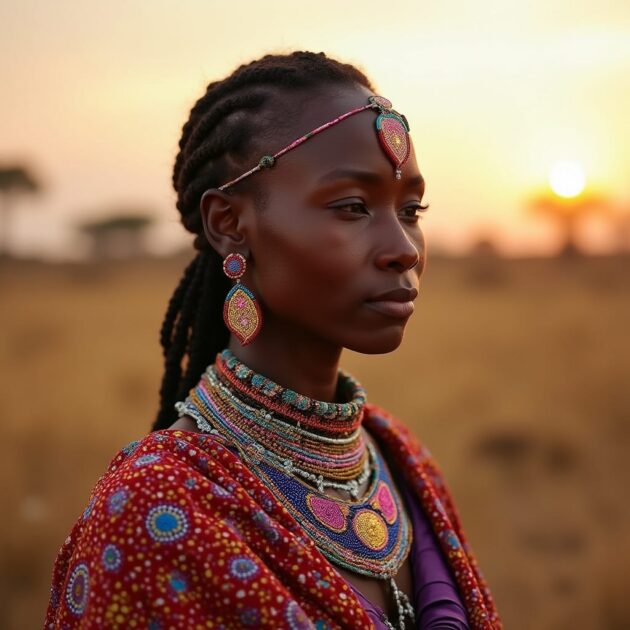
The Maasai of Kenya and Tanzania are instantly recognisable for their vibrant red shukas (cloaks) and elaborate beadwork. The red colour symbolises courage and protection, while the beads—carefully crafted by women—encode social meaning about age, marital status, and tribal identity. A Maasai bride may wear a richly adorned headdress and layers of beaded necklaces, each element narrating her passage into a new phase of life.
A semi-nomadic pastoralist community the Maasai traditional dress


In the Maasai community, every girl traditionally learns beadwork, a practice steeped in cultural importance and responsibility. This art form is not merely decorative—it is a vital expression of identity, storytelling, and generational knowledge. The colours and patterns used in Maasai beadwork communicate deep symbolic meaning, often conveying social roles or emotional messages. Beadwork is also worn during ceremonies such as initiations, weddings, and rites of passage, reinforcing communal bonds through shared visual language.


In Uganda, the gomesi or busuuti is a traditional dress worn by Baganda women. This floor-length, brightly colored garment with puffed sleeves and a sash is both elegant and practical, tailored for the region’s warm climate. The gomesi is typically worn during cultural ceremonies such as weddings, funerals, and introductions, symbolizing respect and tradition. Often paired with a headscarf, the gomesi is a visible marker of Ugandan heritage and pride. Its vibrant appearance and structured design highlight the fashion aesthetics of East Africa while its ceremonial use underscores the importance of ritual and community in African society.
Traditional wear for Baganda


A gomesi, is a traditional Ugandan women’s dress.


In Ethiopia, the netela and shamma are traditional white cotton shawls worn by both men and women.
These garments, adorned with colorful woven borders called tibeb, are draped over the shoulders during religious ceremonies and cultural events. The simplicity of the white fabric contrasted with the intricate embroidery reflects Ethiopia’s rich textile heritage and the spiritual purity often associated with Ethiopian Orthodox traditions. These timeless pieces echo the enduring influence of ancient civilizations and maintain their relevance in contemporary African fashion and identity.
Traditional clothing from Ethiopia


Southern Africa: Regal Skins and Beaded Splendour
In Southern Africa, traditional attire often incorporates animal hides, beads, and vibrant fabrics. Among the Zulu people of South Africa, clothing varies by occasion and social role. For women, the isidwaba, a pleated leather skirt, is worn by married women, often paired with beaded aprons and headbands. Men may wear the ibheshu, a leather garment covering the lower body during cultural ceremonies. Beadwork is central to Zulu attire, with specific colours and patterns conveying messages—white beads symbolising purity, and blue representing loyalty. These garments represent not just dress, but a deeply symbolic language of identity rooted in ancestral values and spiritual continuity.
For women, the isidwaba, a pleated leather skirt, is worn by married women, often paired with beaded aprons and headbands. Men may wear ibheshu, a leather garment covering the lower body, during cultural ceremonies. Beadwork is central to Zulu attire, with specific colours and patterns conveying messages; for instance, white beads symbolise purity, while blue beads represent loyalty.
An isidwaba is a traditional leather skirt worn by married Zulu women in South Africa. An ibheshu, made from animal hides, is a traditional garment worn by Zulu men.


In Eswatini, the emahiya is a traditional wrap worn by women, featuring bold patterns and vibrant colours. During the annual Reed Dance, young women don beaded skirts and sashes, showcasing the intricate artistry of Swazi craftsmanship and reinforcing their cultural values. In Botswana, the Herero dress—influenced by Victorian missionaries—is a voluminous gown with long sleeves and a headscarf shaped like cow horns, reflecting the community’s pastoral heritage and historical adaptation. These garments continue to evolve as modern symbols of heritage preservation and social pride, particularly among youth reclaiming indigenous identity through fashion.
North Africa: Flowing Robes and Ornate Embroidery
North African traditional attire is heavily influenced by Arab, Berber, and Islamic cultures. In Morocco, the djellaba is a long, loose-fitting robe worn by both men and women. Made from cotton or wool, the djellaba often features a pointed hood and intricate embroidery, showcasing the region’s rich design heritage. For special occasions, Moroccan women may wear a kaftan—a robe decorated with sequins and beads—which has gained global popularity for its elegance. In Egypt, the galabeya is a staple garment in rural areas, worn with turbans or headscarves. Meanwhile, in Tunisia and Algeria, the jellaba also reflects Berber influences, often featuring vibrant colours and geometric embroidery tied to local traditions.
For special occasions, Moroccan women may wear a kaftan, a richly decorated robe adorned with embroidery, sequins, and beads. The kaftan has gained global popularity for its elegance and versatility.
In Egypt, traditional attire includes the galabeya, a long, flowing robe worn by men and women in rural areas. For women, the galabeya may be paired with a headscarf, while men often wear it with a turban or cap.
The jellaba of Tunisia and Algeria shares similarities with the Moroccan djellaba, often featuring vibrant colours and geometric patterns inspired by Berber designs.
Central Africa: Woven Raffia and Symbolic Prints
Central African attire often incorporates natural materials like raffia and bark cloth. Among the Kuba people of the Democratic Republic of Congo, Kuba cloth is a masterpiece of textile art. Made from woven raffia, the fabric is dyed and embroidered with geometric patterns and worn during ceremonies. Women wear wraparound skirts called ntshak, paired with beaded belts and jewelry. In Cameroon, the toghu fabric—embroidered with vibrant thread on black cotton—is a mark of prestige and royal identity among the Bamileke people, especially during community events and funerals.
Materials and Craftsmanship
The materials used in African traditional attire reflect the continent’s natural resources and artisanal skills.
Textiles like cotton, silk, and wool are often handwoven on traditional looms. In West Africa, adire (tie-dye cloth) and bogolan (mud cloth) from Mali showcase intricate dyeing techniques. Adire, created by Yoruba women, features indigo patterns made through resist-dyeing, while bogolan uses fermented mud to craft earthy, geometric designs.
Beadwork is another hallmark of African attire, especially in East and Southern Africa. Beads—crafted from glass, bone, or seeds—are meticulously strung into necklaces, bracelets, and clothing embellishments. Leather and animal hides are widely used in pastoral communities such as the Zulu and Maasai for garments like skirts and cloaks.
Raffia, derived from palm trees, is essential in Central African textiles, while bark cloth, made from tree bark, is used by the Baganda of Uganda. These sustainable materials reflect a long-standing tradition of ecological harmony in African craftsmanship.
Contemporary Influence and Global Impact
African traditional attire has transcended borders, influencing global fashion and pop culture. Designers like Lisa Folawiyo in Nigeria and Laduma Ngxokolo in South Africa have reimagined traditional fabrics like ankara and Xhosa beadwork for contemporary fashion runways. The vibrant prints of Ankara and Kente have inspired international brands, appearing in everything from haute couture to streetwear.
The rise of Afrocentric fashion has empowered diaspora communities to reconnect with their roots. Events like Africa Fashion Week and the popularity of headwraps in the U.S. and Europe showcase the global appeal of African aesthetics. Celebrities like Beyoncé and Rihanna have embraced African-inspired designs, amplifying their cultural relevance.
However, the commercialisation of traditional attire raises concerns about cultural appropriation. When non-African designers adopt sacred patterns without acknowledging their origins, they risk diluting cultural meaning. Ethical fashion advocates urge recognition of African artisans and support for local creators to ensure cultural preservation and economic empowerment.
Preservation and Challenges
Preserving African traditional attire requires balancing tradition with modernity. As urbanisation and globalisation increase, many younger generations gravitate toward Western clothing, threatening the survival of indigenous craftsmanship. To counter this, initiatives such as textile cooperatives and fashion schools in countries like Ghana and Nigeria are teaching weaving, dyeing, and beading techniques to a new generation of artisans.
Climate change presents another challenge, impacting the availability of natural resources such as cotton and raffia. In response, many communities are adopting sustainable practices like organic farming and eco-friendly dyeing to preserve their textile traditions while protecting the environment.
Conclusion
African traditional attire is a testament to the continent’s cultural richness and artistic ingenuity. From the regal kente of Ghana to the beaded splendour of the Maasai, these garments are more than fashion—they are living expressions of history, identity, and resilience.
As African designers and global advocates continue to celebrate these traditions, traditional attire remains a powerful symbol of cultural pride and a bridge between past and future. Whether worn in a village ceremony or on a Paris runway, African traditional attire continues to captivate and inspire, reminding the world of the continent’s enduring legacy.