The precession of the equinoxes

The precession of the equinoxes

The precession of the equinoxes, a 26,000-year cycle, shapes African and global views of the cosmos in 2025.

In 2025, as we navigate a world of rapid technological change and global challenges, the precession of the equinoxes, a 26,000-year celestial cycle caused by Earth’s axial wobble, offers a timeless perspective on humanity’s place in the cosmos.

This astronomical phenomenon, which shifts the equinoxes through the zodiac, has shaped calendars, cultures, and worldviews for millennia, particularly in African civilisations like ancient Egypt and the Dogon of Mali.

By examining the significance of precession in 2025, this blog highlights the Global South’s historical contributions to astronomy, critiques Western-centric narratives, and envisions a hopeful future where diverse knowledge systems converge to address contemporary challenges.

Understanding the Precession of the Equinoxes

The precession of the equinoxes is a slow, cyclical shift in Earth’s axis, resembling a wobbling top. Earth’s 23.5-degree tilt causes its axis to trace a circular path over approximately 25,772 years.

It moves the equinoxes backwards through the zodiac constellations when day and night are equal (around March 21 and September 21). In 2025, the vernal equinox is in Pisces, but it is nearing Aquarius, sparking cultural interest in the “Age of Aquarius,” a term popularised in the 1960s to signify spiritual renewal.

Each zodiacal “age” lasts about 2,150 years, with the transition to Aquarius expected around 2600 CE, though some argue it’s closer due to varying zodiac boundaries.

This cycle, first documented by the Greek astronomer Hipparchus in 130 BCE, affects star positions and calendars, requiring adjustments like the adoption of the Gregorian calendar in 1582.

In 2025, precession remains relevant, influencing astronomy, climate science, and cultural narratives. Its study reveals the Global South’s early mastery of celestial observation, challenging Western assumptions and highlighting Africa’s role in shaping human understanding of the universe.


Historical Context: African Insights into Precession

African civilisations, often marginalised in Western histories, demonstrated profound astronomical knowledge, including awareness of precession.

Ancient Egypt, flourishing from 3000 BCE, integrated celestial cycles into its architecture and religion. The Great Pyramid of Giza (c. 2600 BCE) aligns with the cardinal points and stars like Thuban, the pole star during Egypt’s Old Kingdom, due to precession.

Egyptologist Robert Bauval suggests the pyramid’s shafts targeted specific stars, reflecting an understanding of the shifting celestial pole. The Egyptian calendar, tied to Sirius’s heliacal rising, required adjustments over centuries, indicating priests tracked equinoctial shifts to maintain agricultural and ritual accuracy.

The Dogon of Mali, whose culture crystallised around the 15th century, offer another striking example. Their sigui festival, held every 60 years, celebrates Sirius and its companion star, Sirius B, a white dwarf invisible without telescopes.

Anthropologists Marcel Griaule and Germaine Dieterlen, in their 1940s research, noted Dogon myths describing a “great star cycle,” possibly alluding to precession’s 26,000-year arc.

This knowledge, preserved in oral traditions and encoded in masks and dances, suggests centuries of precise observation. In 2025, the next sigui (circa 2032) underscores the Dogon’s enduring connection to celestial rhythms.
Other Global South cultures also engaged with precession.

By 200 BCE, the Maya of Mesoamerica developed the Long Count calendar, which some scholars link to precessional cycles through its tracking of long-term celestial events.

In India, Vedic texts from 1500 BCE reference shifting equinoxes, tying them to cosmic ages. These contributions highlight the Global South’s role as a pioneer of astronomical thought, long before Hipparchus’s calculations.

Cultural Significance in 2025: African Cosmologies and Modern Relevance

In 2025, the precession of the equinoxes resonates deeply in African cultural contexts, where astronomy and spirituality are intertwined.

For the Dogon, the sigui festival celebrates Sirius’s cycles, with wooden masks and dances reenacting creation myths that align with precessional shifts.

As Malian scholar Amadou Hampâté Bâ notes, these rituals are “living archives,” preserving knowledge through oral and material traditions.

The Dogon’s awareness of Sirius B, confirmed by Western science only in 1862, challenges sceptics like Carl Sagan, who suggested missionary influence, and affirms the sophistication of African observation techniques.

In modern Egypt, Nubian and Coptic communities maintain festivals tied to celestial events, echoing ancient practices that accounted for precession.

The Wafaa El-Nil festival, celebrating the Nile’s flooding, historically aligned with Sirius’s rising, a practice adjusted over centuries due to equinoctial shifts.

In 2025, these traditions connect communities to their astronomical heritage, fostering cultural pride amidst globalisation’s pressures.

Globally, precession inspires cultural narratives. While scientifically imprecise, the “Age of Aquarius” concept reflects a desire for transformation in 2025, a year marked by climate crises, technological advances, and social movements.

African cosmologies, which view humans as part of a cosmic whole, offer a counterpoint to Western individualism, suggesting holistic approaches to modern challenges like sustainability and equity.

Western Narratives and Constructive Critique

Western science’s understanding of precession, built on Hipparchus’s work and refined by Ptolemy and Copernicus, has been invaluable.

In 2025, advanced tools like the James Webb Space Telescope will provide precise precession effects data, linking it to Milankovitch cycles that influence Earth’s climate over millennia.

For instance, precession contributed to the Sahara’s transition from a lush savanna to a desert around 6000 BCE, a shift relevant to current climate studies.

However, Western narratives often marginalise Global South contributions. Colonial-era scholars dismissed African astronomical knowledge as “myth,” ignoring evidence like Egypt’s star-aligned temples or the Dogon’s Sirius lore.

This Eurocentrism, as Senegalese historian Cheikh Anta Diop critiques, “erased Africa’s scientific legacy,” framing it as derivative of Greek or Mesopotamian thought. In 2025, this bias persists in popular accounts that credit Hipparchus as precession’s sole discoverer, overlooking earlier African observations.

A balanced critique recognises Western precision while challenging its exclusivity.

The Dogon’s knowledge, for example, was dismissed as “impossible” without telescopes, yet their oral traditions, verified by modern astronomy, suggest advanced naked-eye techniques.

Similarly, Egypt’s pyramid alignments predated Greek astronomy for centuries. In 2025, collaborative research, like archaeoastronomy projects studying African sites, offers a path to integrate these perspectives, enriching global science.

Precession’s Relevance in 2025: Science and Society

In 2025, precession remains a cornerstone of astronomy and climate science.

Astronomers use it to calibrate star charts, essential for navigation and space exploration. Climate scientists study its role in long-term cycles, which informs models for global warming.

For instance, precession’s influence on Earth’s tilt affects solar radiation, a factor in predicting future climate shifts—a critical issue as the world grapples with rising temperatures.

Culturally, precession shapes narratives of renewal. The “Age of Aquarius” resonates in 2025’s social movements, from environmental activism to calls for global equity.

African perspectives, emphasising cosmic harmony, align with these aspirations. The Dogon’s holistic cosmology, for example, suggests humans must align with natural cycles, a principle echoed in 2025’s push for sustainable practices.

African communities face challenges in preserving this heritage. Conflict in Mali threatens Dogon cultural sites, while urban development in Egypt endangers ancient observatories.

Colonial looting, such as the Dendera Zodiac’s removal to the Louvre in 1821, continues to spark repatriation debates.

In 2025, the global push for restitution, led by African scholars like Felwine Sarr, gains traction, with Nigeria and Mali advocating for returned artefacts to bolster local museums.

Amplifying Global South Voices

Amplifying African voices is central to redefining the history of precession. Dogon elders, who pass down Sirius knowledge through oral traditions, offer insights Western science often overlooks.

Egyptian archaeologists like Zahi Hawass, advocating for local scholarship, emphasise Africa’s astronomical primacy.

In 2025, institutions like Nigeria’s Centre for Black Culture and International Understanding and Mali’s University of Timbuktu promote indigenous knowledge, integrating it with modern astronomy.

These efforts challenge Western biases toward written records. African oral traditions, as Bâ argues, are “dynamic repositories,” rivalling texts in accuracy.

The Dogon’s sigui masks and Egyptian star charts are material evidence of precessional awareness, deserving equal weight. In 2025, digital platforms like Google Arts & Culture amplify these voices, sharing African cosmologies with global audiences.

Challenges and Opportunities in 2025

Preserving precession-related knowledge faces hurdles.

Environmental threats, like desertification in Mali, endanger Dogon sites, while funding disparities limit African research compared to Western observatories.

Globalisation risks diluting oral traditions, as younger generations adopt digital cultures. Yet, 2025 offers opportunities. Digital archiving, such as 3D models of Egyptian temples, preserves knowledge.

UNESCO’s support for Mali’s heritage and Nigeria’s cultural tourism initiatives bolsters local efforts. Community-led astronomy workshops, like those in South Africa’s SKA project, empower youth to blend traditional and modern science.

Repatriation remains critical. The Dendera Zodiac’s return, demanded by Egyptian activists in 2025, could set a precedent for other artefacts and strengthen African institutions.

Collaborative projects, like those between African universities and global observatories, can bridge knowledge systems and foster mutual respect.

A Hopeful Vision for 2025 and Beyond

In 2025, the precession of the equinoxes will be more than an astronomical cycle; it will be a lens for uniting humanity.

African civilisations, from Egypt’s pyramids to the Dogon’s sigui, demonstrate the Global South’s astronomical genius, challenging Western monopolies on science.

By centring these voices through scholarship, repatriation, and education, we can build a more inclusive narrative of human discovery.

This legacy inspires hope. African cosmologies, which integrate science and spirituality, offer models for addressing 2025’s challenges, from climate change to cultural erosion.

The Dogon’s view of cosmic harmony aligns with global calls for sustainability, while Egypt’s ancient observatories remind us of humanity’s shared quest for knowledge. As we approach the “Age of Aquarius,” precession invites us to embrace diverse perspectives, fostering a future where the Global South’s wisdom guides humanity toward unity and progress.
Wood Sculpture: Yoruba, Dogon, Baule, Shona Artistry

 Wood Sculpture

Across the African continent, wood sculpture stands as a testament to the creativity, spirituality, and resilience of its peoples.

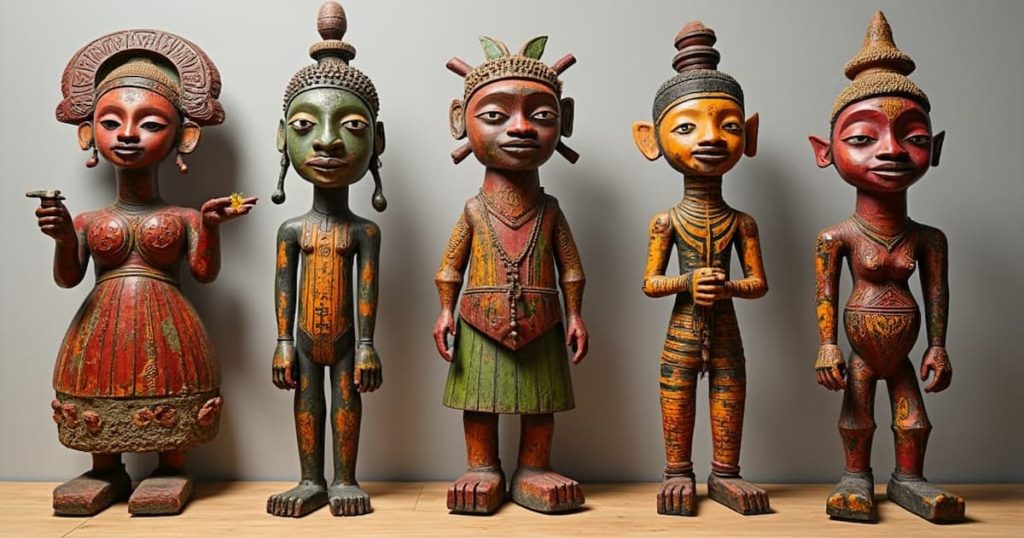
From the Yoruba of Nigeria to the Dogon of Mali, the Baule of Côte d’Ivoire, and the Shona of Zimbabwe, these cultures have crafted wooden masterpieces that embody their worldviews, histories, and aspirations.

These sculptures, often imbued with spiritual significance, challenge Western stereotypes of African art as “primitive” and reveal the Global South’s profound contributions to global aesthetics.

This blog explores the history, cultural significance, and enduring legacy of wood sculpture among the Yoruba, Dogon, Baule, and Shona, amplifying African voices while offering a hopeful vision for cultural appreciation and societal progress.

Historical Context: Wood Sculpture in African Societies

Wood sculpture in Africa is deeply rooted in the continent’s diverse cultural and historical landscapes.

Unlike stone or metal, wood was abundant, versatile, and accessible, making it a primary medium for artistic expression across sub-Saharan Africa.

From the 10th century onward, as African societies developed complex political systems, trade networks, and religious practices, wood sculpture became a dynamic tool for expressing identity, spirituality, and power.

The Yoruba, centred in southwestern Nigeria, flourished as a cultural and political force from the 11th century, with cities like Ilé-Ifẹ̀ and Owo serving as artistic hubs. Their wood sculptures, often linked to religious rituals, reflected a cosmology where deities (orishas) and ancestors played central roles.

The Dogon, in Mali’s Bandiagara Escarpment, developed their art within a cliff-dwelling society from around the 15th century, using wood to create sculptures that mediated between the human and spiritual realms.

The Baule, in Côte d’Ivoire, emerged as a distinct group in the 18th century, crafting wood figures that balanced aesthetic beauty with spiritual function.

The Shona of Zimbabwe, with a history tied to the Great Zimbabwe civilisation (11th–15th centuries), saw a modern sculptural renaissance in the 20th century, blending tradition with contemporary innovation.

These societies were not isolated. Trans-Saharan and coastal trade routes connected them to global networks, facilitating the exchange of goods such as gold, salt, and ivory.

This economic vitality supported artistic patronage, with rulers, priests, and communities commissioning sculptures for rituals, governance, and social cohesion.

Despite colonial disruptions in the 19th and 20th centuries, these traditions endured, adapting to new contexts while preserving their cultural essence.

Yoruba Wood Sculpture: Spiritual and Social Narratives

Yoruba wood sculpture is renowned for its intricate detail and spiritual depth. Often carved from iroko or ebony, these works served as ritual objects, embodying the Yoruba concept of ase (spiritual energy).

Common forms include ere ibeji (twin figures), epo masks for Gelede festivals, and shrine figures for orishas like Eshu, the trickster deity.

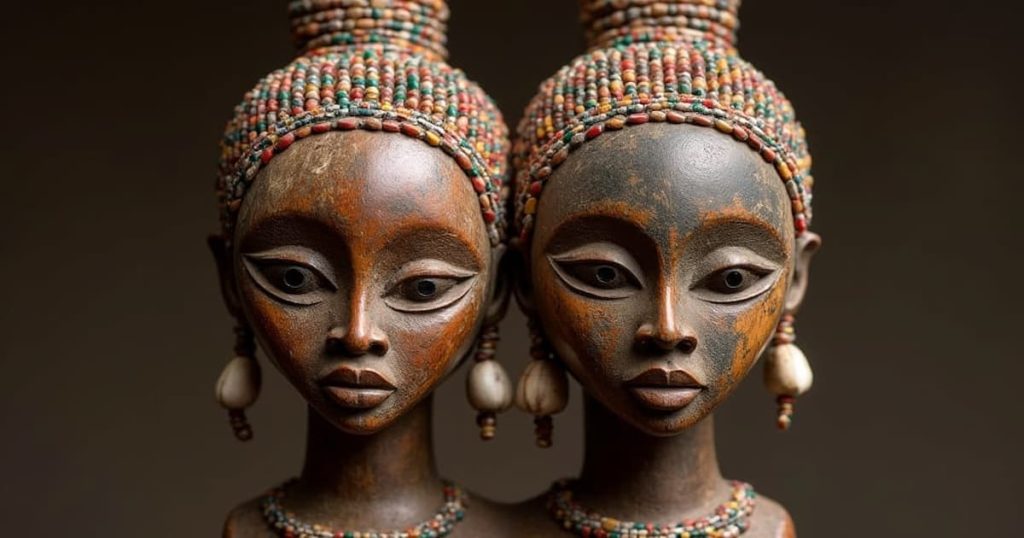
The ere ibeji, small figures carved to honour deceased twins, are particularly significant, reflecting the Yoruba’s high twin birth rate and belief in twins’ spiritual potency.

These sculptures, often adorned with beads and cowrie shells, feature exaggerated heads to signify ase and are treated as living entities, clothed and fed by families.

ere ibeji (twin figures)

Yoruba masks, used in festivals such as Gelede to honour female ancestors, feature dynamic forms with vibrant colours and elaborate headdresses.

The Gelede mask, with its serene face and superstructure depicting animals or humans, balances male and female energies, promoting social harmony.

Yoruba carvers, organised in guilds, passed techniques through generations, ensuring continuity. As historian Rowland Abiodun notes, these sculptures are “visual metaphors” for Yoruba philosophy, encoding complex ideas about balance, community, and divinity.

Colonialism disrupted Yoruba art, with missionaries destroying “idols” and markets shifting toward Western buyers. Yet, the resilience of Yoruba sculptors, who adapted by creating works for tourists while maintaining ritual pieces, preserved their tradition.

Today, the Owo Museum and Lagos’s National Museum showcase these works, affirming their cultural significance.

Dogon Wood Sculpture: Cosmic Connections

The Dogon, living in Mali’s rugged Bandiagara Escarpment, are celebrated for their wood sculptures that reflect a complex cosmology.

Carved from hardwoods like baobab, Dogon figures often depict ancestors, mythical beings, or nommo (primordial spirits).

These sculptures, used in funerary rituals like the dama ceremony, guide souls to the afterlife. The togu na (men’s house) pillars, adorned with carvings of ancestors and animals, symbolise community strength, while kanaga masks, with their cross-shaped superstructures, represent the connection between earth and sky.

Dogon art is characterised by angular, abstract forms, contrasting with Yoruba naturalism. Figures often have elongated limbs and stylised features, reflecting a focus on spiritual essence over physical likeness.

The sigui festival, held every 60 years, features masks that reenact the Dogon creation myth, linking art to cosmic cycles. As art historian Kate Ezra explains, Dogon sculptures are “not just objects but active participants in ritual,” embodying spiritual agency.

Colonial French administration and missionary activity in the 19th century looted many Dogon works, now housed in Western museums like the Louvre.

This loss disrupted local practices, but Dogon carvers adapted, creating pieces for global markets while maintaining sacred traditions. Modern Dogon communities continue to produce sculptures, balancing cultural preservation with economic needs.

Baule Wood Sculpture: Harmony and Elegance

The Baule of Côte d’Ivoire are renowned for their polished wood sculptures, which blend aesthetic refinement with spiritual purpose.

Emerging in the 18th century after migrating from Ghana, the Baule crafted figures like blolo bla (spirit spouse) statues, believed to represent otherworldly partners who ensure personal harmony.

These figures, often male or female, feature serene faces, scarification patterns, and elegant postures, carved from softwoods like sese. Baule masks, used in goli dances, depict animals or human faces, celebrating life’s cycles and social unity.

Baule art emphasises balance, reflecting their belief in complementary forces, male and female, human and spirit. The mblo mask, with its smooth surfaces and idealised features, is a portrait of a living person, used in performances to honour community members.

As anthropologist Susan Vogel notes, Baule sculptures are “objects of beauty and power,” designed to please both humans and spirits.

Colonialism and the global art market challenged Baule traditions, with many works sold to Western collectors.

However, Baule artists adapted, creating pieces for export while preserving ritual sculptures. Today, institutions like the Musée National de Côte d’Ivoire celebrate Baule art, fostering local pride and global recognition.

Shona Wood Sculpture: Tradition Meets Modernity

The Shona of Zimbabwe, with roots in the Great Zimbabwe civilisation, are known for their modern wood sculpture movement, which emerged in the 1950s.

While traditional Shona art used stone (notably soapstone), wood became a key medium in the 20th century, reflecting both ancestral reverence and contemporary innovation.

Shona wood sculptures, often carved from ironwood or teak, depict spirits, animals, or abstract forms, embodying the concept of mudzimu (ancestral spirits).

The modern Shona sculpture movement, led by figures like Frank McEwen, who founded the National Gallery of Zimbabwe’s workshop school, blended traditional motifs with modernist aesthetics.

Artists like Bernard Matemera and Nicholas Mukomberanwa created fluid, organic forms that expressed spiritual and social themes.

Unlike Yoruba or Dogon art, Shona wood sculpture often engages global audiences, with pieces displayed in galleries from London to New York.

Colonial land dispossession and economic hardship drove many Shona to sculpture as a livelihood, transforming traditional practices into a global art form.

This adaptability highlights the Shona’s resilience, though it raises questions about commercialisation’s impact on cultural authenticity. As art historian Anitra Nettleton observes, Shona sculpture “bridges the ancestral and the modern,” maintaining spiritual roots while embracing global dialogue.

Western Perceptions and Critique

Western engagement with African wood sculpture has been marked by both admiration and misunderstanding.

In the early 20th century, colonial collectors and ethnographers labelled these works “fetishes,” ignoring their cultural context.

The 1907 Picasso-inspired Cubist movement drew heavily from African masks, including Yoruba and Baule forms, yet rarely credited their origins, perpetuating a narrative of African art as raw material for Western innovation.

This appropriation, as scholar Okwui Enwezor argues, “stripped African art of its agency,” framing it as primitive rather than sophisticated.

The looting of African sculptures during colonialism, with many Yoruba, Dogon, and Baule works now in Western museums, remains a contentious issue.

The 2018 Sarr-Savoy report called for repatriation, yet progress is slow. For instance, Dogon masks in the Musée du Quai Branly face ongoing restitution debates.

This colonial legacy contrasts with the growing global appreciation of African art, seen in exhibitions like the 2017 “African Art Now” at the Smithsonian, which featured Shona sculptures alongside Yoruba and Baule works.

A balanced critique acknowledges Western efforts to elevate African art through exhibitions and scholarship, but these must be paired with restitution and support for African institutions.

By centring African voices, like Yoruba scholar Babatunde Lawal or Shona artist Tapfuma Gutsa, we can reframe the narrative, recognising these sculptures as products of cultural genius rather than colonial trophies.

Challenges and Resilience

Wood sculpture faces challenges, including environmental degradation and the loss of traditional materials like iroko due to deforestation.

Economic pressures push artists toward commercial markets, risking the dilution of cultural significance.

For example, Baule carvers produce tourist-oriented pieces alongside ritual objects, creating a tension between authenticity and economic survival.

Yet, African communities have shown remarkable resilience.

Yoruba carvers maintain guild traditions, passing skills to new generations.

Dogon elders continue dama ceremonies, preserving sculptural practices.

Baule artists balance local and global demands, while Shona sculptors have turned economic hardship into a globally recognised art movement. These adaptations reflect the Global South’s ability to navigate modernity while honouring heritage.

A Hopeful Vision for the Future

The wood sculptures of the Yoruba, Dogon, Baule, and Shona are more than artefacts; they are living expressions of African identity, spirituality, and creativity.

Their history challenges Western narratives that marginalise the Global South, revealing instead a continent that has shaped global aesthetics for centuries. By amplifying African voices, through scholarship, exhibitions, and repatriation, we can foster a more inclusive art history that values the contributions of all cultures.

The resilience of these traditions offers hope for societal progress. Yoruba ere ibeji teach us about community and care, Dogon masks remind us of our cosmic connections, Baule figures model balance, and Shona sculptures bridge tradition and modernity.

Supporting African artists, museums, and cultural initiatives can ensure these traditions thrive, while global partnerships can promote mutual understanding.

As we confront issues like cultural restitution and environmental sustainability, the legacy of African wood sculpture inspires a vision of a world where diverse voices are celebrated, and art serves as a bridge for unity and progress.

By honouring these masterpieces, we honour the Global South’s enduring contributions to humanity’s shared heritage.

Celebrating the Vibrancy of African Traditional Attire: A Cultural Journey

African Traditional Attire

African traditional attire weaves a vibrant tapestry of culture, identity, and artistry across the continent.

African Distinctive Traditional Attire: A Tapestry of Culture, Identity, and Artistry

Africa, a continent of unparalleled diversity, is home to thousands of ethnic groups, each with its unique cultural heritage, traditions, and sartorial expressions. African traditional attire is more than just clothing; it is a vibrant canvas that tells stories of African history, identity, spirituality, and social status. This blog explores the significance, styles, materials, and contemporary influence of African traditional attire, celebrating its role in preserving heritage and shaping global African fashion.

From the intricate beadwork of the Maasai to the colourful Kente cloth of the Ashanti, African traditional attire weaves a vibrant tapestry of culture, identity, and artistry across the continent, reflecting the diverse heritage celebrated throughout African history, art, and fashion movements. This blog explores the significance, styles, materials, and contemporary influence of African traditional attire, celebrating its role in preserving heritage and inspiring modern African designers.

The Cultural Significance of African Traditional Attire

Traditional attire in Africa is deeply symbolic, serving as a visual language that communicates identity, status, and belonging. Clothing often conveys messages about a person’s tribe, marital status, age, or role within the community. For instance, among the Yoruba of Nigeria, specific colours and patterns in aso-oke fabric may signify a celebratory occasion like a wedding or a solemn event like a funeral. Similarly, the Zulu people of South Africa use beaded patterns to encode messages about love, fertility, or social standing.

For instance, among the Yoruba of Nigeria, specific colours and patterns in aso-oke fabric may signify a celebratory occasion like a wedding or a solemn event like a funeral. Similarly, the Zulu people of South Africa use beaded patterns to encode messages about love, fertility, or social standing.

Beyond personal expression, traditional attire is a marker of cultural pride. In many African societies, wearing traditional clothing during ceremonies, festivals, or rites of passage reinforces communal bonds and honours ancestral traditions. For example, during the Reed Dance ceremony in Eswatini, young women wear colourful beaded skirts and sashes, symbolising purity and cultural unity. These garments are not merely decorative but are imbued with spiritual and historical significance.

For example, during the Reed Dance ceremony in Eswatini, young women wear colourful beaded skirts and sashes, symbolising purity and cultural unity. These garments are not merely decorative but are imbued with spiritual and historical significance.

Traditional attire also serves as a form of resistance and resilience. During colonial eras, many African communities preserved their cultural identities through clothing, defying attempts to erase their heritage. Today, traditional attire continues to be a powerful statement of decolonisation and self-affirmation, especially in the face of globalisation and Western fashion influences.

Regional Diversity in African Traditional Attire

Africa’s vastness encompasses a multitude of climates, histories, and cultural practices, resulting in a stunning variety of traditional clothing. Below, we explore some iconic styles from different regions of the continent, each deeply rooted in its local heritage, identity, and expression of cultural pride.

West Africa: Vibrant Fabrics and Regal Elegance

West Africa is renowned for its bold, colourful textiles and elaborate designs. One of the most iconic fabrics is kente, originating from the Ashanti people of Ghana. Kente is a handwoven cloth made from silk and cotton, featuring intricate geometric patterns in vibrant hues like red, gold, green, and blue. Each colour and pattern carries specific meanings; for example, gold represents wealth and fertility, while green symbolises growth and renewal. Traditionally, kente was reserved for royalty and significant occasions, but today it is worn widely and has become a global symbol of African pride.

Ghana, Kente is also referred to as “Nwentoma” which simply means woven cloth.

This treasured fabric is not just an emblem of Ghanaian royalty, but a profound expression of West African craftsmanship. The weaving of kente involves age-old techniques passed down through generations, rooted in the cultural legacy of the Ashanti Kingdom. As it evolves in contemporary fashion, kente remains a vital symbol in festivals, weddings, and diasporic identity, playing a key role in the global celebration of African heritage. Its popularity has inspired artists and designers, solidifying its place in both traditional attire and modern design movements.

In Nigeria, the aso-oke fabric, woven by the Yoruba, is a staple for ceremonial wear.

This luxurious textile, often seen at weddings and festivals, is a hallmark of Nigerian cultural identity. The fabric is used to create traditional garments like the flowing agbada for men and the intricate gele headwraps for women—both of which serve as expressions of beauty, respect, and status. Aso-oke continues to influence global fashion trends, with modern designers incorporating it into high-end collections that elevate African aesthetics and promote pride in indigenous craftsmanship across the diaspora.

Nigerias’ the aso-oke fabric

Another notable West African attire is the boubou, a loose-fitting robe worn across the region, particularly in Senegal and Mali.

The grand boubou, known for its flowing elegance and detailed embroidery, is a staple of West African fashion and a symbol of status and refinement. In Senegal, the boubou is worn with pride during religious festivals and formal gatherings, while in Mali, it often reflects the wearer’s age, gender, and regional origin. As with many traditional garments, the boubou has inspired modern Afrocentric designs, bridging heritage and contemporary style in both local and global fashion scenes.

Senegals’ boubou attire

Malis’ boubou attire

East Africa: Beadwork and Pastoral Elegance

East African traditional attire often uses natural materials and intricate adornments.

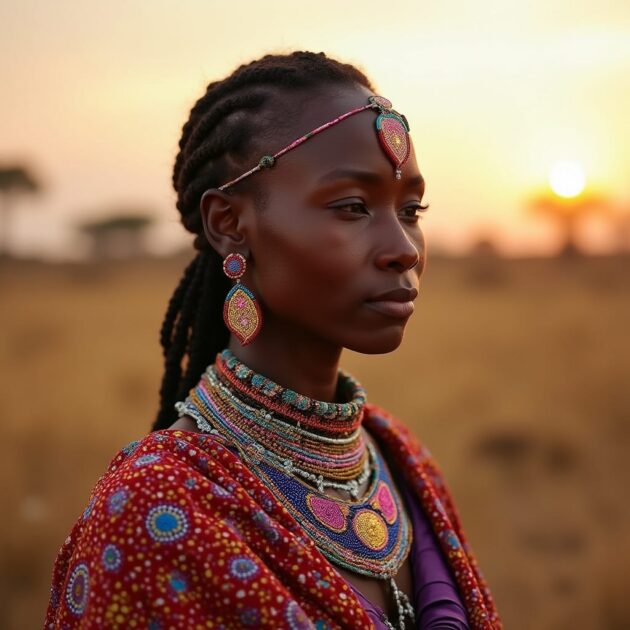
The Maasai of Kenya and Tanzania are instantly recognisable for their vibrant red shukas (cloaks) and elaborate beadwork. The red colour symbolises courage and protection, while the beads—carefully crafted by women—encode social meaning about age, marital status, and tribal identity. A Maasai bride may wear a richly adorned headdress and layers of beaded necklaces, each element narrating her passage into a new phase of life.

A semi-nomadic pastoralist community the Maasai traditional dress

In the Maasai community, every girl traditionally learns beadwork, a practice steeped in cultural importance and responsibility. This art form is not merely decorative—it is a vital expression of identity, storytelling, and generational knowledge. The colours and patterns used in Maasai beadwork communicate deep symbolic meaning, often conveying social roles or emotional messages. Beadwork is also worn during ceremonies such as initiations, weddings, and rites of passage, reinforcing communal bonds through shared visual language.

In Uganda, the gomesi or busuuti is a traditional dress worn by Baganda women. This floor-length, brightly colored garment with puffed sleeves and a sash is both elegant and practical, tailored for the region’s warm climate. The gomesi is typically worn during cultural ceremonies such as weddings, funerals, and introductions, symbolizing respect and tradition. Often paired with a headscarf, the gomesi is a visible marker of Ugandan heritage and pride. Its vibrant appearance and structured design highlight the fashion aesthetics of East Africa while its ceremonial use underscores the importance of ritual and community in African society.

Traditional wear for Baganda

A gomesi, is a traditional Ugandan women’s dress.

In Ethiopia, the netela and shamma are traditional white cotton shawls worn by both men and women.

These garments, adorned with colorful woven borders called tibeb, are draped over the shoulders during religious ceremonies and cultural events. The simplicity of the white fabric contrasted with the intricate embroidery reflects Ethiopia’s rich textile heritage and the spiritual purity often associated with Ethiopian Orthodox traditions. These timeless pieces echo the enduring influence of ancient civilizations and maintain their relevance in contemporary African fashion and identity.

Traditional clothing from Ethiopia

Southern Africa: Regal Skins and Beaded Splendour

In Southern Africa, traditional attire often incorporates animal hides, beads, and vibrant fabrics. Among the Zulu people of South Africa, clothing varies by occasion and social role. For women, the isidwaba, a pleated leather skirt, is worn by married women, often paired with beaded aprons and headbands. Men may wear the ibheshu, a leather garment covering the lower body during cultural ceremonies. Beadwork is central to Zulu attire, with specific colours and patterns conveying messages—white beads symbolising purity, and blue representing loyalty. These garments represent not just dress, but a deeply symbolic language of identity rooted in ancestral values and spiritual continuity.

For women, the isidwaba, a pleated leather skirt, is worn by married women, often paired with beaded aprons and headbands. Men may wear ibheshu, a leather garment covering the lower body, during cultural ceremonies. Beadwork is central to Zulu attire, with specific colours and patterns conveying messages; for instance, white beads symbolise purity, while blue beads represent loyalty.

An isidwaba is a traditional leather skirt worn by married Zulu women in South Africa. An ibheshu, made from animal hides, is a traditional garment worn by Zulu men.

In Eswatini, the emahiya is a traditional wrap worn by women, featuring bold patterns and vibrant colours. During the annual Reed Dance, young women don beaded skirts and sashes, showcasing the intricate artistry of Swazi craftsmanship and reinforcing their cultural values. In Botswana, the Herero dress—influenced by Victorian missionaries—is a voluminous gown with long sleeves and a headscarf shaped like cow horns, reflecting the community’s pastoral heritage and historical adaptation. These garments continue to evolve as modern symbols of heritage preservation and social pride, particularly among youth reclaiming indigenous identity through fashion.

North Africa: Flowing Robes and Ornate Embroidery

North African traditional attire is heavily influenced by Arab, Berber, and Islamic cultures. In Morocco, the djellaba is a long, loose-fitting robe worn by both men and women. Made from cotton or wool, the djellaba often features a pointed hood and intricate embroidery, showcasing the region’s rich design heritage. For special occasions, Moroccan women may wear a kaftan—a robe decorated with sequins and beads—which has gained global popularity for its elegance. In Egypt, the galabeya is a staple garment in rural areas, worn with turbans or headscarves. Meanwhile, in Tunisia and Algeria, the jellaba also reflects Berber influences, often featuring vibrant colours and geometric embroidery tied to local traditions.

For special occasions, Moroccan women may wear a kaftan, a richly decorated robe adorned with embroidery, sequins, and beads. The kaftan has gained global popularity for its elegance and versatility.

In Egypt, traditional attire includes the galabeya, a long, flowing robe worn by men and women in rural areas. For women, the galabeya may be paired with a headscarf, while men often wear it with a turban or cap.

The jellaba of Tunisia and Algeria shares similarities with the Moroccan djellaba, often featuring vibrant colours and geometric patterns inspired by Berber designs.

Central Africa: Woven Raffia and Symbolic Prints

Central African attire often incorporates natural materials like raffia and bark cloth. Among the Kuba people of the Democratic Republic of Congo, Kuba cloth is a masterpiece of textile art. Made from woven raffia, the fabric is dyed and embroidered with geometric patterns and worn during ceremonies. Women wear wraparound skirts called ntshak, paired with beaded belts and jewelry. In Cameroon, the toghu fabric—embroidered with vibrant thread on black cotton—is a mark of prestige and royal identity among the Bamileke people, especially during community events and funerals.

Materials and Craftsmanship

The materials used in African traditional attire reflect the continent’s natural resources and artisanal skills.

Textiles like cotton, silk, and wool are often handwoven on traditional looms. In West Africa, adire (tie-dye cloth) and bogolan (mud cloth) from Mali showcase intricate dyeing techniques. Adire, created by Yoruba women, features indigo patterns made through resist-dyeing, while bogolan uses fermented mud to craft earthy, geometric designs.

Beadwork is another hallmark of African attire, especially in East and Southern Africa. Beads—crafted from glass, bone, or seeds—are meticulously strung into necklaces, bracelets, and clothing embellishments. Leather and animal hides are widely used in pastoral communities such as the Zulu and Maasai for garments like skirts and cloaks.

Raffia, derived from palm trees, is essential in Central African textiles, while bark cloth, made from tree bark, is used by the Baganda of Uganda. These sustainable materials reflect a long-standing tradition of ecological harmony in African craftsmanship.

Contemporary Influence and Global Impact

African traditional attire has transcended borders, influencing global fashion and pop culture. Designers like Lisa Folawiyo in Nigeria and Laduma Ngxokolo in South Africa have reimagined traditional fabrics like ankara and Xhosa beadwork for contemporary fashion runways. The vibrant prints of Ankara and Kente have inspired international brands, appearing in everything from haute couture to streetwear.

The rise of Afrocentric fashion has empowered diaspora communities to reconnect with their roots. Events like Africa Fashion Week and the popularity of headwraps in the U.S. and Europe showcase the global appeal of African aesthetics. Celebrities like Beyoncé and Rihanna have embraced African-inspired designs, amplifying their cultural relevance.

However, the commercialisation of traditional attire raises concerns about cultural appropriation. When non-African designers adopt sacred patterns without acknowledging their origins, they risk diluting cultural meaning. Ethical fashion advocates urge recognition of African artisans and support for local creators to ensure cultural preservation and economic empowerment.

Preservation and Challenges

Preserving African traditional attire requires balancing tradition with modernity. As urbanisation and globalisation increase, many younger generations gravitate toward Western clothing, threatening the survival of indigenous craftsmanship. To counter this, initiatives such as textile cooperatives and fashion schools in countries like Ghana and Nigeria are teaching weaving, dyeing, and beading techniques to a new generation of artisans.

Climate change presents another challenge, impacting the availability of natural resources such as cotton and raffia. In response, many communities are adopting sustainable practices like organic farming and eco-friendly dyeing to preserve their textile traditions while protecting the environment.

Conclusion

African traditional attire is a testament to the continent’s cultural richness and artistic ingenuity. From the regal kente of Ghana to the beaded splendour of the Maasai, these garments are more than fashion—they are living expressions of history, identity, and resilience.

As African designers and global advocates continue to celebrate these traditions, traditional attire remains a powerful symbol of cultural pride and a bridge between past and future. Whether worn in a village ceremony or on a Paris runway, African traditional attire continues to captivate and inspire, reminding the world of the continent’s enduring legacy.

Celebrating the Vibrant Heritage of African Music and Dance

African Dance

African music and dance, vibrant and diverse, weave stories and rhythms, shaping culture and identity

Africa, a continent of unparalleled cultural diversity, is home to a vibrant and intricate tapestry of music and dance traditions that have shaped its identity for centuries. With over 54 countries, thousands of ethnic groups, and countless languages, African music and dance are as diverse as the people who create them.

These art forms are not merely entertainment; they are deeply rooted in the social, spiritual, and political fabric of African societies. From the rhythmic drumming of West Africa to the intricate footwork of Southern African dances, these traditions tell stories of history, community, resistance, and celebration. This blog explores the rich heritage of African music and dance, their cultural significance, their evolution, and their global influence.

The Cultural Significance of African Music and Dance

In African societies, music and dance are inseparable from daily life. They serve as vehicles for storytelling, preserving history, and passing down traditions across generations. Unlike Western traditions, where music and dance are often performed for entertainment or artistic expression, these art forms are deeply functional in Africa.

They accompany rituals, ceremonies, and rites of passage, such as births, initiations, weddings, and funerals. They also play a role in community bonding, spiritual worship, and even political expression.

Music and dance in Africa are communal activities. They bring people together, fostering a sense of unity and shared identity.

For example, among the Yoruba people of Nigeria, music and dance are integral to festivals honouring deities like Sango, the god of thunder. Drummers, singers, and dancers perform in unison, creating a collective experience that strengthens community ties.

Similarly, the Maasai of Kenya and Tanzania use their iconic jumping dance, known as Adumu, during warrior initiation ceremonies, symbolising strength and agility.

Rhythm is the heartbeat of African music and dance.

Polyrhythms, multiple rhythms played simultaneously, are a hallmark of many African musical traditions.

These complex rhythmic patterns, often created by drums, are not just musical but also communicative. In many cultures, drums are considered sacred instruments that convey messages, summon spirits, or mark significant events.

The djembe, a goblet-shaped drum from West Africa, is one such instrument, widely used in Mali, Guinea, and Senegal to accompany dances and rituals.

Regional Diversity in African Music and Dance

Africa’s vastness contributes to its incredible diversity in musical and dance styles. Each region has developed unique traditions influenced by geography, history, and cultural exchange. Below is an overview of some key regional traditions.

West Africa: The Pulse of Drumming and Griot Traditions

West Africa is renowned for its drumming traditions and the role of griots, oral historians and musicians who preserve the history of their people through song. The griot tradition, found among the Mandinka, Wolof, and other ethnic groups, is a cornerstone of West African culture.

Griots, often accompanied by the kora (a 21-stringed harp-lute), sing epic tales of kings, warriors, and ancestors. Their music is both a historical record and a form of social commentary.

Dance in West Africa is equally dynamic, often characterised by vigorous movements and intricate footwork. The Sabar dance of Senegal, performed to the rapid rhythms of the sabar drum, is a prime example.

Dancers move with precision, their bodies responding to the drum’s call-and-response patterns. Similarly, the Kpanlogo dance of Ghana’s Ga people blends traditional rhythms with modern influences, reflecting the region’s history of cultural fusion.

East Africa: Melodic Harmonies and Ritual Dances

East African music and dance are marked by melodic instruments and communal participation. In Kenya and Tanzania, the taarab music of the Swahili coast blends African, Arab, and Indian influences, featuring instruments like the oud and violin.

Taarab performances often accompany weddings and social gatherings, with singers delivering poetic lyrics about love and life.

The Maasai’s Adumu dance, mentioned earlier, is a striking example of East African dance. Performed by young warriors, it involves high jumps and synchronised movements, showcasing physical prowess and group cohesion. In Uganda, the Amaggunju dance, traditionally performed for the Buganda kings, uses rapid footwork and expressive gestures to tell stories of royal lineage.

Southern Africa: Polyphony and Liberation Movements

Southern African music is known for its rich vocal harmonies and polyphonic singing. The mbube style, popularised globally by groups like Ladysmith Black Mambazo, features layered vocals that create a hauntingly beautiful sound. This style, originating among the Zulu people of South Africa, has roots in both sacred and secular traditions.

Dance in Southern Africa often reflects historical and political contexts. The gumboot dance, born in South Africa’s mining communities during the apartheid era, is a powerful example. Miners, restricted from speaking, used rhythmic stomping and slapping of their boots to communicate. Today, gumboot dancing is a celebrated art form, symbolising resilience and creativity in the face of oppression.

Central Africa: The Forest’s Rhythmic Pulse

Central African music and dance are deeply tied to the region’s lush rainforests and spiritual traditions.

The Baka people of Cameroon and Gabon, for instance, use polyphonic singing and percussion to accompany their forest rituals.

Their music, often performed during hunting or healing ceremonies, mimics the sounds of the natural world.

The Makosa dance from Cameroon, popularised in the 20th century, blends traditional rhythms with modern influences like jazz and rumba.

It’s fluid, hip-shaking movements have made it a staple in African dance halls and a precursor to global styles like soukous.

North Africa: The Influence of Arab and Berber Traditions

North African music and dance reflect a blend of indigenous Berber, Arab, and Mediterranean influences. In Morocco, the Gnawa music tradition combines spiritual chants with hypnotic rhythms, often performed during healing rituals. The accompanying dance, characterised by acrobatic movements and trance-like states, is believed to connect participants with spiritual forces.

In Egypt, the tanoura dance, a Sufi whirling dance, is both a spiritual and artistic expression. Dancers spin continuously, their colourful skirts creating mesmerising patterns, symbolising the soul’s journey toward divine unity.

Instruments: The Soul of African Music

African music is defined by its instruments, which vary widely across regions but share a common role in storytelling and ritual.

Drums, such as the djembe, talking drum, and ngoma, are central to many traditions, serving as both musical and communicative tools.

The talking drum, used by the Yoruba and Hausa people, can mimic human speech through variations in pitch and rhythm.

Stringed instruments like the kora and ngoni are prevalent in West Africa, offering melodic accompaniment to vocal performances.

The mbira, or thumb piano, is a staple in Southern African music, particularly among the Shona people of Zimbabwe.

Its delicate, resonant tones are often used in spiritual ceremonies to invoke ancestors.

Wind and percussion instruments, such as the balafon (a wooden xylophone) and shekere (a beaded gourd rattle), add texture to African music.

These instruments are often crafted from natural materials, reflecting the deep connection between African cultures and their environment.

The Role of Dance in African Societies

Dance in Africa is more than a physical act; it is a language of expression, communication, and identity.

Each dance has a specific purpose, whether to celebrate, mourn, or mark a transition.

For example, the Kuku dance of the Susu people in Guinea is performed during harvest festivals to give thanks for abundance, while the Bikutsi dance of Cameroon’s Beti people is a lively celebration of femininity and community.

Dances are often gender-specific, with movements reflecting social roles. Among the Dogon people of Mali, men perform the Dama dance to honour the dead, using elaborate masks and stilts to represent spiritual beings.

Women, meanwhile, may perform dances like the Eswe of the Bamileke in Cameroon, which celebrates fertility and motherhood.

Call-and-response, a key feature of African music, extends to dance. Dancers respond to the rhythms and calls of drummers or singers, creating a dynamic interplay.

This interaction is evident in the Agbadza dance of the Ewe people in Ghana and Togo, where dancers’ movements mirror the drum’s intricate patterns.

Evolution and Modernisation

While African music and dance are deeply traditional, they are not static. Over time, they have evolved through contact with other cultures, colonisation, and globalisation.

The transatlantic slave trade, for instance, carried African rhythms and movements to the Americas, giving rise to genres like jazz, blues, samba, and salsa.

In Brazil, the capoeira dance, a martial art disguised as dance, reflects the resilience of enslaved Africans who preserved their culture under oppression.

In the 20th century, African music began to incorporate Western instruments and styles.

Highlife in Ghana and Nigeria blended traditional rhythms with jazz and brass bands, while Afrobeat, pioneered by Fela Kuti, fused African percussion with funk and political lyrics.

Today, genres like Afrobeats (distinct from Afrobeat) dominate global charts, with artists like Burna Boy and Wizkid blending African rhythms with pop, hip-hop, and electronic music.

Dance has also modernised. Urban dance styles like Azonto from Ghana and Kuduro from Angola have gained international popularity, driven by social media and music videos.

These dances retain traditional elements, such as rhythmic precision and storytelling, while embracing contemporary influences.

Global Influence and Challenges

African music and dance have left an indelible mark on the world. From the syncopated rhythms of jazz to the hip-shaking moves of reggaeton, African traditions have shaped global culture.

Festivals like WOMAD (World of Music, Arts and Dance) and performances by groups like the Soweto Gospel Choir have brought African artistry to international audiences.

However, these traditions face challenges. Globalisation and urbanisation threaten indigenous practices, as younger generations gravitate toward modern genres.

Preservation efforts, such as cultural festivals and education programs, are crucial to maintaining these traditions.

Additionally, the commercialisation of African music can sometimes strip it of its cultural context, reducing sacred rituals to mere entertainment.

Conclusion


The rich tradition of African music and dance is a testament to the continent’s cultural depth and resilience.

These art forms are more than aesthetic expressions; they are the lifeblood of African societies, carrying the weight of history, spirituality, and community.

From the polyrhythms of West African drums to the soulful harmonies of Southern African choirs, African music and dance continue to captivate and inspire. As they evolve and spread globally, they remind us of the power of culture to connect, heal, and celebrate the human spirit. By honouring and preserving these traditions, we ensure that the heartbeat of Africa continues to resonate for generations to come.