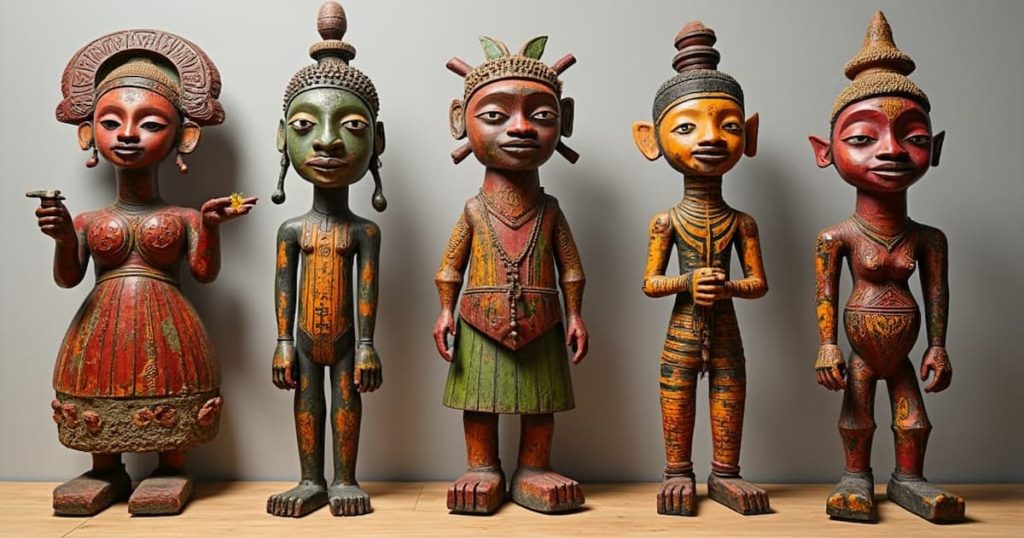
Wood Sculpture: Yoruba, Dogon, Baule, Shona Artistry

 Wood Sculpture

Across the African continent, wood sculpture stands as a testament to the creativity, spirituality, and resilience of its peoples.

From the Yoruba of Nigeria to the Dogon of Mali, the Baule of Côte d’Ivoire, and the Shona of Zimbabwe, these cultures have crafted wooden masterpieces that embody their worldviews, histories, and aspirations.

These sculptures, often imbued with spiritual significance, challenge Western stereotypes of African art as “primitive” and reveal the Global South’s profound contributions to global aesthetics.

This blog explores the history, cultural significance, and enduring legacy of wood sculpture among the Yoruba, Dogon, Baule, and Shona, amplifying African voices while offering a hopeful vision for cultural appreciation and societal progress.

Historical Context: Wood Sculpture in African Societies

Wood sculpture in Africa is deeply rooted in the continent’s diverse cultural and historical landscapes.

Unlike stone or metal, wood was abundant, versatile, and accessible, making it a primary medium for artistic expression across sub-Saharan Africa.

From the 10th century onward, as African societies developed complex political systems, trade networks, and religious practices, wood sculpture became a dynamic tool for expressing identity, spirituality, and power.

The Yoruba, centred in southwestern Nigeria, flourished as a cultural and political force from the 11th century, with cities like Ilé-Ifẹ̀ and Owo serving as artistic hubs. Their wood sculptures, often linked to religious rituals, reflected a cosmology where deities (orishas) and ancestors played central roles.

The Dogon, in Mali’s Bandiagara Escarpment, developed their art within a cliff-dwelling society from around the 15th century, using wood to create sculptures that mediated between the human and spiritual realms.

The Baule, in Côte d’Ivoire, emerged as a distinct group in the 18th century, crafting wood figures that balanced aesthetic beauty with spiritual function.

The Shona of Zimbabwe, with a history tied to the Great Zimbabwe civilisation (11th–15th centuries), saw a modern sculptural renaissance in the 20th century, blending tradition with contemporary innovation.

These societies were not isolated. Trans-Saharan and coastal trade routes connected them to global networks, facilitating the exchange of goods such as gold, salt, and ivory.

This economic vitality supported artistic patronage, with rulers, priests, and communities commissioning sculptures for rituals, governance, and social cohesion.

Despite colonial disruptions in the 19th and 20th centuries, these traditions endured, adapting to new contexts while preserving their cultural essence.

Yoruba Wood Sculpture: Spiritual and Social Narratives

Yoruba wood sculpture is renowned for its intricate detail and spiritual depth. Often carved from iroko or ebony, these works served as ritual objects, embodying the Yoruba concept of ase (spiritual energy).

Common forms include ere ibeji (twin figures), epo masks for Gelede festivals, and shrine figures for orishas like Eshu, the trickster deity.

The ere ibeji, small figures carved to honour deceased twins, are particularly significant, reflecting the Yoruba’s high twin birth rate and belief in twins’ spiritual potency.

These sculptures, often adorned with beads and cowrie shells, feature exaggerated heads to signify ase and are treated as living entities, clothed and fed by families.
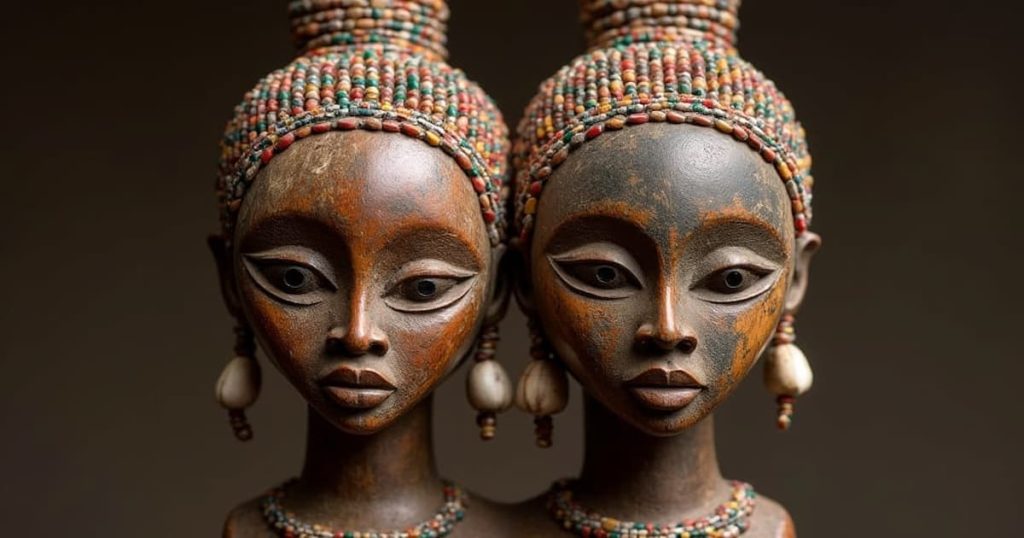
ere ibeji (twin figures)

Yoruba masks, used in festivals such as Gelede to honour female ancestors, feature dynamic forms with vibrant colours and elaborate headdresses.

The Gelede mask, with its serene face and superstructure depicting animals or humans, balances male and female energies, promoting social harmony.

Yoruba carvers, organised in guilds, passed techniques through generations, ensuring continuity. As historian Rowland Abiodun notes, these sculptures are “visual metaphors” for Yoruba philosophy, encoding complex ideas about balance, community, and divinity.

Colonialism disrupted Yoruba art, with missionaries destroying “idols” and markets shifting toward Western buyers. Yet, the resilience of Yoruba sculptors, who adapted by creating works for tourists while maintaining ritual pieces, preserved their tradition.

Today, the Owo Museum and Lagos’s National Museum showcase these works, affirming their cultural significance.

Dogon Wood Sculpture: Cosmic Connections

The Dogon, living in Mali’s rugged Bandiagara Escarpment, are celebrated for their wood sculptures that reflect a complex cosmology.

Carved from hardwoods like baobab, Dogon figures often depict ancestors, mythical beings, or nommo (primordial spirits).

These sculptures, used in funerary rituals like the dama ceremony, guide souls to the afterlife. The togu na (men’s house) pillars, adorned with carvings of ancestors and animals, symbolise community strength, while kanaga masks, with their cross-shaped superstructures, represent the connection between earth and sky.

Dogon art is characterised by angular, abstract forms, contrasting with Yoruba naturalism. Figures often have elongated limbs and stylised features, reflecting a focus on spiritual essence over physical likeness.

The sigui festival, held every 60 years, features masks that reenact the Dogon creation myth, linking art to cosmic cycles. As art historian Kate Ezra explains, Dogon sculptures are “not just objects but active participants in ritual,” embodying spiritual agency.

Colonial French administration and missionary activity in the 19th century looted many Dogon works, now housed in Western museums like the Louvre.

This loss disrupted local practices, but Dogon carvers adapted, creating pieces for global markets while maintaining sacred traditions. Modern Dogon communities continue to produce sculptures, balancing cultural preservation with economic needs.

Baule Wood Sculpture: Harmony and Elegance

The Baule of Côte d’Ivoire are renowned for their polished wood sculptures, which blend aesthetic refinement with spiritual purpose.

Emerging in the 18th century after migrating from Ghana, the Baule crafted figures like blolo bla (spirit spouse) statues, believed to represent otherworldly partners who ensure personal harmony.

These figures, often male or female, feature serene faces, scarification patterns, and elegant postures, carved from softwoods like sese. Baule masks, used in goli dances, depict animals or human faces, celebrating life’s cycles and social unity.

Baule art emphasises balance, reflecting their belief in complementary forces, male and female, human and spirit. The mblo mask, with its smooth surfaces and idealised features, is a portrait of a living person, used in performances to honour community members.

As anthropologist Susan Vogel notes, Baule sculptures are “objects of beauty and power,” designed to please both humans and spirits.

Colonialism and the global art market challenged Baule traditions, with many works sold to Western collectors.

However, Baule artists adapted, creating pieces for export while preserving ritual sculptures. Today, institutions like the Musée National de Côte d’Ivoire celebrate Baule art, fostering local pride and global recognition.

Shona Wood Sculpture: Tradition Meets Modernity

The Shona of Zimbabwe, with roots in the Great Zimbabwe civilisation, are known for their modern wood sculpture movement, which emerged in the 1950s.

While traditional Shona art used stone (notably soapstone), wood became a key medium in the 20th century, reflecting both ancestral reverence and contemporary innovation.

Shona wood sculptures, often carved from ironwood or teak, depict spirits, animals, or abstract forms, embodying the concept of mudzimu (ancestral spirits).

The modern Shona sculpture movement, led by figures like Frank McEwen, who founded the National Gallery of Zimbabwe’s workshop school, blended traditional motifs with modernist aesthetics.

Artists like Bernard Matemera and Nicholas Mukomberanwa created fluid, organic forms that expressed spiritual and social themes.

Unlike Yoruba or Dogon art, Shona wood sculpture often engages global audiences, with pieces displayed in galleries from London to New York.

Colonial land dispossession and economic hardship drove many Shona to sculpture as a livelihood, transforming traditional practices into a global art form.

This adaptability highlights the Shona’s resilience, though it raises questions about commercialisation’s impact on cultural authenticity. As art historian Anitra Nettleton observes, Shona sculpture “bridges the ancestral and the modern,” maintaining spiritual roots while embracing global dialogue.

Western Perceptions and Critique

Western engagement with African wood sculpture has been marked by both admiration and misunderstanding.

In the early 20th century, colonial collectors and ethnographers labelled these works “fetishes,” ignoring their cultural context.

The 1907 Picasso-inspired Cubist movement drew heavily from African masks, including Yoruba and Baule forms, yet rarely credited their origins, perpetuating a narrative of African art as raw material for Western innovation.

This appropriation, as scholar Okwui Enwezor argues, “stripped African art of its agency,” framing it as primitive rather than sophisticated.

The looting of African sculptures during colonialism, with many Yoruba, Dogon, and Baule works now in Western museums, remains a contentious issue.

The 2018 Sarr-Savoy report called for repatriation, yet progress is slow. For instance, Dogon masks in the Musée du Quai Branly face ongoing restitution debates.

This colonial legacy contrasts with the growing global appreciation of African art, seen in exhibitions like the 2017 “African Art Now” at the Smithsonian, which featured Shona sculptures alongside Yoruba and Baule works.

A balanced critique acknowledges Western efforts to elevate African art through exhibitions and scholarship, but these must be paired with restitution and support for African institutions.

By centring African voices, like Yoruba scholar Babatunde Lawal or Shona artist Tapfuma Gutsa, we can reframe the narrative, recognising these sculptures as products of cultural genius rather than colonial trophies.

Challenges and Resilience

Wood sculpture faces challenges, including environmental degradation and the loss of traditional materials like iroko due to deforestation.

Economic pressures push artists toward commercial markets, risking the dilution of cultural significance.

For example, Baule carvers produce tourist-oriented pieces alongside ritual objects, creating a tension between authenticity and economic survival.

Yet, African communities have shown remarkable resilience.

Yoruba carvers maintain guild traditions, passing skills to new generations.

Dogon elders continue dama ceremonies, preserving sculptural practices.

Baule artists balance local and global demands, while Shona sculptors have turned economic hardship into a globally recognised art movement. These adaptations reflect the Global South’s ability to navigate modernity while honouring heritage.

A Hopeful Vision for the Future

The wood sculptures of the Yoruba, Dogon, Baule, and Shona are more than artefacts; they are living expressions of African identity, spirituality, and creativity.

Their history challenges Western narratives that marginalise the Global South, revealing instead a continent that has shaped global aesthetics for centuries. By amplifying African voices, through scholarship, exhibitions, and repatriation, we can foster a more inclusive art history that values the contributions of all cultures.

The resilience of these traditions offers hope for societal progress. Yoruba ere ibeji teach us about community and care, Dogon masks remind us of our cosmic connections, Baule figures model balance, and Shona sculptures bridge tradition and modernity.

Supporting African artists, museums, and cultural initiatives can ensure these traditions thrive, while global partnerships can promote mutual understanding.

As we confront issues like cultural restitution and environmental sustainability, the legacy of African wood sculpture inspires a vision of a world where diverse voices are celebrated, and art serves as a bridge for unity and progress.

By honouring these masterpieces, we honour the Global South’s enduring contributions to humanity’s shared heritage.
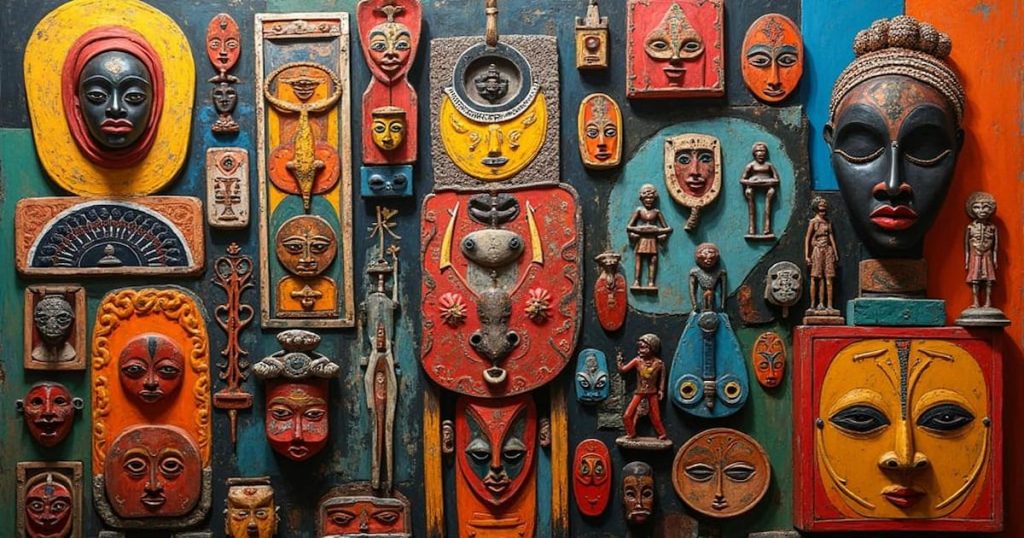
Ife Art: Yoruba Masterpieces Shaping Global Heritage

 Ife Art

Unveiling the Yoruba’s Masterpieces from the Heart of Africa

In the lush rainforests of southwestern Nigeria lies Ilé-Ifẹ̀, a city revered by the Yoruba people as the cradle of humanity and the spiritual heart of their culture. From the 11th to the 15th centuries, Ife was a political and religious centre and a hub of extraordinary artistic innovation.

The art of Ife, encompassing bronze, terracotta, and stone sculptures, stands among the most technically sophisticated and aesthetically compelling creations in global art history.

These works, often life-sized and strikingly naturalistic, challenged Western assumptions about African creativity and reshaped narratives about the continent’s historical contributions.

This blog explores the history of Ife art, its cultural significance, and its enduring legacy, while amplifying the voices of the Global South and offering a hopeful vision for reclaiming African narratives in a global context.

The Historical Context of Ife: A Cosmopolitan City-State

Ife, founded between 1000 BC and 500 BC, emerged as a significant urban centre by the 11th century CE, flourishing as the capital of the Yoruba kingdom in what is now Osun State, Nigeria.

According to Yoruba cosmology, Ife is the birthplace of humanity, created by the deity Obatala under the direction of the Supreme God Olódùmarè, with Oduduwa, another deity, establishing a dynasty that shaped Yoruba political and cultural identity.

This origin story, rich with spiritual and political significance, underscores Ife’s role as a sacred city, home to 401 deities (orishas) and vibrant festivals like the Olojo, celebrating divine authority and renewal.

By the 12th century, Ife was a cosmopolitan hub, thriving on trade networks that connected West Africa to regions as far as Mali, Mauritania, and Ghana.

Its economy, bolstered by iron-smelting technology, supported agriculture and commerce, with goods like glass beads, textiles, and iron tools fueling regional exchange.

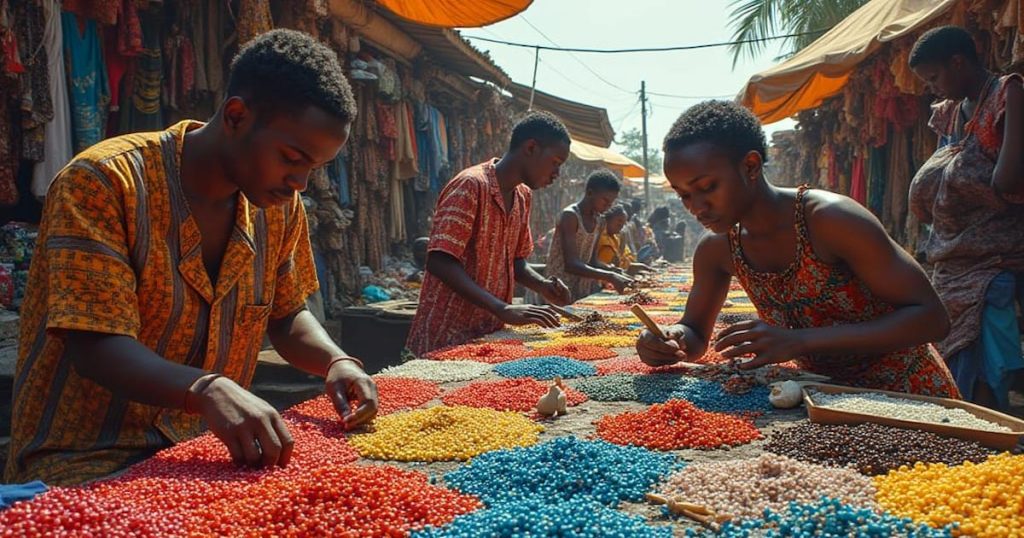
Ife’s glass bead industry, particularly from sites like Igbo Olokun, was renowned, with beads found across West Africa, highlighting the city’s participation in trans-Saharan and trans-Atlantic trade.

This economic vitality fostered a diverse society where artists, merchants, and rulers interacted, creating a fertile ground for artistic innovation.

Glass bead industry

Ife’s political structure, centred on the Ooni (king), was complex, with divine kingship balancing spiritual and temporal authority.

The city’s history was not without conflict; a civil war between supporters of Obatala and Oduduwa during the reign of the 46th Ooni left Ife vulnerable, yet its art flourished during this period, reflecting resilience and cultural synthesis.

This historical context is crucial to understanding Ife art, which was not merely decorative but a medium for expressing power, identity, and cosmology.

The Art of Ife: Masterpieces of Naturalism and Craftsmanship

Ife art, produced primarily between the 11th and 15th centuries, is celebrated for its naturalistic bronze, terracotta, and stone sculptures, which rank among the most technically advanced works of their time.

Unlike the stylised forms common in other African traditions, Ife sculptures display a remarkable realism, capturing individual features with precision.

Life-sized heads, often depicting royalty or dignitaries, feature symmetrical faces, almond-shaped eyes, full lips, and “beauty lines” (horizontal neck lines), embodying an idealised perfection.

As Yoruba historian Akinwumi notes, these works balance “absolute abstraction and absolute likeness,” reflecting the proverb, “It is death that turns an individual into a beautiful sculpture; a living person has blemishes.”

The bronze and copper alloy heads, crafted using the lost-wax casting technique, are among Ife’s most iconic creations. This method required immense skill, which involved creating a wax model, encasing it in clay, melting the wax, and pouring molten metal into the mould.

The resulting sculptures, such as the brass head of an Ooni from the 14th–15th century (now in the Museum of Ife Antiquities, Lagos), rivalled European Renaissance techniques in complexity.

Terracotta sculptures, often found in sacred groves like Ore and Iwinrin, depicted a cross-section of society, royalty, servants, and even diseased figures, showcasing the diversity of Ife’s social fabric.

Stone carvings, including monoliths and animal figures, added to the city’s artistic repertoire, often serving ritual purposes.

A standout piece is the bronze figure of a standing chief from Tada, Nigeria, dating to the 14th century. Dressed in a kilt-like garment and adorned with necklaces and a beaded hat, the figure holds a buffalo horn (likely a medicine container) and a staff, symbolising authority and spiritual power.

The veils often depicted in Ife art, covering the mouth or face, reflect the Yoruba concept of ase (spiritual energy), believed to reside in the head and requiring containment to protect others from its potency.

These sculptures were not mere portraits but ritual objects, used in funerary effigies or altars to honour ancestors and deities.

Ife’s artists also worked with glass, producing beads that served as currency and symbols of power. The glassmaking technology at Igbo Olokun, unique in West Africa, underscores Ife’s technological prowess, with beads found as far afield as Mali and Burkina Faso.

This diversity of materials, bronze, terracotta, stone, and glass, demonstrates the ingenuity of Ife’s artisans, who transformed raw materials into symbols of divine and political authority.

Cultural Significance: Art as Power and Identity

Ife art was deeply embedded in Yoruba cosmology and politics.

The head, central to Yoruba philosophy, was seen as the seat of ase, the life force that defined an individual’s essence.

This belief explains the prevalence of head sculptures, often oversized in proportion to the body, as seen in works like the terracotta head of an Ooni from the Yemisi Shyllon Museum of Art.

These sculptures were not just artistic but functional, used in rituals to mediate between the living, ancestors, and deities. Sacred groves like Ore and Iwinrin housed these works, where they played roles in worship and commemoration.

The art also reflected Ife’s political dynamics.

The copper alloy heads, possibly created during the reign of Obalufon II (14th century), are thought to have served a unifying purpose after a civil war between autochthonous groups and newcomers.

Art historian Suzanne Preston Blier argues that these works, with their varied scarification patterns and regalia, symbolised a cosmological synthesis of competing ethnic identities, fostering peace in a divided city.

Obalufon II, a patron of bronze casting and textiles, is credited with elevating Ife’s artistic tradition, making it a tool for diplomacy and cultural cohesion.

Ife’s art extended its influence beyond its borders, notably to the Kingdom of Benin, founded by a descendant of Ife’s dynasty.

Benin’s bronzes, while more stylised, share Ife’s realism and lost-wax technique, with oral traditions crediting Ife artisans for teaching Benin’s craftsmen.

This connection highlights Ife’s role as a cultural and artistic hub, shaping West African aesthetics and challenging the notion of isolated African societies.

Western Discovery and Misconceptions

The global recognition of Ife art began in 1910 when German ethnographer Leo Frobenius unearthed bronze and terracotta heads.

Stunned by their realism, Frobenius, steeped in colonial biases, attributed them to the mythical Greek colony of Atlantis, denying African authorship.

His claim that they were created by a “race far superior to the Negro” reflected the era’s racist assumptions, which dismissed African capacity for sophisticated art.

The discovery of additional heads in 1938, under the oversight of Ooni Adesoji Aderemi, further debunked these theories, affirming the art’s Yoruba origins.

Nigerian archaeologist Ekpo Eyo later criticised Western scholars for their “preconceived notions of so-called Western civilisation,” which blinded them to Africa’s creative legacy.

The 1910 discovery forced a reevaluation of African art, previously labelled “primitive” by colonial powers.

A 1948 article in the Illustrated London News compared Ife’s sculptures to the finest works of Italy and Greece, calling them the “Donatellos of medieval Africa.”

Exhibitions like the British Museum’s “Kingdom of Ife: Sculptures from West Africa” (2010) and “Dynasty and Divinity: Ife Art in Ancient Nigeria” further elevated its status, with critics hailing the works as “treasures of the human spirit” comparable to the Terracotta Army or the Parthenon.

Yet, the looting of Ife artefacts, such as a bronze sculpture intercepted in 1987, underscores the ongoing challenge of repatriation and the colonial legacy of cultural theft.

Critiquing Western Narratives

Western engagement with Ife art reveals a broader pattern of misunderstanding and appropriation.

The initial attribution of Ife’s sculptures to non-African origins reflects a colonial mindset that undervalued African contributions to global culture.

This Eurocentrism marginalised the Global South, framing its histories as peripheral to a Western-defined “universal” narrative.

Even today, many Ife masterpieces reside in Western museums, raising ethical questions about cultural heritage and restitution.

The British Museum’s retention of Ife bronzes, unlike the Benin Bronzes, which have faced stronger repatriation demands, highlights inconsistencies in addressing colonial looting.

Yet, this critique is not merely accusatory.

The global appreciation of Ife art, spurred by exhibitions and scholarship, has begun to reshape perceptions, offering opportunities for cross-cultural dialogue.

By centring African voices—like those of Yoruba scholars Rowland Abiodun and Babatunde Lawal—the narrative shifts from Western discovery to African agency. Their work emphasises Ife’s art as a product of local genius, rooted in Yoruba philosophy and innovation, rather than external influence.

The Decline of Ife and Its Artistic Legacy

Ife’s artistic tradition waned in the early 15th century, likely due to a combination of smallpox epidemics, drought, and shifting trade routes that diminished the city’s economic and demographic vitality.

The reign of Obalufon II, marked by these calamities, saw a decline in patronage for the arts, as sculptors lost support and the population dispersed. Despite this, Ife’s legacy endured through neighbouring kingdoms like Oyo and Benin, which adopted its artistic techniques and iconography.

The Yoruba diaspora further carried Ife’s cultural heritage to the Americas, influencing art and religion in Cuba, Brazil, and the United States.

Today, Ife remains a spiritual and cultural centre, with shrines and groves preserving its sacred traditions.

The Ooni of Ife, currently Oba Adeyeye Enitan Ogunwusi, continues to embody the city’s divine kingship, while institutions like the Yemisi Shyllon Museum of Art and Obafemi Awolowo University promote its artistic heritage.

The modern Ife Art School, established in the 1970s, builds on this legacy, training artists who blend traditional Yoruba aesthetics with contemporary forms.

A Hopeful Vision for the Future

The history of Ife art offers profound lessons for today’s world. Its technical sophistication and cultural depth challenge stereotypes of African societies as “primitive,” affirming the Global South’s role in shaping global civilisation.

By reclaiming these narratives, we can foster a more inclusive understanding of history that values African contributions alongside those of Europe, Asia, or the Americas. The resilience of Ife’s artists, who created enduring works amidst political and environmental challenges, inspires hope for societal

The decline of Ife’s artistic production in the 15th century did not erase its influence.

The Yoruba worldview, which sees Ife as the origin of humanity, continues to shape cultural and religious practices. Modern Yoruba communities maintain a plurality of beliefs, traditional, Islamic, and Christian, yet remain united by a shared heritage rooted in Ife’s legacy.

This enduring cultural cohesion offers a model for societies grappling with diversity and division, demonstrating how art and ritual can bridge differences and foster unity.

Amplifying African Voices in Ife’s Legacy

To fully appreciate Ife art, we must centre African perspectives, particularly those of Yoruba scholars and communities.

Western narratives, like Frobenius’s Atlantis theory, often overshadowed local interpretations, framing Ife’s achievements through a colonial lens.

Yoruba scholars like Rowland Abiodun emphasise the spiritual and philosophical underpinnings of Ife art, noting that sculptures were not mere objects but embodiments of ase, used in rituals to connect the living with ancestors and deities.

Babatunde Lawal highlights how Ife’s naturalistic style reflects a Yoruba aesthetic of idealised beauty, where physical imperfections are transcended to convey divine perfection.

These perspectives reveal the art’s purpose as a mediator of spiritual and political power, not just an aesthetic achievement.

The global diaspora of Yoruba culture further amplifies Ife’s significance.

In the Americas, Yoruba traditions, carried through the transatlantic slave trade, influenced religious practices like Santería in Cuba and Candomblé in Brazil.

Ife’s artistic legacy, with its focus on divine kingship and ritual, resonates in these diasporic expressions, where sculptures and altars continue to serve spiritual functions.

This global reach underscores the universal relevance of Ife’s art, challenging Western-centric art histories that marginalise African contributions.

Constructive Critique of Western Engagement

The Western encounter with Ife art reveals both progress and persistent challenges.

The early 20th-century dismissal of African authorship reflects a broader colonial tendency to deny the Global South’s agency.

This mindset justified the removal of artefacts to Western museums, where many Ife bronzes and terracottas remain.

The British Museum’s 2010 exhibition, while celebrated, raised questions about ownership, as most displayed works were from African collections, unlike the controversially acquired Benin Bronzes.

The lack of consistent repatriation efforts for Ife artefacts highlights an ethical gap in global heritage management.

However, Western recognition of Ife art has also sparked positive change.

Exhibitions have elevated their status, with critics comparing them to global masterpieces like the Parthenon sculptures.

This shift challenges the historical devaluation of African art and opens avenues for collaboration.

Partnerships, like the 2010 exhibition co-organised with Nigeria’s National Commission for Museums and Monuments, demonstrate how mutual respect can amplify African voices.

The challenge lies in moving beyond display to repatriation and supporting local institutions like the Yemisi Shyllon Museum of Art, which preserve Ife’s heritage in situ.

Ife Art in the Modern Context

Today, Ife remains a living cultural centre.

The Ooni, as a custodian of tradition, oversees festivals and shrines that maintain the city’s spiritual role.

The Obafemi Awolowo University, formerly the University of Ife, has been instrumental in studying and promoting Yoruba culture since the 1960s, with its Institute of African Studies fostering research and art education.

The Ife Art School, established in the 1970s, trains artists who blend traditional motifs with contemporary styles, ensuring the art’s relevance in a globalised world.

The global art world is increasingly recognising Ife’s influence.

Its naturalistic style has inspired modern African artists, from Nigeria’s Nsukka School to sculptors across the continent.

The Yemisi Shyllon Museum of Art, housing Ife artefacts, serves as a model for local stewardship, countering the narrative of Western museums as the sole guardians of African heritage.

These efforts reflect a broader movement to reclaim African narratives, emphasising self-determination and cultural pride.

Challenges and Opportunities

The preservation of Ife art faces challenges, including environmental threats to archaeological sites and the economic pressures of globalisation.

The loss of patronage in the 15th century, compounded by smallpox and drought, mirrors modern challenges like funding shortages for cultural institutions. Yet, these challenges present opportunities.

Digital archiving, community-led conservation, and international partnerships can protect Ife’s heritage. Nigeria’s growing cultural tourism sector, centred on Ife’s shrines and museums, offers economic potential while educating global audiences about Yoruba contributions.

The repatriation of looted artefacts remains a pressing issue. The 1987 interception of a stolen Ife bronze, valued at £20 million, underscores the scale of cultural theft.

Advocacy for restitution, led by African scholars and activists, aligns with global movements to address colonial legacies.

Collaborative models, like those seen in the 2010 exhibition, suggest a path forward where Western institutions support African-led initiatives without claiming ownership.

A Vision for Societal Progress

Ife’s art offers a blueprint for societal progress. Its creation during a time of conflict demonstrates how art can heal divisions, a lesson for today’s polarised world.

The synthesis of autochthonous and immigrant identities under Obalufon II shows the power of cultural expression to foster unity. Modern societies can draw on this by investing in arts education and cultural exchange to bridge divides.

The global impact of Ife art challenges the notion that innovation flows only from the Global North.

By integrating African perspectives into global curricula and exhibitions, we can create a more equitable narrative of human creativity.

Supporting institutions like the National Museum of African Art and local Nigerian museums ensures that Ife’s story is told by those who inherit its legacy.

Conclusion

The history of Ife art is a testament to the Yoruba people’s genius, creating sculptures that rivalled the world’s finest during a time of global medieval flourishing.

From the 11th to 15th centuries, Ife’s artists transformed bronze, terracotta, and stone into symbols of divine authority and cultural identity, shaping West African aesthetics and influencing global traditions through the Yoruba diaspora.

The Western discovery of Ife art, while initially marred by colonial biases, has sparked a reevaluation of African contributions, offering a chance to correct historical injustices.

By amplifying Yoruba voices and supporting local stewardship, we can honour Ife’s legacy while addressing modern challenges like repatriation and cultural preservation.

The resilience of Ife’s artists, who created beauty amidst adversity, inspires hope for a future where the Global South’s contributions are celebrated as integral to human history.

Ife’s art, with its serene faces and intricate craftsmanship, invites us to envision a world where cultural heritage unites rather than divides, fostering progress through shared understanding.

Sources:

  • Blier, Suzanne Preston. Art and Risk in Ancient Yoruba: Ife History, Power, and Identity c. 1300. Cambridge University Press, 2015.
  • Drewal, Henry John, and Schildkrout, Enid. Dynasty and Divinity: Ife Art in Ancient Nigeria. Museum for African Art, 2009.
  • Garlake, Peter. Early Art and Architecture of Africa. Oxford University Press, 2002.
  • The Metropolitan Museum of Art. “Ife (from ca. 6th Century).” Heilbrunn Timeline of Art History, 2014.
  • Smarthistory. “Kingdom of Ife: Sculptures from West Africa.” 2016.
  • National Geographic. “Nigerian Treasures: Ife Heads.” 2025.