
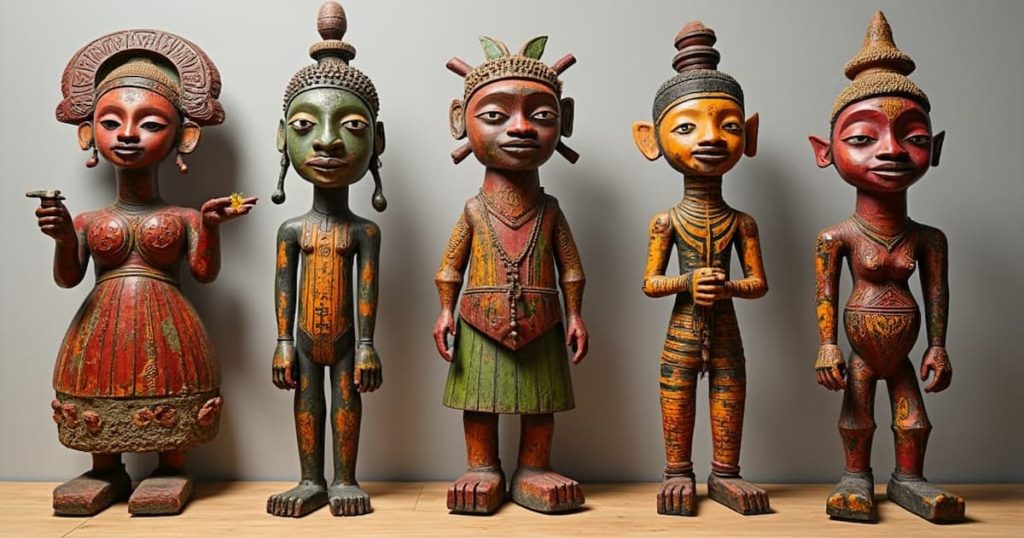
Across the African continent, wood sculpture stands as a testament to the creativity, spirituality, and resilience of its peoples.
From the Yoruba of Nigeria to the Dogon of Mali, the Baule of Côte d’Ivoire, and the Shona of Zimbabwe, these cultures have crafted wooden masterpieces that embody their worldviews, histories, and aspirations.
These sculptures, often imbued with spiritual significance, challenge Western stereotypes of African art as “primitive” and reveal the Global South’s profound contributions to global aesthetics.
This blog explores the history, cultural significance, and enduring legacy of wood sculpture among the Yoruba, Dogon, Baule, and Shona, amplifying African voices while offering a hopeful vision for cultural appreciation and societal progress.
Historical Context: Wood Sculpture in African Societies
Wood sculpture in Africa is deeply rooted in the continent’s diverse cultural and historical landscapes.
Unlike stone or metal, wood was abundant, versatile, and accessible, making it a primary medium for artistic expression across sub-Saharan Africa.
From the 10th century onward, as African societies developed complex political systems, trade networks, and religious practices, wood sculpture became a dynamic tool for expressing identity, spirituality, and power.
The Yoruba, centred in southwestern Nigeria, flourished as a cultural and political force from the 11th century, with cities like Ilé-Ifẹ̀ and Owo serving as artistic hubs. Their wood sculptures, often linked to religious rituals, reflected a cosmology where deities (orishas) and ancestors played central roles.
The Dogon, in Mali’s Bandiagara Escarpment, developed their art within a cliff-dwelling society from around the 15th century, using wood to create sculptures that mediated between the human and spiritual realms.
The Baule, in Côte d’Ivoire, emerged as a distinct group in the 18th century, crafting wood figures that balanced aesthetic beauty with spiritual function.
The Shona of Zimbabwe, with a history tied to the Great Zimbabwe civilisation (11th–15th centuries), saw a modern sculptural renaissance in the 20th century, blending tradition with contemporary innovation.
These societies were not isolated. Trans-Saharan and coastal trade routes connected them to global networks, facilitating the exchange of goods such as gold, salt, and ivory.
This economic vitality supported artistic patronage, with rulers, priests, and communities commissioning sculptures for rituals, governance, and social cohesion.
Despite colonial disruptions in the 19th and 20th centuries, these traditions endured, adapting to new contexts while preserving their cultural essence.
Yoruba Wood Sculpture: Spiritual and Social Narratives
Yoruba wood sculpture is renowned for its intricate detail and spiritual depth. Often carved from iroko or ebony, these works served as ritual objects, embodying the Yoruba concept of ase (spiritual energy).
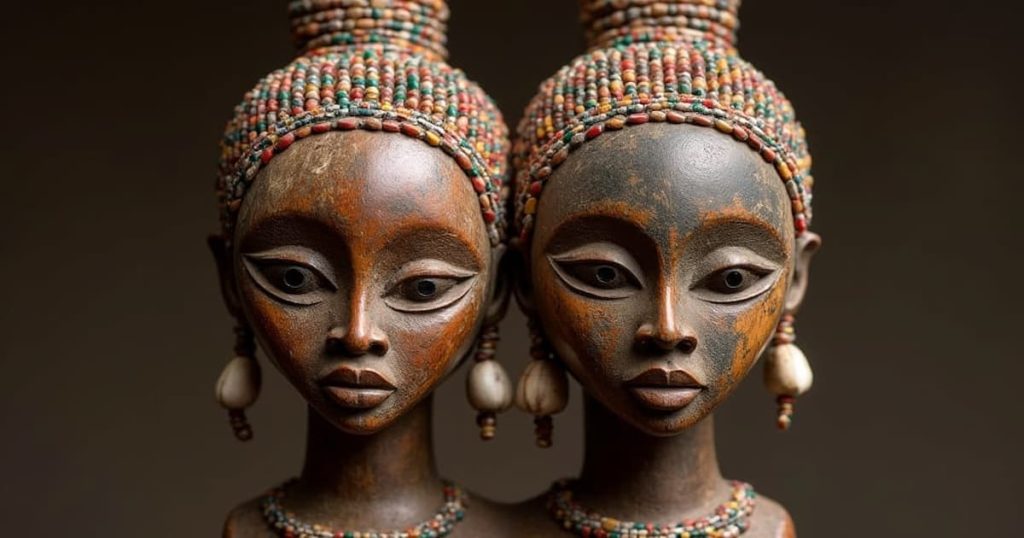
Common forms include ere ibeji (twin figures), epo masks for Gelede festivals, and shrine figures for orishas like Eshu, the trickster deity.
The ere ibeji, small figures carved to honour deceased twins, are particularly significant, reflecting the Yoruba’s high twin birth rate and belief in twins’ spiritual potency.
These sculptures, often adorned with beads and cowrie shells, feature exaggerated heads to signify ase and are treated as living entities, clothed and fed by families.
Yoruba masks, used in festivals such as Gelede to honour female ancestors, feature dynamic forms with vibrant colours and elaborate headdresses.
The Gelede mask, with its serene face and superstructure depicting animals or humans, balances male and female energies, promoting social harmony.
Yoruba carvers, organised in guilds, passed techniques through generations, ensuring continuity. As historian Rowland Abiodun notes, these sculptures are “visual metaphors” for Yoruba philosophy, encoding complex ideas about balance, community, and divinity.
Colonialism disrupted Yoruba art, with missionaries destroying “idols” and markets shifting toward Western buyers. Yet, the resilience of Yoruba sculptors, who adapted by creating works for tourists while maintaining ritual pieces, preserved their tradition.
Today, the Owo Museum and Lagos’s National Museum showcase these works, affirming their cultural significance.
Dogon Wood Sculpture: Cosmic Connections
The Dogon, living in Mali’s rugged Bandiagara Escarpment, are celebrated for their wood sculptures that reflect a complex cosmology.
Carved from hardwoods like baobab, Dogon figures often depict ancestors, mythical beings, or nommo (primordial spirits).
These sculptures, used in funerary rituals like the dama ceremony, guide souls to the afterlife. The togu na (men’s house) pillars, adorned with carvings of ancestors and animals, symbolise community strength, while kanaga masks, with their cross-shaped superstructures, represent the connection between earth and sky.
Dogon art is characterised by angular, abstract forms, contrasting with Yoruba naturalism. Figures often have elongated limbs and stylised features, reflecting a focus on spiritual essence over physical likeness.
The sigui festival, held every 60 years, features masks that reenact the Dogon creation myth, linking art to cosmic cycles. As art historian Kate Ezra explains, Dogon sculptures are “not just objects but active participants in ritual,” embodying spiritual agency.
Colonial French administration and missionary activity in the 19th century looted many Dogon works, now housed in Western museums like the Louvre.
This loss disrupted local practices, but Dogon carvers adapted, creating pieces for global markets while maintaining sacred traditions. Modern Dogon communities continue to produce sculptures, balancing cultural preservation with economic needs.
Baule Wood Sculpture: Harmony and Elegance
The Baule of Côte d’Ivoire are renowned for their polished wood sculptures, which blend aesthetic refinement with spiritual purpose.
Emerging in the 18th century after migrating from Ghana, the Baule crafted figures like blolo bla (spirit spouse) statues, believed to represent otherworldly partners who ensure personal harmony.
These figures, often male or female, feature serene faces, scarification patterns, and elegant postures, carved from softwoods like sese. Baule masks, used in goli dances, depict animals or human faces, celebrating life’s cycles and social unity.
Baule art emphasises balance, reflecting their belief in complementary forces, male and female, human and spirit. The mblo mask, with its smooth surfaces and idealised features, is a portrait of a living person, used in performances to honour community members.
As anthropologist Susan Vogel notes, Baule sculptures are “objects of beauty and power,” designed to please both humans and spirits.
Colonialism and the global art market challenged Baule traditions, with many works sold to Western collectors.
However, Baule artists adapted, creating pieces for export while preserving ritual sculptures. Today, institutions like the Musée National de Côte d’Ivoire celebrate Baule art, fostering local pride and global recognition.
Shona Wood Sculpture: Tradition Meets Modernity
The Shona of Zimbabwe, with roots in the Great Zimbabwe civilisation, are known for their modern wood sculpture movement, which emerged in the 1950s.
While traditional Shona art used stone (notably soapstone), wood became a key medium in the 20th century, reflecting both ancestral reverence and contemporary innovation.
Shona wood sculptures, often carved from ironwood or teak, depict spirits, animals, or abstract forms, embodying the concept of mudzimu (ancestral spirits).
The modern Shona sculpture movement, led by figures like Frank McEwen, who founded the National Gallery of Zimbabwe’s workshop school, blended traditional motifs with modernist aesthetics.
Artists like Bernard Matemera and Nicholas Mukomberanwa created fluid, organic forms that expressed spiritual and social themes.
Unlike Yoruba or Dogon art, Shona wood sculpture often engages global audiences, with pieces displayed in galleries from London to New York.
Colonial land dispossession and economic hardship drove many Shona to sculpture as a livelihood, transforming traditional practices into a global art form.
This adaptability highlights the Shona’s resilience, though it raises questions about commercialisation’s impact on cultural authenticity. As art historian Anitra Nettleton observes, Shona sculpture “bridges the ancestral and the modern,” maintaining spiritual roots while embracing global dialogue.
Western Perceptions and Critique
Western engagement with African wood sculpture has been marked by both admiration and misunderstanding.
In the early 20th century, colonial collectors and ethnographers labelled these works “fetishes,” ignoring their cultural context.
The 1907 Picasso-inspired Cubist movement drew heavily from African masks, including Yoruba and Baule forms, yet rarely credited their origins, perpetuating a narrative of African art as raw material for Western innovation.
This appropriation, as scholar Okwui Enwezor argues, “stripped African art of its agency,” framing it as primitive rather than sophisticated.
The looting of African sculptures during colonialism, with many Yoruba, Dogon, and Baule works now in Western museums, remains a contentious issue.
The 2018 Sarr-Savoy report called for repatriation, yet progress is slow. For instance, Dogon masks in the Musée du Quai Branly face ongoing restitution debates.
This colonial legacy contrasts with the growing global appreciation of African art, seen in exhibitions like the 2017 “African Art Now” at the Smithsonian, which featured Shona sculptures alongside Yoruba and Baule works.
A balanced critique acknowledges Western efforts to elevate African art through exhibitions and scholarship, but these must be paired with restitution and support for African institutions.
By centring African voices, like Yoruba scholar Babatunde Lawal or Shona artist Tapfuma Gutsa, we can reframe the narrative, recognising these sculptures as products of cultural genius rather than colonial trophies.
Challenges and Resilience
Wood sculpture faces challenges, including environmental degradation and the loss of traditional materials like iroko due to deforestation.
Economic pressures push artists toward commercial markets, risking the dilution of cultural significance.
For example, Baule carvers produce tourist-oriented pieces alongside ritual objects, creating a tension between authenticity and economic survival.
Yet, African communities have shown remarkable resilience.
Yoruba carvers maintain guild traditions, passing skills to new generations.
Dogon elders continue dama ceremonies, preserving sculptural practices.
Baule artists balance local and global demands, while Shona sculptors have turned economic hardship into a globally recognised art movement. These adaptations reflect the Global South’s ability to navigate modernity while honouring heritage.
A Hopeful Vision for the Future
The wood sculptures of the Yoruba, Dogon, Baule, and Shona are more than artefacts; they are living expressions of African identity, spirituality, and creativity.
Their history challenges Western narratives that marginalise the Global South, revealing instead a continent that has shaped global aesthetics for centuries. By amplifying African voices, through scholarship, exhibitions, and repatriation, we can foster a more inclusive art history that values the contributions of all cultures.
The resilience of these traditions offers hope for societal progress. Yoruba ere ibeji teach us about community and care, Dogon masks remind us of our cosmic connections, Baule figures model balance, and Shona sculptures bridge tradition and modernity.
Supporting African artists, museums, and cultural initiatives can ensure these traditions thrive, while global partnerships can promote mutual understanding.
As we confront issues like cultural restitution and environmental sustainability, the legacy of African wood sculpture inspires a vision of a world where diverse voices are celebrated, and art serves as a bridge for unity and progress.
By honouring these masterpieces, we honour the Global South’s enduring contributions to humanity’s shared heritage.