The precession of the equinoxes, a 26,000-year cycle, shapes African and global views of the cosmos in 2025.
In 2025, as we navigate a world of rapid technological change and global challenges, the precession of the equinoxes, a 26,000-year celestial cycle caused by Earth’s axial wobble, offers a timeless perspective on humanity’s place in the cosmos.
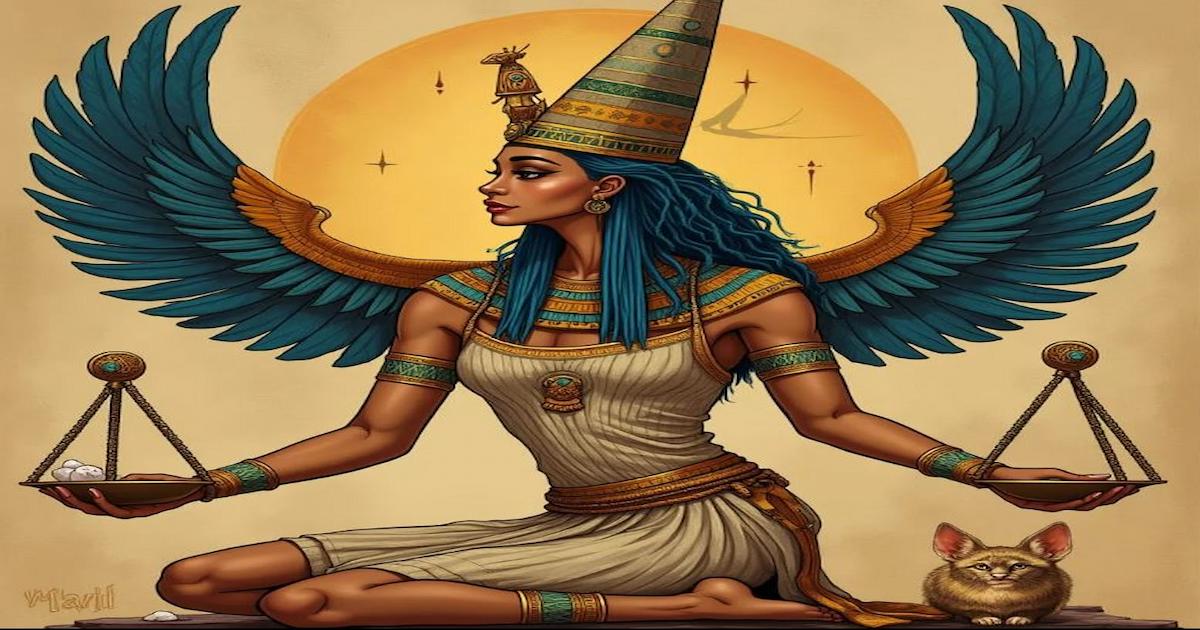
This astronomical phenomenon, which shifts the equinoxes through the zodiac, has shaped calendars, cultures, and worldviews for millennia, particularly in African civilisations like ancient Egypt and the Dogon of Mali.
By examining the significance of precession in 2025, this blog highlights the Global South’s historical contributions to astronomy, critiques Western-centric narratives, and envisions a hopeful future where diverse knowledge systems converge to address contemporary challenges.
Understanding the Precession of the Equinoxes
The precession of the equinoxes is a slow, cyclical shift in Earth’s axis, resembling a wobbling top. Earth’s 23.5-degree tilt causes its axis to trace a circular path over approximately 25,772 years.
It moves the equinoxes backwards through the zodiac constellations when day and night are equal (around March 21 and September 21). In 2025, the vernal equinox is in Pisces, but it is nearing Aquarius, sparking cultural interest in the “Age of Aquarius,” a term popularised in the 1960s to signify spiritual renewal.
Each zodiacal “age” lasts about 2,150 years, with the transition to Aquarius expected around 2600 CE, though some argue it’s closer due to varying zodiac boundaries.
This cycle, first documented by the Greek astronomer Hipparchus in 130 BCE, affects star positions and calendars, requiring adjustments like the adoption of the Gregorian calendar in 1582.
In 2025, precession remains relevant, influencing astronomy, climate science, and cultural narratives. Its study reveals the Global South’s early mastery of celestial observation, challenging Western assumptions and highlighting Africa’s role in shaping human understanding of the universe.
Historical Context: African Insights into Precession
African civilisations, often marginalised in Western histories, demonstrated profound astronomical knowledge, including awareness of precession.
Ancient Egypt, flourishing from 3000 BCE, integrated celestial cycles into its architecture and religion. The Great Pyramid of Giza (c. 2600 BCE) aligns with the cardinal points and stars like Thuban, the pole star during Egypt’s Old Kingdom, due to precession.
Egyptologist Robert Bauval suggests the pyramid’s shafts targeted specific stars, reflecting an understanding of the shifting celestial pole. The Egyptian calendar, tied to Sirius’s heliacal rising, required adjustments over centuries, indicating priests tracked equinoctial shifts to maintain agricultural and ritual accuracy.
The Dogon of Mali, whose culture crystallised around the 15th century, offer another striking example. Their sigui festival, held every 60 years, celebrates Sirius and its companion star, Sirius B, a white dwarf invisible without telescopes.
Anthropologists Marcel Griaule and Germaine Dieterlen, in their 1940s research, noted Dogon myths describing a “great star cycle,” possibly alluding to precession’s 26,000-year arc.
This knowledge, preserved in oral traditions and encoded in masks and dances, suggests centuries of precise observation. In 2025, the next sigui (circa 2032) underscores the Dogon’s enduring connection to celestial rhythms.
Other Global South cultures also engaged with precession.
By 200 BCE, the Maya of Mesoamerica developed the Long Count calendar, which some scholars link to precessional cycles through its tracking of long-term celestial events.
In India, Vedic texts from 1500 BCE reference shifting equinoxes, tying them to cosmic ages. These contributions highlight the Global South’s role as a pioneer of astronomical thought, long before Hipparchus’s calculations.
Cultural Significance in 2025: African Cosmologies and Modern Relevance
In 2025, the precession of the equinoxes resonates deeply in African cultural contexts, where astronomy and spirituality are intertwined.
For the Dogon, the sigui festival celebrates Sirius’s cycles, with wooden masks and dances reenacting creation myths that align with precessional shifts.
As Malian scholar Amadou Hampâté Bâ notes, these rituals are “living archives,” preserving knowledge through oral and material traditions.
The Dogon’s awareness of Sirius B, confirmed by Western science only in 1862, challenges sceptics like Carl Sagan, who suggested missionary influence, and affirms the sophistication of African observation techniques.
In modern Egypt, Nubian and Coptic communities maintain festivals tied to celestial events, echoing ancient practices that accounted for precession.
The Wafaa El-Nil festival, celebrating the Nile’s flooding, historically aligned with Sirius’s rising, a practice adjusted over centuries due to equinoctial shifts.
In 2025, these traditions connect communities to their astronomical heritage, fostering cultural pride amidst globalisation’s pressures.
Globally, precession inspires cultural narratives. While scientifically imprecise, the “Age of Aquarius” concept reflects a desire for transformation in 2025, a year marked by climate crises, technological advances, and social movements.
African cosmologies, which view humans as part of a cosmic whole, offer a counterpoint to Western individualism, suggesting holistic approaches to modern challenges like sustainability and equity.
Western Narratives and Constructive Critique
Western science’s understanding of precession, built on Hipparchus’s work and refined by Ptolemy and Copernicus, has been invaluable.
In 2025, advanced tools like the James Webb Space Telescope will provide precise precession effects data, linking it to Milankovitch cycles that influence Earth’s climate over millennia.
For instance, precession contributed to the Sahara’s transition from a lush savanna to a desert around 6000 BCE, a shift relevant to current climate studies.
However, Western narratives often marginalise Global South contributions. Colonial-era scholars dismissed African astronomical knowledge as “myth,” ignoring evidence like Egypt’s star-aligned temples or the Dogon’s Sirius lore.
This Eurocentrism, as Senegalese historian Cheikh Anta Diop critiques, “erased Africa’s scientific legacy,” framing it as derivative of Greek or Mesopotamian thought. In 2025, this bias persists in popular accounts that credit Hipparchus as precession’s sole discoverer, overlooking earlier African observations.
A balanced critique recognises Western precision while challenging its exclusivity.
The Dogon’s knowledge, for example, was dismissed as “impossible” without telescopes, yet their oral traditions, verified by modern astronomy, suggest advanced naked-eye techniques.
Similarly, Egypt’s pyramid alignments predated Greek astronomy for centuries. In 2025, collaborative research, like archaeoastronomy projects studying African sites, offers a path to integrate these perspectives, enriching global science.
Precession’s Relevance in 2025: Science and Society
In 2025, precession remains a cornerstone of astronomy and climate science.
Astronomers use it to calibrate star charts, essential for navigation and space exploration. Climate scientists study its role in long-term cycles, which informs models for global warming.
For instance, precession’s influence on Earth’s tilt affects solar radiation, a factor in predicting future climate shifts—a critical issue as the world grapples with rising temperatures.
Culturally, precession shapes narratives of renewal. The “Age of Aquarius” resonates in 2025’s social movements, from environmental activism to calls for global equity.
African perspectives, emphasising cosmic harmony, align with these aspirations. The Dogon’s holistic cosmology, for example, suggests humans must align with natural cycles, a principle echoed in 2025’s push for sustainable practices.
African communities face challenges in preserving this heritage. Conflict in Mali threatens Dogon cultural sites, while urban development in Egypt endangers ancient observatories.
Colonial looting, such as the Dendera Zodiac’s removal to the Louvre in 1821, continues to spark repatriation debates.
In 2025, the global push for restitution, led by African scholars like Felwine Sarr, gains traction, with Nigeria and Mali advocating for returned artefacts to bolster local museums.
Amplifying Global South Voices
Amplifying African voices is central to redefining the history of precession. Dogon elders, who pass down Sirius knowledge through oral traditions, offer insights Western science often overlooks.
Egyptian archaeologists like Zahi Hawass, advocating for local scholarship, emphasise Africa’s astronomical primacy.
In 2025, institutions like Nigeria’s Centre for Black Culture and International Understanding and Mali’s University of Timbuktu promote indigenous knowledge, integrating it with modern astronomy.
These efforts challenge Western biases toward written records. African oral traditions, as Bâ argues, are “dynamic repositories,” rivalling texts in accuracy.
The Dogon’s sigui masks and Egyptian star charts are material evidence of precessional awareness, deserving equal weight. In 2025, digital platforms like Google Arts & Culture amplify these voices, sharing African cosmologies with global audiences.
Challenges and Opportunities in 2025
Preserving precession-related knowledge faces hurdles.
Environmental threats, like desertification in Mali, endanger Dogon sites, while funding disparities limit African research compared to Western observatories.
Globalisation risks diluting oral traditions, as younger generations adopt digital cultures. Yet, 2025 offers opportunities. Digital archiving, such as 3D models of Egyptian temples, preserves knowledge.
UNESCO’s support for Mali’s heritage and Nigeria’s cultural tourism initiatives bolsters local efforts. Community-led astronomy workshops, like those in South Africa’s SKA project, empower youth to blend traditional and modern science.
Repatriation remains critical. The Dendera Zodiac’s return, demanded by Egyptian activists in 2025, could set a precedent for other artefacts and strengthen African institutions.
Collaborative projects, like those between African universities and global observatories, can bridge knowledge systems and foster mutual respect.
A Hopeful Vision for 2025 and Beyond
In 2025, the precession of the equinoxes will be more than an astronomical cycle; it will be a lens for uniting humanity.
African civilisations, from Egypt’s pyramids to the Dogon’s sigui, demonstrate the Global South’s astronomical genius, challenging Western monopolies on science.
By centring these voices through scholarship, repatriation, and education, we can build a more inclusive narrative of human discovery.
This legacy inspires hope. African cosmologies, which integrate science and spirituality, offer models for addressing 2025’s challenges, from climate change to cultural erosion.
The Dogon’s view of cosmic harmony aligns with global calls for sustainability, while Egypt’s ancient observatories remind us of humanity’s shared quest for knowledge. As we approach the “Age of Aquarius,” precession invites us to embrace diverse perspectives, fostering a future where the Global South’s wisdom guides humanity toward unity and progress.