The Eternal Dance of Osiris: A Tale of Life, Death, and Rebirth

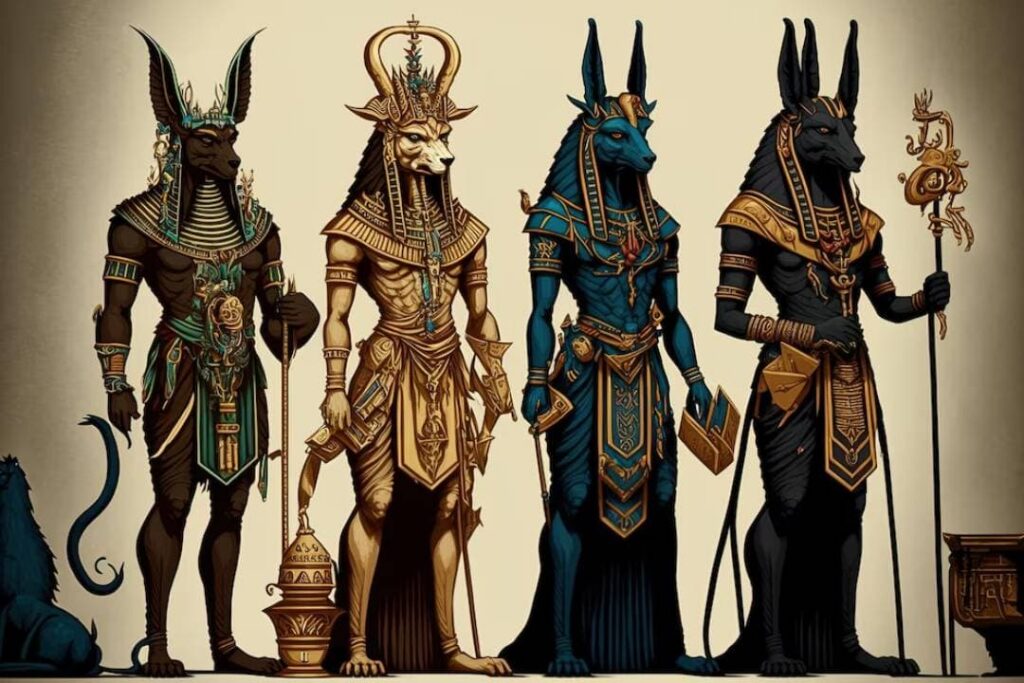
egyptian-deities-including-anubis-seth-hathor-horus_

Step into ancient Egypt, where the Nile’s gentle ripples reflect a sky ablaze with stars, and the gods walk among whispers of papyrus and stone. Here, in a time before pyramids touched the heavens, a story unfolded that would echo through millennia, the Osirian Cycle, a saga of love, betrayal, and triumph that shaped the heart of a civilization.

This is no mere myth but a sacred truth to the Egyptians, carved in temple walls and chanted in the Pyramid Texts, revealing the mysteries of Osiris, Isis, Horus, Seth, and Nephthys. Let’s journey to their world, where life and death dance in an eternal embrace, and secrets of the gods unfold like lotus petals at dawn.

The Golden King and His Verdant Realm

In the beginning, when the world was young, Osiris stood as Egypt’s first king, a god of radiant wisdom and boundless generosity. His skin shimmered green, like the fertile fields he blessed, and his eyes held the promise of life itself. Osiris taught humanity to sow grain, brew beer, and live in harmony, turning chaos into order.

By his side was Isis, his sister and queen, her beauty matched only by her magic, which could weave spells to mend or protect. Together, they ruled a golden age, their love as steady as the Nile’s flow. But every light casts a shadow. Seth, Osiris’s brother, burned with envy, his heart a storm of chaos. A god of deserts and tempests, Seth’s red hair and fierce eyes marked him as wild, untamed.

Nephthys, Seth’s wife and another sister, watched quietly, her loyalty torn between her husband and her love for Osiris and Isis. These four, bound by blood and fate, were the pillars of a story that would test the very fabric of the cosmos.

A Treacherous Feast and a Secret Plot

The Osirian Cycle’s first mystery unfolds in a moment of betrayal, cloaked in celebration. Seth, consumed by jealousy, devised a plan as cunning as the desert fox. He invited Osiris to a grand feast, where laughter rang and wine flowed like the river. Amid the revelry, Seth unveiled a magnificent chest, carved with spells and inlaid with gold, promising it to whoever fit perfectly inside. The guests tried, one by one, but none knew the chest was crafted to Osiris’s exact measure a secret only Seth held.

Osiris, trusting and noble, lay within the chest, his laughter echoing as the lid slammed shut. In an instant, Seth’s followers sealed it with molten lead, and the chest became a tomb. The guests gasped, but Seth’s triumph was swift. He hurled the chest into the Nile, where it drifted away, carrying Osiris to a watery fate. The mystery deepened: where had Osiris gone, and could life endure without its king?

Isis’s Quest: A Mother’s Magic

Isis, heartbroken yet fierce, refused to let her love vanish. She was no ordinary goddess, her magic was a river of power, her heart a beacon of hope. With Nephthys by her side, weeping for her brother’s fate, Isis scoured the land, her wings of a kite soaring over reeds and marshes.

Nephthys, often silent in the myth, played a tender role, her loyalty to Isis a quiet secret that softened the cycle’s tragedy. Together, they followed whispers of the chest, which had washed ashore in Byblos, entwined in a tamarisk tree that grew into a pillar for a king’s palace.

Using her cunning, Isis entered the palace as a nursemaid, her magic unrecognized. She retrieved the chest, cradling it as tears fell, and brought it back to Egypt’s marshes to hide. Here, another secret unfolded: Isis’s spells could defy death itself.

Alone under the stars, she chanted ancient words, her hands glowing as she sought to awaken Osiris. Though his body was whole, his spirit had crossed to the Duat, the underworld. Yet Isis’s magic wove a miracle, she conceived a child, Horus, through divine union, ensuring Osiris’s legacy would live. This act, shrouded in mystery, was Egypt’s testament to love’s power over loss.

Seth’s Wrath and the Hidden Child

But Seth’s shadow loomed. Discovering Osiris’s body in the marshes, he unleashed his fury, tearing it into fourteen pieces and scattering them across Egypt. This brutal act was no mere cruelty, it was a challenge to Ma’at, the cosmic balance Osiris embodied. Isis, undaunted, embarked on a second quest, gathering each piece with Nephthys’s aid.

Where they found a fragment, a shrine arose, explaining why Osiris had temples across the land. With her magic, Isis reassembled Osiris, wrapping him in linen as the first mummy, a sacred rite that promised rebirth.

Meanwhile, Isis hid in the Delta’s reeds, pregnant with Horus, her son destined to avenge his father. Seth hunted them, his storms shaking the marshes, but Isis’s spells cloaked Horus in safety. Raised in secret, Horus grew strong, his falcon eyes gleaming with Osiris’s spirit. The Egyptians saw this as a divine mystery: a child born from death, carrying the hope of justice.

The Battle for the Throne

The Osirian Cycle’s heart is a clash of destinies, as Horus, now a young god, faced Seth for Egypt’s throne. This wasn’t just a family feud, it was a cosmic trial to restore Ma’at. The gods assembled, led by Ra, the sun god, to judge the rivals.

Seth argued his strength made him worthy, while Horus claimed his birth right as Osiris’s heir. Their contests, detailed in the Contending of Horus and Seth, were both fierce and strange, racing as hippos beneath the Nile, battling in boats of stone, even a trick where Isis’s magic outwitted Seth.

One secret moment stands out: Seth tried to dishonor Horus, but Isis’s spells protected her son, turning Seth’s act against him. The gods, swayed by Horus’s resilience and Isis’s wisdom, declared him king, banishing Seth to the desert’s edge. Horus’s victory was Egypt’s triumph, linking every pharaoh to Osiris’s legacy, as kings were seen as “living Horuses” ruling with their father’s blessing.

Osiris’s New Realm: The Underworld’s King

Osiris, though dead, was not gone. Resurrected by Isis’s love, he became lord of the Duat, the underworld, judging souls with a feather of Ma’at to grant eternal life. His green skin now symbolized rebirth, like crops rising from the Nile’s silt.

The Egyptians saw Osiris in every harvest, every burial, believing that, like him, they could rise again. This mystery, the promise of resurrection, was the cycle’s deepest gift, etched in tomb texts and mummification rites.

Symbols and Secrets of the Cycle

The Osirian Cycle shimmered with symbols that told its story. The djed pillar, a spine-like column, stood for Osiris’s stability, raised in festivals to honor his strength. The ankh, the cross of life, tied to Isis’s nurturing, promised eternity. Horus’s falcon soared as a symbol of kingship, while Seth’s chaotic beast part jackal, part unknown warned of disorder. The Nile itself was the cycle’s stage, its floods mirroring Osiris’s renewal. These emblems, carved in amulets and temples, were secrets shared with the faithful, inviting them into the gods’ eternal drama.

Worshipping the Cycle: Egypt’s Devotion

Egyptians lived the Osirian Cycle through rituals and festivals, their hearts woven into its mysteries. At Abydos, Osiris’s cult center, priests reenacted his death and rebirth in the “Mysteries of Osiris,” with processions and sacred dramas. Mummies were wrapped to mimic Osiris, their tombs painted with Isis’s protective wings.

The festival of Khoiak saw clay figures of Osiris sown with seeds, sprouting to celebrate his fertility. Ordinary people wore ankh amulets or prayed to Isis for protection, feeling the cycle’s warmth in their daily lives. Pharaohs built temples to Horus, claiming his victory as their own, ensuring Ma’at endured.

The Cycle’s Lasting Light

The Osirian Cycle didn’t fade with Egypt’s sands. Its story, preserved in Pyramid Texts and later Greco-Roman tales, inspired myths of resurrection worldwide. Isis’s image as a universal mother influenced later goddesses, while Osiris’s judgment shaped ideas of the afterlife. Today, the cycle lives in museums, books, and films, its tale of love and triumph still stirring hearts. It’s a reminder that even in death, there’s hope a secret the Egyptians gifted to eternity.

A Tender Farewell to the Gods

As the Nile glitters under the stars, the Osirian Cycle whispers its truths: Osiris, the king who rose again; Isis, the mother who wove life from loss; Horus, the son who reclaimed justice; Seth, the storm tamed by order; and Nephthys, the quiet ally of love. Their story, rich with mysteries of betrayal, magic, and rebirth, was Egypt’s heartbeat, a tender promise that life endures. Step back from their world, but carry their light, the gods still watch, their cycle spinning forever.
Ma’at – Healing Principles That Can Change the Modern World

In a world fractured by inequality, environmental crises, and division, Ma’at offers a beacon of hope, a way to heal through harmony and interconnectedness. Let me take you on a journey to discover Ma’at, its African roots, its universal values, and how its gentle power can mend our modern world.

Ma’at Healing Principles

Ma’at Healing Principles: A people’s Restoration

Imagine a river flowing gently through an ancient land, its waters steady, nourishing the earth, and reflecting the stars above. This is how I see Ma’at, the ancient Egyptian principle that guided a civilisation for millennia. As someone who has wandered the paths of African philosophy, I feel a deep pull to share Ma’at’s wisdom with you, a wisdom of truth, balance, and justice that feels as vital today as it did when pharaohs ruled beside the Nile.

In a world fractured by inequality, environmental crises, and division, Ma’at offers a beacon of hope, a way to heal through harmony and interconnectedness. Let me take you on a journey to discover Ma’at, its African roots, its universal values, and how its gentle power can mend our modern world.

Understanding Ma’at and Its African Roots

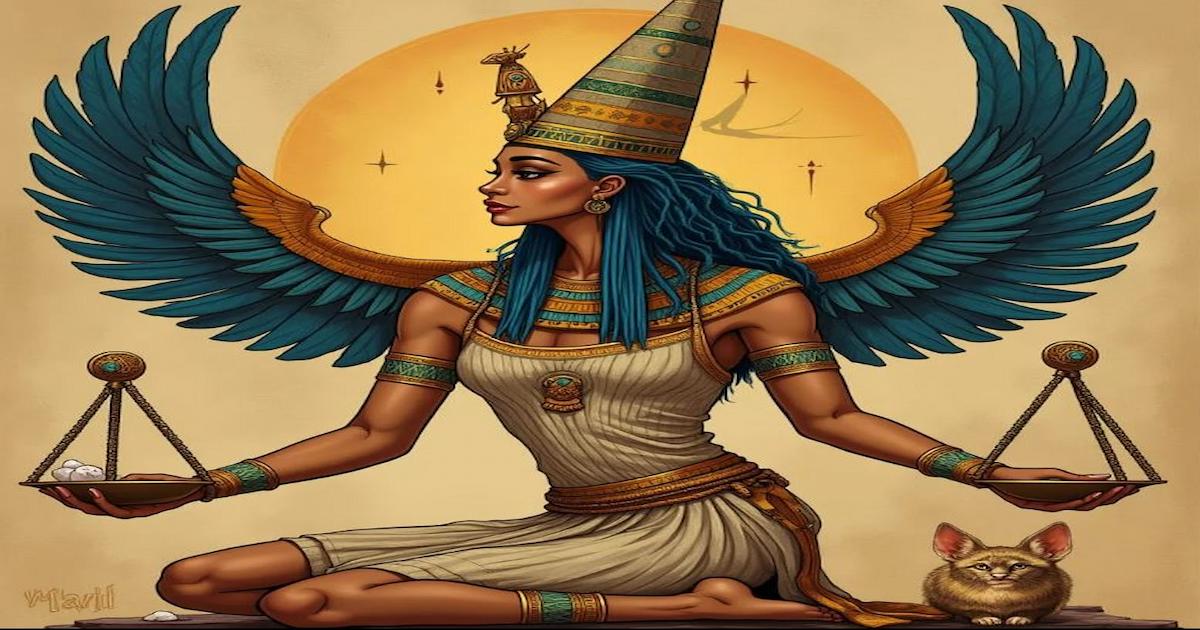
Ma’at is the heartbeat of ancient Egyptian life, a principle that wove together truth, balance, order, harmony, justice, morality, and reciprocity into a single, radiant ideal. Picture it as a scale, perfectly balanced, holding the world in equilibrium. To the Egyptians of the Old Kingdom (c. 2686–2181 BCE), Ma’at was both a goddess and a concept, her feather of truth the measure of every soul. She guided pharaohs to rule with fairness, priests to honour the gods, and farmers to share their harvest.

Ma’at was the order that kept the Nile flooding predictably, the harmony that bound families, and the justice that ensured no one’s voice was silenced. In ancient Egypt, Ma’at was everywhere. Pharaohs offered her image in temples, pledging to uphold truth in their decrees. In the afterlife, hearts were weighed against her feather, if heavy with deceit, they faced judgment; if light with integrity, they found eternity.

This wasn’t just about rules; it was about reciprocity, giving back to the community as it gave to you. A farmer shared grain, knowing his neighbor would share in turn. A judge sought equity, ensuring disputes ended in restoration, not revenge. Ma’at was morality in action, a lived commitment to doing what was right for the whole.

Ma’at’s roots run deep in African philosophical traditions, sharing a spirit with concepts like Ubuntu, the Southern African principle of shared humanity, “I am because we are.” Like Ubuntu, Ma’at sees interconnectedness as the core of existence. In African worldviews, no one stands alone; we are tied to our community, the land, and the spiritual world.

Ma’at reflects this by demanding respect for nature’s cycles, planting in rhythm with the Nile’s floods, and for each other’s dignity. When a dispute arose, Egyptians sought reconciliation, not domination, mirroring Ubuntu’s focus on healing relationships. This African lens, prioritizing balance over chaos, community over isolation, shaped Ma’at into a philosophy that held a civilization together for thousands of years.

Ma’at’s Universal Values

Ma’at’s wisdom isn’t locked in Egypt’s past; it carries universal values that speak to hearts everywhere. At its core, Ma’at is about equity, fairness that lifts everyone, not just the powerful. Imagine a village where every voice, from the elder to the child, shapes decisions. That’s Ma’at’s justice, rooted in empathy, ensuring no one is left behind.

This resonates with traditions worldwide, from the Buddhist call for compassion to the Indigenous emphasis on respect for the earth. Ma’at’s integrity demands we act with honesty, like a merchant in ancient Memphis weighing grain fairly, knowing trust builds stronger bonds than deceit.

Ma’at’s harmony is a song all cultures can sing. In Japan, the concept of wa seeks group unity; in Ma’at, harmony means aligning personal actions with cosmic order, like stars moving in their orbits. This requires wisdom, knowing when to speak, when to listen, and how to restore what’s broken.

Consider a family resolving a quarrel not with blame but with understanding, each member practicing reciprocity by offering forgiveness. Ma’at’s restoration is universal, a call to mend rather than discard, whether it’s a relationship or a ravaged forest.

Ma’at also teaches respect, not just for people but for the world we share. In ancient Egypt, farmers honoured the land’s cycles, planting and harvesting in sync with the Nile’s pulse. This respect mirrors global Indigenous practices, where the earth is a partner, not a resource. Ma’at’s values, empathy, integrity, equity, bridge cultures, inviting us to see ourselves in others, to act with wisdom, and to build a world where justice and harmony prevail.

Healing the Modern World with Ma’at

Today, our world feels like a river thrown off course, churning with systemic injustice, environmental collapse, and cultural divides. Ma’at’s principles offer a path to healing, a way to restore balance in a chaotic age. Let’s explore how its wisdom can address these challenges, bringing responsibility and reconciliation to our lives and communities.

Consider systemic injustice, where wealth and power concentrate in few hands. Ma’at’s justice demands equity, urging us to dismantle barriers that deny opportunities to the marginalized. Picture a community inspired by Ma’at, launching initiatives like job training for underserved youth, ensuring everyone has a seat at the table. This mirrors restorative justice practices, where offenders and victims meet to heal wounds, not widen them, a modern echo of Ma’at’s reconciliation. By prioritizing fairness and empathy, we can rebuild trust, turning division into community.

The environmental crisis, with its rising seas and burning forests, cries out for Ma’at’s sustainability. Ancient Egyptians lived in harmony with the Nile, never taking more than they gave. Today, Ma’at inspires us to adopt sustainable practices, think of urban gardens that feed neighbourhoods or global agreements to cut emissions.

A hypothetical town might launch a Ma’at-inspired project, planting trees to restore a degraded watershed, each citizen taking responsibility for the land’s health. This interconnectedness, seeing ourselves as part of nature’s web, can heal ecosystems and ensure a thriving planet for future generations.

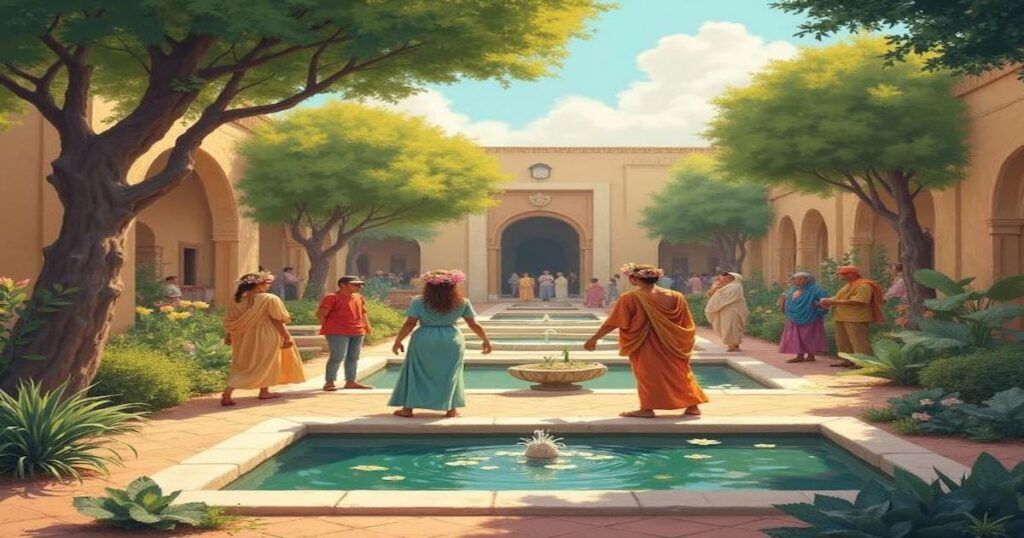
Social fragmentation, where cultures clash and empathy fades, finds answers in Ma’at’s harmony. In a polarised world, Ma’at calls for dialogue, like a village council where every voice is heard. Imagine a city hosting “Ma’at circles,” where residents share stories across divides, racial, political, and religious, finding common ground through respect and reciprocity. This reflects Ubuntu’s communal spirit, reminding us that our strength lies in unity. Such efforts foster healing, turning strangers into neighbours, and discord into understanding.

On a personal level, Ma’at offers a compass for growth. In a world of distraction, its truth encourages us to live with integrity, aligning actions with values. Picture someone overwhelmed by stress, rediscovering balance through daily reflection, perhaps journaling to weigh their choices against Ma’at’s feather. This personal restoration ripples outward, as one person’s empathy inspires others, creating communities rooted in mutual care. Ma’at’s wisdom teaches us that healing starts within, then spreads like the Nile’s waters, nourishing all it touches.

Historical traumas, like the scars of colonialism or slavery, also find solace in Ma’at. Its reconciliation invites truth-telling, as seen in South Africa’s Truth and Reconciliation Commission, where victims and oppressors faced their shared past. A Ma’at, inspired approach might see communities honoring forgotten histories, perhaps a monument to enslaved ancestors, built with community input, fostering healing through justice and respect. By confronting pain with empathy, we restore Ma’at’s balance, turning wounds into bridges.

A Call to Embrace Ma’at

As I reflect on Ma’at, I see a river flowing through time, its waters carrying truth, balance, and justice from ancient Egypt to our troubled world. Ma’at is more than a philosophy; it’s a call to live with integrity, to seek harmony in our communities, and to take responsibility for the earth and each other. Its African roots, shared with Ubuntu’s communal spirit, remind us of our interconnectedness, while its universal values, empathy, equity, restoration, speak to every heart.

You don’t need to be a scholar to embrace Ma’at. Start small: listen with respect to someone’s story, act with wisdom in a conflict, or plant a seed, literal or metaphorical, to sustain your community. Imagine a world where Ma’at’s principles guide us, where justice heals, harmony unites, and reciprocity rebuilds. This is the healing Ma’at offers, a gentle yet powerful force to mend our fractured planet. Let’s step into its flow, carrying its wisdom forward, and watch as balance returns, one compassionate act at a time.