In the golden dawn of Egypt’s Old Kingdom, when pyramids rose like stairways to the gods, the Nile whispered secrets of a world held in delicate balance. This was a land of Ma’at, order, truth, and harmony, watched over by Ra, the sun god whose radiant gaze warmed the earth. But beneath the sun’s glow, a storm brewed, born of human folly and divine wrath.
This is the tale of Sekhmet, the lioness goddess whose fury nearly drowned mankind in blood, and of Ra’s desperate plan to save his creation with a flood of crimson beer. It’s a story of chaos and renewal, of a goddess torn between destruction and love, and of a cosmos striving for balance.
Ra’s Gaze and Humanity’s Fall
Ra, the falcon-headed sun god, sailed daily across the sky in his solar barque, his sun disk a beacon of life. From his celestial throne, he watched humanity, his children, whom he had crafted from the primordial waters of Nun. In the Old Kingdom, when pharaohs built monuments to eternity, Ra expected gratitude and adherence to Ma’at. But mankind grew reckless, scheming, warring, and defying the sacred order.
Their greed and pride disrupted the cosmic harmony, like stones rippling the Nile’s calm surface. Ra’s heart, once warm, grew heavy with disappointment. Humanity’s rebellion was a wound to Ma’at, and the sun god resolved to punish them, his decision both a father’s discipline and a king’s decree.
Sekhmet: The Lioness Unleashed
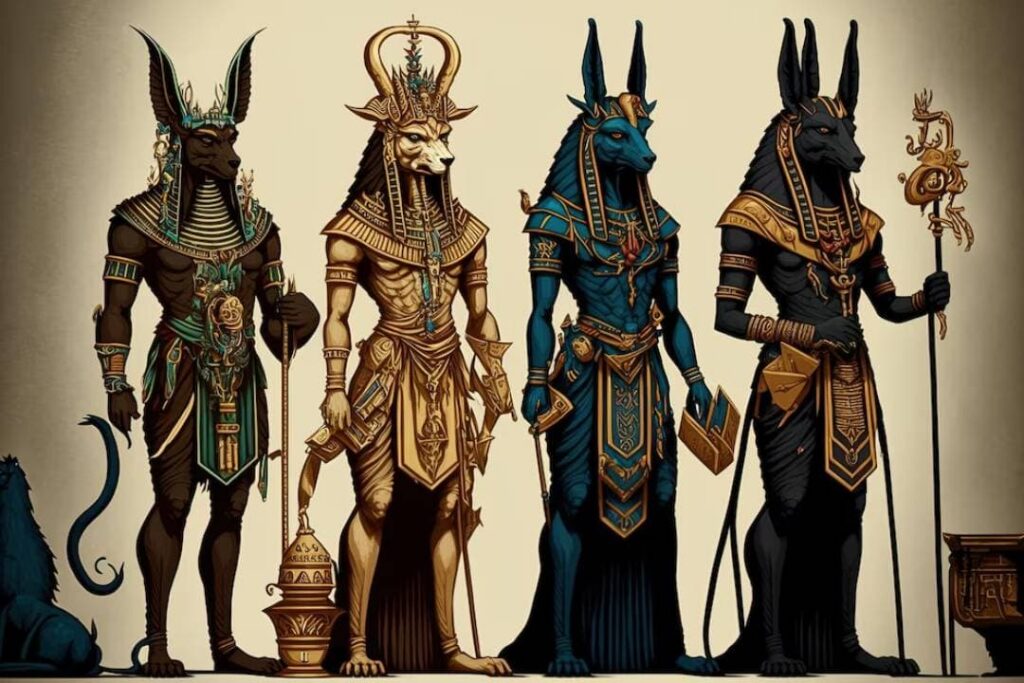
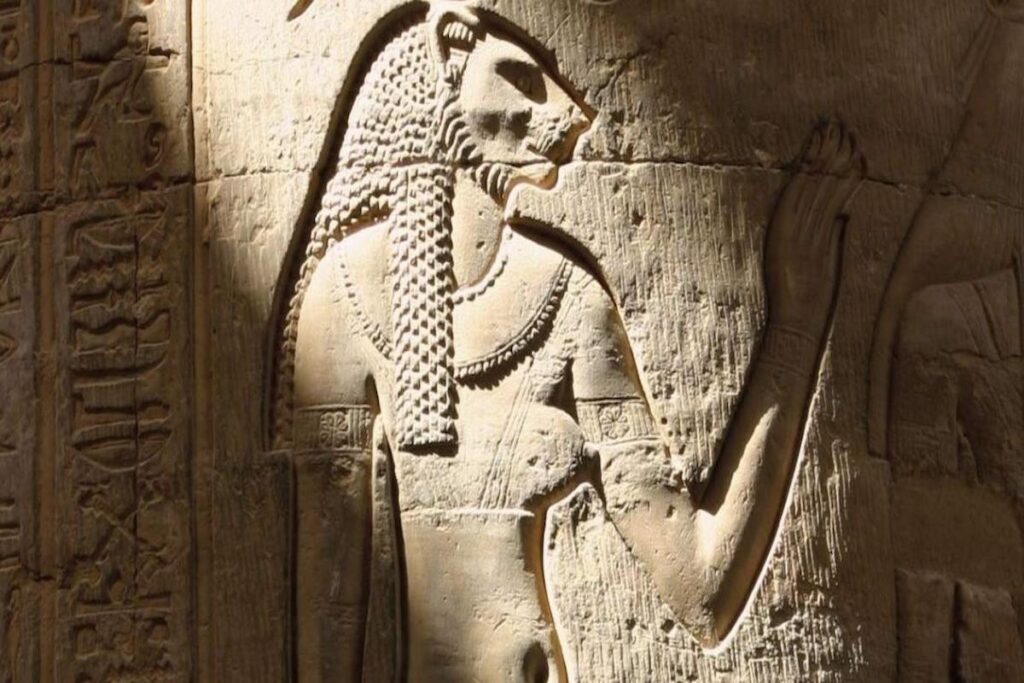
To enact his judgment, Ra summoned Sekhmet, a goddess born from his own fiery will. Sekhmet was the Eye of Ra, an extension of his power, her name meaning “the powerful one.” With a lioness’s head, eyes blazing like embers, and a body draped in red, she was divine wrath incarnate, yet also held a duality, fierce destroyer and fierce protector.
Linked to Hathor, the gentle goddess of love and joy, Sekhmet was Hathor’s shadow, her rage a twisted mirror of Hathor’s nurturing warmth. This inner conflict, love and destruction entwined, made Sekhmet a force of awe and terror. Ra sent her to earth, her roar shaking the sands, to punish mankind for their sins against Ma’at.
The Bloodlust and Chaos Unleashed
Sekhmet descended like a wildfire, her claws tearing through villages, her breath a scorching wind. Her bloodlust was insatiable, a primal hunger that drove her to slaughter without mercy. Fields turned crimson, the Nile choked with the fallen, and humanity’s cries rose to the heavens. The world spiraled into chaos, Ma’at’s delicate balance shattered as Sekhmet’s rampage spared neither the guilty nor the innocent.
Temples crumbled, crops withered, and the land groaned under the weight of destruction. Mankind, once proud, now cowered, their rebellion replaced by despair. Yet within Sekhmet’s fury lay a mystery, a goddess torn between her divine duty and the Hathor-like love buried deep within her, a duality reflecting the human struggle between creation and ruin.
Ra’s Regret and the Divine Council
High above, Ra watched, his heart twisting with regret. He had sought justice, not annihilation. Humanity, flawed as they were, was still his creation, and their near-destruction threatened the very cosmology he upheld, a world born from order, not chaos.
Ra called a council of gods, their voices echoing in the celestial realm. Thoth, the ibis-headed god of wisdom, urged a solution that honoured Ma’at’s balance. Hathor, her eyes soft with compassion, reminded Ra of her connection to Sekhmet, hinting at the lioness’s hidden potential for renewal. Ra devised a plan, a delicate deception born of sacrifice and cunning, to halt Sekhmet’s rampage without breaking her divine spirit.
The Crimson Flood: A Brew of Deception
Ra’s strategy was as bold as it was tender, a trick to soothe the lioness’s fury. He ordered the gods to gather vats of beer, thousands of jugs brewed from barley in the temples of Heliopolis. To mimic blood, they mixed in red ochre, a sacred pigment from the earth, its hue rich with the symbolism of life and sacrifice. Under Ra’s command, the gods poured the crimson brew into the fields near Dendera, Sekhmet’s hunting ground, creating a vast, shimmering flood that gleamed like a sea of blood under the dawn. The red ochre, tied to rituals of offering, was a silent prayer for Ma’at’s restoration, a sacrifice to appease the divine wrath.
As the sun rose, Sekhmet bounded into the fields, her eyes alight with bloodlust. Seeing the crimson flood, she mistook it for the blood of her prey. With a triumphant roar, she drank deeply, gulping the beer until her senses swam. The alcohol dulled her rage, her limbs grew heavy, and her roars softened to murmurs. The deception worked, Sekhmet’s bloodlust faded, and she sank into a drunken slumber, her destructive fire quenched. The gods watched in awe, their hearts lifted by Ra’s wisdom and the power of their collective intervention.
Transformation: From Fury to Renewal
As Sekhmet slept, a miracle unfolded. The goddess awoke not as the lioness of wrath but transformed, her spirit softened, her Hathor-like essence rising to the surface. The duality within her, destroyer and nurturer, found harmony, reflecting the divine capacity for both judgment and mercy. Hathor’s gentle presence shimmered in Sekhmet’s eyes, a reminder that love could tame even the fiercest storm.
The land, scarred by her rampage, began to heal, as the surviving humans emerged, humbled and repentant. Ra, his sun disk glowing warmly, declared Ma’at restored, the balance between order and chaos renewed. Sekhmet, now a guardian as much as a warrior, stood as a symbol of transformation, her story a lesson in the potential for redemption within gods and mortals alike.
Humanity’s Plight and the Cosmos Restored
The myth of Sekhmet was more than a tale of divine anger, it was a cornerstone of ancient Egyptian cosmology, reflecting beliefs about creation, the gods’ roles, and existence’s fragile balance. In the Old Kingdom, when the myth likely took shape, Egyptians saw humanity’s role as upholding Ma’at through devotion and harmony. Their rebellion, greed, strife, defiance, had invited chaos, but Sekhmet’s rampage showed the consequences of disrupting the divine order. The flood of beer, a sacred offering, was a sacrifice to restore what was broken, echoing rituals where offerings appeased the gods.
The story’s significance lay in its message: the gods, like humans, held duality. wrath and mercy, destruction and creation. Sekhmet’s transformation mirrored humanity’s chance to learn from their mistakes, to rebuild with humility. The red ochre in the beer, used in temple rites, tied the myth to Egypt’s spiritual life, symbolising life’s renewal through sacrifice. The cosmos, shaken by chaos, found equilibrium, affirming Ra’s role as the guardian of Ma’at and the gods’ duty to guide, not destroy, their creation.
The Myth’s Eternal Echoes
In the temples of Dendera and Memphis, priests chanted Sekhmet’s tale, her statues both feared and revered. The myth, preserved in texts like the Book of the Heavenly Cow, was a warning and a promise: stray from Ma’at, and chaos follows; seek balance, and renewal awaits. Sekhmet’s duality inspired rituals where beer and ochre offerings honoured her, ensuring her protection rather than her wrath. The story shaped Egyptian views of the divine-human condition, showing that even gods wrestle with conflicting natures, just as humans grapple with pride and redemption.
Today, Sekhmet’s roar echoes in museum halls and storybooks, her tale a vibrant thread in Egypt’s mythological tapestry. It reminds us of the delicate dance between order and chaos, the power of sacrifice to heal, and the hope that even the fiercest storms can give way to dawn. As the Nile flows on, Sekhmet stands watch, her lioness heart a testament to the eternal quest for balance.