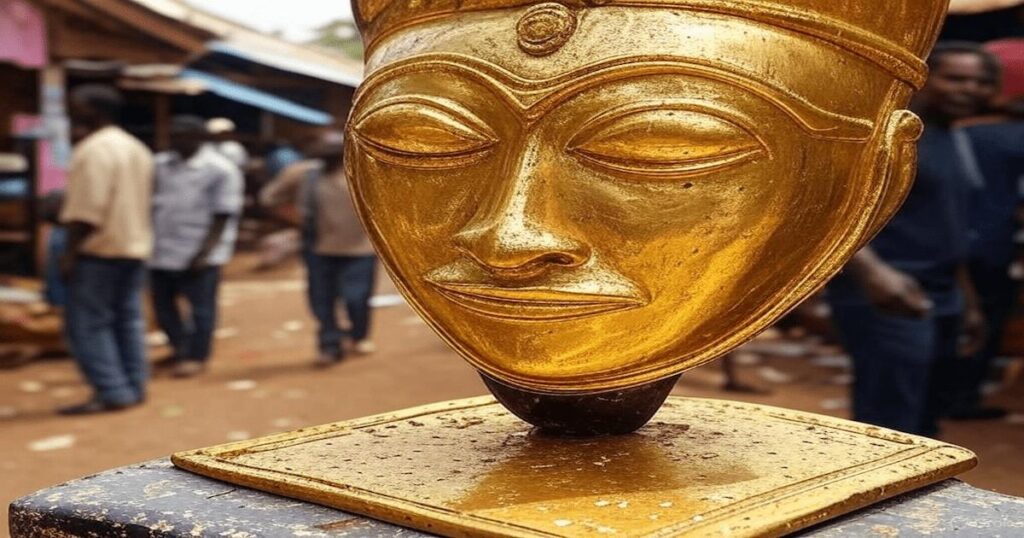
The Golden Thread: Africa’s Gold Trade and Its Timeless Allure

Gold Trade

In the heart of Africa, where the sun kisses the earth with a fiery glow, gold has long been more than a metal, It’s a story, a dream, a pulse of power and prestige. From the ancient kingdoms of the Sahel to the bustling ports of the Swahili Coast, the gold trade wove a glittering tapestry across the continent, connecting distant lands and shaping civilisations.

For those new to Africa’s past, this is not just a tale of commerce but a saga of ambition, ingenuity, and resilience that spanned over two millennia, from roughly 1000 BCE to the 19th century CE. Let us embark on a journey through time, tracing the rise, zenith, and transformation of Africa’s gold trade, with a storyteller’s heart to captivate and enchant.

The Dawn of Gold: Ancient Beginnings

Gold, that radiant symbol of wealth, has sparkled in Africa’s story since time immemorial. The continent’s geological bounty, rich with gold deposits, lay scattered across its landscapes, from the highlands of Zimbabwe to the riverbeds of West Africa.

As early as 1000 BCE, African communities were mining this treasure, not with industrial machines but with skillful hands, using pans, picks, and communal labor. Gold was revered, not just for its lustre but for its spiritual weight, often associated with divine favour and royal authority.

In ancient Nubia, along the Nile in modern-day Sudan, the Kingdom of Kush (c. 1070 BCE–350 CE) was among the first to harness gold’s power. The Kushites, master traders and artisans, extracted gold from the Nubian Desert, crafting it into jewellery and offerings for their gods.

Their gold flowed north to Egypt, adorning pharaohs’ tombs and temples. Imagine the sight: Nubian caravans, laden with shimmering nuggets, crossing the desert under starlit skies, their wealth fuelling an empire that rivalled Egypt’s grandeur.

Yet, it was in West Africa, centuries later, that the precious metal trade truly blossomed. The region’s savannas and forests, crisscrossed by rivers like the Niger and Senegal, hid vast goldfields.

By the 4th century CE, local communities in modern-day Ghana, Mali, and Senegal were mining gold, trading it with neighbours, and forging connections that would reshape the world. This was the seed of Africa’s golden age, a time when empires would rise on the strength of this precious metal.

The Rise of Empires: Ghana and the Trans-Saharan Trade

The precious metal trade’s first great chapter unfolded in West Africa with the rise of the Ghana Empire (c. 300–1200 CE). Centred in what is now south-eastern Mauritania and western Mali, Ghana was a land of legend, its capital, Kumbi Saleh, a bustling hub of commerce.

The empire’s wealth stemmed from its control of goldfields in the Bambuk and Bure regions, where miners, often women, sifted rivers for alluvial gold. This wasn’t just labor, it was an art, a communal dance of skill and tradition.

Ghana’s genius lay in its mastery of the trans-Saharan trade. By the 8th century CE, Arab and Berber traders, riding camels across the Sahara’s dunes, linked West Africa to North Africa and beyond.

The precious metal was the star of this trade, carried north in camel caravans alongside ivory, salt, and slaves. In return, Ghana received horses, textiles, and knowledge, Islamic scholarship, writing, and architecture. The empire’s kings, known as the Wagadu, taxed this trade, amassing wealth so vast that Arab chroniclers like Al-Bakri marvelled at their courts, where precious metal adorned everything from sceptres to horse bridles.

Picture the scene: a Ghanaian king, resplendent in gold-embroidered robes, presiding over a market where merchants haggled in a dozen tongues. The air hums with the clink of precious metal nuggets, the scent of spices, and the rhythm of griots singing royal praises.

Ghana’s precious metal didn’t just enrich its rulers; it fuelled a cultural renaissance, blending African traditions with Islamic influences. Mosques rose alongside ancestral shrines, and Timbuktu, though not yet famous, began its ascent as a scholarly beacon.

The Golden Zenith: Mali and Songhai

Ghana’s fall around 1200 CE, weakened by invasions and drought, only set the stage for a greater empire: Mali (c. 1230–1600 CE). Mali was the gold trade’s crescendo, a kingdom whose name still evokes awe.

Founded by Sundiata Keita, a warrior-king of mythic stature, Mali stretched from the Atlantic to the Niger River, encompassing goldfields in Bambuk, Bure, and Akan. Its capital, Niani, was a cosmopolitan crossroads, but it was Timbuktu that became the world’s precious metal standard for learning and wealth.

Mali’s precious metal trade was a marvel of organisation. Miners, traders, and royal officials worked in harmony, with the Mansa (king) overseeing the flow of precious metal. The Akan goldfields, in modern-day Ghana, became a major source, with their forest communities supplying gold to Mali’s markets.

Caravans, sometimes thousands of camels strong, carried gold north to cities like Sijilmasa and Tunis, where it entered the Mediterranean and Middle Eastern economies. By the 14th century, Mali’s precious metal underpinned global trade, stabilising currencies from Cairo to Cordoba.

The most iconic moment came in 1324, when Mansa Musa, Mali’s greatest ruler, embarked on a pilgrimage to Mecca. His caravan, laden with 18 tons of precious metal, dazzled the Islamic world.

In Cairo, Musa’s generosity, handing out precious metal to scholars, merchants, and the poor, caused inflation that lingered for years. His journey wasn’t just a display of wealth but a diplomatic masterstroke, putting Mali on the world map. European cartographers, awed by tales of a golden king, began depicting Mali on maps like the Catalan Atlas, with Musa holding a gold nugget.

Mali’s precious metal fuelled a cultural golden age. Timbuktu’s Sankore University drew scholars from across the Islamic world, its libraries brimming with manuscripts on astronomy, law, and poetry.

Griots, the oral historians, wove tales of Mali’s glory, their voices echoing in mud-brick mosques. Precious metal wasn’t just currency; it was the lifeblood of a civilisation that married wealth with wisdom.

By the 15th century, the Songhai Empire (c. 1464–1591 CE) inherited Mali’s mantle. Centred in Gao, Songhai expanded the precious metal trade, controlling the same trans-Saharan routes. Askia Muhammad, its greatest ruler, streamlined trade and pilgrimage routes, ensuring precious metal flowed smoothly to North Africa.

Songhai’s markets glittered with gold dust, weighed on delicate scales, as traders from Venice and Constantinople vied for a share. Yet, Songhai’s reliance on precious metals made it vulnerable. When Moroccan invaders, armed with gunpowder, sacked Gao in 1591, the empire crumbled, signalling the end of West Africa’s golden empires.

The East African Gold Trade: Great Zimbabwe and the Swahili Coast

While West Africa’s precious metal dazzled the Sahara, East Africa’s precious metal trade sparkled along the Indian Ocean. The Kingdom of Great Zimbabwe (c. 1100–1450 CE), in modern-day Zimbabwe and southern Mozambique, was a powerhouse built on precious metal.

Its goldfields, nestled in the Zambezi and Limpopo valleys, supplied the Swahili Coast’s ports, Kilwa, Sofala, and Mombasa, where African, Arab, and Indian traders met.

Great Zimbabwe was a marvel of engineering, its stone palaces, like the Great Enclosure, built without mortar. Precious metal was mined by local Shona communities, smelted into ingots, and traded for Chinese porcelain, Persian glass, and Indian textiles.

Kilwa, described by traveller Ibn Battuta as “one of the finest cities,” was the hub of this trade, its sultans amassing fortunes. By the 13th century, East African gold reached as far as China and India, carried by monsoon-driven dhows.

Imagine the Swahili Coast: coral-stone mosques gleaming against turquoise waters, merchants bartering gold for silk under palm-fringed skies. This was a cosmopolitan world where African ingenuity met global ambition.

Great Zimbabwe’s decline, likely due to environmental strain, didn’t dim the coast’s lustre. Ports like Mombasa thrived into the 16th century, until Portuguese colonisers disrupted the trade, redirecting gold to Europe.

The Twilight and Transformation: Colonial Shadows

By the 16th century, Africa’s gold trade faced new challenges. European powers, Portuguese, Dutch, and British, sought to control the continent’s wealth. In West Africa, the Akan states, like Asante (c. 1701–1901), rose to prominence, their goldfields fuelling a powerful empire.

Asante’s kings, adorned in gold regalia, resisted European encroachment, but the Atlantic slave trade, peaking in the 17th–19th centuries, shifted focus from gold to human cargo. Gold still flowed, but its prominence waned as colonial powers plundered Africa’s resources.

The 19th century brought industrial mining, with Europeans exploiting South Africa’s Witwatersrand goldfields, discovered in 1886.

Traditional African mining, once a communal art, was overshadowed by colonial enterprises. Yet, Africa’s gold trade never truly ended; it transformed, feeding global markets while leaving a legacy of resilience.

Africa’s Gold

Africa’s gold trade is a saga of human spirit, a thread that stitched empires to the world. From Kush’s desert caravans to Mali’s scholarly cities, Great Zimbabwe’s stone palaces, and Kilwa’s coral ports, gold was more than wealth; it was a catalyst for culture, connection, and creativity.

For those new to Africa, this story dispels myths of a “dark continent,” revealing a land of light, where gold illuminated paths to greatness.

Stand on the banks of the Niger, where miners still pan for gold, or gaze at Great Zimbabwe’s ruins, where stones whisper of ancient wealth.

Feel the pulse of Timbuktu, where manuscripts preserve a golden age. Africa’s gold trade is not just history, it’s a legacy reminder that this continent, with its radiant heart, has always shaped the world’s dreams.
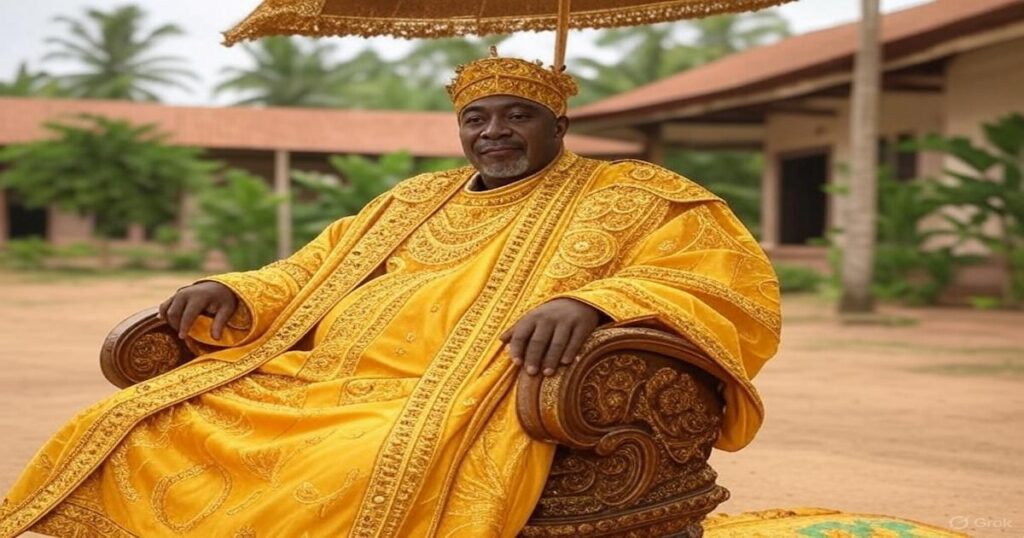
The Ghanaian Empire: A Journey Through the Land of Gold

Ghana Empire

Welcome, dear reader, to a story of wealth, power, and resilience—a tale of the Ghanaian Empire, one of West Africa’s greatest medieval kingdoms. Known as Wagadou to its people, this empire shone brightly from around the 3rd to the 13th century, earning fame as the “Land of Gold.” Its story is not just about riches but about the ingenuity, strength, and spirit of the Soninke people who built a legacy that echoes today. Let’s embark on this journey together, exploring the crucial moments that made Ghana an empire, from its humble beginnings to its eventual decline. Whether you’re new to history or a seasoned explorer, I’ll guide you gently through this vibrant chapter of the past.

The Seeds of an Empire: Origins of Ghana (c. 3rd Century CE)

Imagine a vast, sun-drenched savannah in West Africa, where the Senegal and Niger rivers carve paths through grasslands. This is where the Ghanaian Empire, or Wagadou, began, in what is now southeastern Mauritania, western Mali, and eastern Senegal. The Soninke people, a Mande-speaking group, were the heart of this land. They were farmers, herders, and skilled ironworkers, living in a region blessed with fertile soil and abundant resources.

The name “Ghana” didn’t refer to the modern country of Ghana but came from the Soninke word for “warrior king.” The empire’s true name, Wagadou, meant “Land of Herds,” reflecting the Soninke’s pastoral roots. According to oral traditions, the empire’s story began with a legendary figure, Dinga Cisse, a warrior who united Soninke clans around the 3rd century CE. While the exact date is uncertain, archaeological evidence suggests complex societies thrived here as early as 1600 BCE, with ironworking and trade laying the groundwork for what would become an empire.

A crucial moment came with the introduction of the camel to the western Sahara around the 3rd century CE. Camels revolutionised trade, allowing goods to cross the harsh desert more efficiently. The Soninke, strategically positioned between the Sahara to the north and gold-rich forests to the south, seized this opportunity. They began trading gold, ivory, and salt with North African merchants, setting the stage for Ghana’s rise. This early mastery of trade was the first spark that would ignite the empire’s greatness.

The Rise of a Trading Power (c. 6th–8th Century)

By the 6th century, Ghana was no longer just a collection of villages—it was becoming a centralised state. The Soninke united under strong leaders, forming a kingdom that controlled key trade routes. This was a pivotal moment: the shift from local chiefdoms to a structured monarchy. The king, or “Ghana,” held both political and spiritual power, seen as a divine ruler who ensured prosperity.

The empire’s wealth grew from its control of the trans-Saharan trade. Gold, mined in southern forests by independent kingdoms, flowed through Ghana’s markets. The kings cleverly monopolised gold nuggets, leaving gold dust for traders, which ensured their wealth while keeping trade vibrant. Salt, vital for preserving food, came from the Sahara, and Ghana’s position made it the perfect middleman. Ivory, kola nuts, and even enslaved people were also traded, linking West Africa to North Africa, the Middle East, and Europe.

Another key moment was the establishment of Koumbi Saleh as the capital, likely by the 8th century. This bustling city, located about 200 miles north of modern Bamako, Mali, was a marvel. It had two towns: one for Muslim traders with mosques and scholars, and another for the king and his court. Al-Bakri, an 11th-century Arab geographer, described Koumbi Saleh as a thriving hub with wells, irrigated fields, and a population possibly exceeding 20,000. The city’s dual structure welcomed diverse cultures, fostering trade and ideas. This cosmopolitan spirit was a cornerstone of Ghana’s power.

The Golden Age: Prosperity and Power (8th–11th Century)

The 8th to 11th centuries were Ghana’s golden age, a time when the empire shone brightest. This period was marked by economic prosperity, military strength, and political sophistication, cementing Ghana’s status as a true empire. Let’s explore the crucial moments that defined this era.

Control of Trans-Saharan Trade

The trans-Saharan trade was the lifeblood of Ghana’s wealth. Caravans of camels, carrying gold and salt across the Sahara, made the empire a vital link between sub-Saharan Africa and the Mediterranean world. The kings imposed taxes on every load passing through their territory, filling royal coffers. They also controlled key markets like Awdaghust, a northern trade hub, ensuring their dominance.

A significant moment came in the 8th century when Arab geographers, like Ibrahim al-Fazari, began calling Ghana the “Land of Gold.” This reputation spread, drawing more traders and boosting the empire’s influence. The kings’ monopoly on gold nuggets ensured they amassed immense wealth, with legends claiming their dogs wore golden collars and their horses slept on plush carpets. While these tales may be exaggerated, they reflect Ghana’s extraordinary prosperity.

Sophisticated Governance

Ghana’s political system was another key to its success. The king ruled as an absolute monarch, supported by a council of advisors, including military leaders and religious figures. Provinces were governed by local rulers who paid tribute to the king, blending centralised control with local autonomy. This system allowed Ghana to manage a vast territory, from the Sahara’s edge to the forests of the south.

The empire’s administration was remarkably advanced. Officials collected taxes, enforced laws, and maintained order. The king’s court was a centre of justice, where disputes were settled, and loyalty was rewarded. This governance structure, described by Al-Bakri, showed Ghana’s ability to unite diverse peoples under one rule, a hallmark of a great empire.

Military Might

A powerful military was essential for protecting trade routes and expanding territory. Al-Bakri claimed the king could field an army of 200,000, including elite cavalry armed with iron weapons. While this number may be inflated, it highlights Ghana’s military strength. The cavalry, with swift horses, allowed rapid responses to threats and conquests of neighbouring states.

A crucial moment was Ghana’s annexation of smaller polities, creating a confederated empire. Tributary states paid taxes and provided soldiers, strengthening Ghana’s reach. The military also defended against nomadic raiders, like the Sanhaja Berbers, ensuring trade routes remained open. This combination of economic control, governance, and military power made Ghana a dominant force in West Africa.

Cultural and Religious Harmony

Ghana’s rulers followed traditional Soninke beliefs, centred on ancestor worship and spiritual rituals. However, the empire welcomed Muslim traders from North Africa, who brought Islam and new ideas. By the 8th century, Islam began influencing the elite, though the kings never fully converted. Koumbi Saleh’s Muslim town, with its mosques and scholars, coexisted peacefully with the royal town, creating a cultural melting pot.

This religious tolerance was a defining moment. It fostered trade with Muslim North Africa and attracted scholars who spread knowledge. The empire’s ability to balance traditional beliefs with Islamic influences strengthened its diplomatic ties and enriched its culture, making it a beacon of learning and commerce.

Challenges on the Horizon (Late 11th Century)

Even at its peak, Ghana faced challenges that foreshadowed its decline. The late 11th century brought external pressures and internal strains, testing the empire’s resilience. Let’s look at the pivotal moments that marked the beginning of Ghana’s struggles.

The Almoravid Invasion (1076 CE)

In 1076, the Almoravids, a Muslim Berber confederation from North Africa, launched a holy war against Ghana. Led by Abu Bakr, they sought to spread Islam and control trade routes. They captured Awdaghust in 1054 and sacked Koumbi Saleh in 1076, disrupting the empire’s heart. This invasion was a turning point, weakening Ghana’s grip on trade and shaking its prestige.

The Almoravids’ rule over Ghana was brief, but their impact was lasting. Their flocks overgrazed farmlands, contributing to desertification, and their interference disrupted trade networks. The invasion exposed Ghana’s vulnerability to external forces, planting seeds of decline.

Environmental and Economic Shifts

The environment also played a role. The Sahel region, where Ghana thrived, was prone to droughts. By the late 11th century, reduced rainfall strained agriculture, which supported the empire’s population. Overgrazing by nomadic herders, including the Almoravids, worsened land degradation, making it harder to sustain Koumbi Saleh’s large population.

At the same time, new trade routes began bypassing Ghana. The rise of eastern routes, controlled by emerging powers like the Sosso, diverted commerce away from Koumbi Saleh. These economic shifts eroded Ghana’s wealth, challenging its dominance.

The Decline of Ghana (12th–13th Century)

The 12th century saw Ghana’s gradual decline, as internal divisions and external pressures took their toll. The empire, once a towering giant, began to crumble. Here are the crucial moments that marked its fall.

Internal Conflicts and Rebellions

The Almoravid invasion weakened Ghana’s unity, encouraging subject peoples to rebel. The Susu, a group under Ghana’s rule, broke free in the late 12th century, seizing Koumbi Saleh in 1203 under their leader Sumanguru. This rebellion was a devastating blow, as the capital was the empire’s political and economic heart.

Internal rivalries among the Soninke elite also fractured the empire. Power struggles over succession and resources weakened centralised control, making it harder to govern distant provinces. Without unity, Ghana struggled to respond to external threats.

The Rise of the Sosso and Mali

Sumanguru’s Sosso Kingdom briefly dominated the region, moulding Ghana’s provinces into a short-lived empire. His harsh rule, however, sparked resentment. In 1240, Sundiata Keita, a Mande leader, defeated Sumanguru at the Battle of Kirina, founding the Mali Empire. Sundiata incorporated what remained of Ghana into his new empire, ending its independence.

This moment was the final curtain for Ghana. The Mali Empire, building on Ghana’s trade networks and administrative traditions, became West Africa’s new powerhouse. Ghana’s legacy lived on, but its days as an empire were over.

The Legacy of the Ghanaian Empire

Though the Ghanaian Empire fell, its impact endures. It laid the foundation for West Africa’s great empires, like Mali and Songhai, which inherited its trade routes and governance systems. The empire’s role in spreading Islam and fostering cultural exchange shaped the region’s identity.

Ghana’s story also inspired modern Africa. When the Gold Coast gained independence in 1957, it took the name Ghana, honouring the ancient empire’s legacy of strength and unity. Today, the empire’s history reminds us of Africa’s rich past, challenging stereotypes and celebrating its contributions to global civilisation.

Crucial Moments That Made Ghana an Empire

Let’s reflect on the key moments that transformed Ghana into an empire:

Camel-Driven Trade (3rd Century CE): The introduction of camels revolutionised trans-Saharan trade, positioning the Soninke as key intermediaries in the gold and salt trade.

Centralised Monarchy (6th Century): The unification of Soninke clans under a strong king created a structured state, laying the empire’s foundation.

Koumbi Saleh as Capital (8th Century): The establishment of a cosmopolitan capital fostered trade, culture, and governance, making Ghana a regional hub.

Trans-Saharan Trade Dominance (8th–11th Century): Control of the gold and salt trade brought immense wealth, earning Ghana fame as the “Land of Gold.”

Sophisticated Governance and Military (8th–11th Century): A centralised administration and powerful army enabled Ghana to govern a vast territory and protect its interests.

Cultural Harmony (8th–11th Century): Balancing traditional beliefs with Islamic influences strengthened trade ties and enriched Ghana’s culture.

Almoravid Invasion (1076 CE): The sacking of Koumbi Saleh marked the beginning of decline, exposing Ghana’s vulnerabilities.

Susu Rebellion and Sosso Rise (1203): The loss of Koumbi Saleh to the Susu weakened Ghana, paving the way for its fall.

Incorporation into Mali (1240): Sundiata’s victory ended Ghana’s independence, but its legacy shaped the Mali Empire.

A Warm Farewell to Ghana’s Story

As we close this journey, I hope you’ve felt the pulse of the Ghanaian Empire, its triumphs, struggles, and enduring spirit. From a cluster of Soninke villages to a dazzling empire, Ghana’s story is one of human ingenuity and resilience. Its kings, traders, and warriors built a world where gold flowed, cultures mingled, and power thrived. Even in its fall, Ghana left a legacy that inspires pride and wonder.

Thank you for walking this path with me. If you’re curious to learn more about West Africa’s empires or want to share your thoughts, I’m here to listen. Let’s keep celebrating the stories that make this continent so beautifully connected.