Medieval Africa: A Tapestry of Empires, Trade, and Brilliance
Picture a vast continent where golden savannas stretch beneath a blazing sun, where markets hum with the chatter of traders from Cairo to Calicut, and where stone cities rise like mirages on the horizon. This is medieval Africa, an age of empires, scholars, and adventurers spanning 500 to 1500 CE. Far from the colonial myth of a “dark continent,” Africa in the Middle Ages was a crucible of innovation, wealth, and culture, woven into the fabric of the global medieval world.
Africa in the Middle Ages was a crucible of innovation, wealth, and culture, its kingdoms weaving a vibrant tapestry that connected to Europe, Asia, and beyond. For those new to African history or wary of dusty tomes, this story is your gateway to a dazzling era.
We’ll wander through the Kingdom of Aksum’s misty highlands, the Mali Empire’s golden cities, the Songhai Empire’s riverine might, and Great Zimbabwe’s stone palaces, painting a picture of a continent that shaped the medieval world with charm and grandeur.
The Pulse of Medieval Africa
Medieval Africa wasn’t a patchwork of isolated villages; it was a constellation of sophisticated societies. Its empires commanded trade routes that crisscrossed deserts, rivers, and coasts, carrying gold, salt, ivory, and ideas. Cities like Timbuktu and Great Zimbabwe buzzed with life, their streets alive with scholars, artisans, and merchants.
These kingdoms weren’t just rich in resources; they were rich in ambition, building systems of governance, art, and learning that rivalled any in the world. To understand medieval Africa is to see a continent that didn’t just survive but thrived, its heartbeat echoing across centuries.
Let’s journey through four iconic realms, Aksum, Mali, Songhai, and Great Zimbabwe, each a gem in Africa’s medieval crown, revealing a world of splendour and strength.
The Kingdom of Aksum: The Highland Beacon (100–940 CE)
High in the rugged mountains of what’s now Ethiopia and Eritrea, where clouds cling to jagged peaks, the Kingdom of Aksum rose like a star in the early medieval world. From 100 to 940 CE, this East African powerhouse was a crossroads of civilisations, its ports on the Red Sea alive with ships from Rome, Persia, and India.
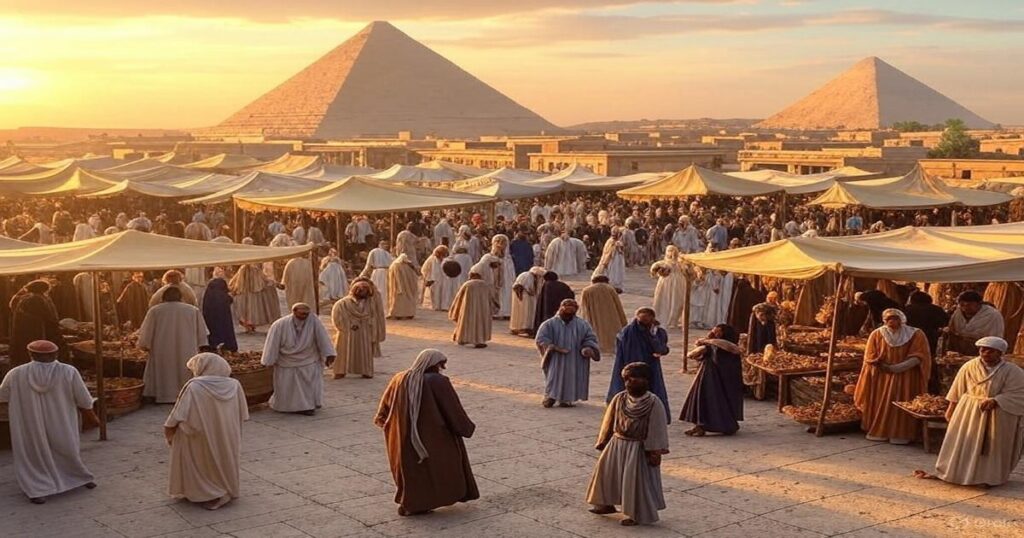
A Trading Empire’s Glitter: Aksum’s wealth came from its perfect perch. Its harbours bustled with traders swapping ivory, gold, and frankincense for silks and spices. The kingdom minted gold coins, rare for the time, etched with the stern faces of its kings, found as far afield as India. Picture merchants haggling in Aksum’s markets, their voices mingling with the bleat of goats and the scent of incense wafting through the air. This was no backwater; Aksum was a global hub, its coffers brimming.
Faith and Stone: Aksum’s soul was as rich as its purse. Around 330 CE, King Ezana embraced Christianity, making Aksum one of the world’s first Christian states, centuries before much of Europe. Towering obelisks, carved from single stones and rising over 100 feet, dotted the landscape, their intricate designs glinting in the sun.
These weren’t just monuments; they were declarations of power and piety. Aksum also birthed Ge’ez, a written script still used in Ethiopian churches, its flowing letters a testament to the kingdom’s intellect.
A Fading Light: By the 10th century, Aksum’s star dimmed. Shifting trade routes and possible climate shifts strained its fields and ports. Yet its legacy endures in Ethiopia’s ancient churches, where priests still chant in Ge’ez, and in the obelisks that stand defiant against time. Aksum was Africa’s lighthouse, guiding ships and ideas across the medieval world, proving the continent was no stranger to greatness.
The Mali Empire: The Golden Heart of the Sahara (1235–1600 CE)
Now, let’s cross the continent to West Africa, where the Mali Empire glittered like a mirage in the Sahara’s heat. From the 13th to 16th centuries, Mali sprawled across modern Mali, Senegal, and Guinea, its cities pulsing with gold and wisdom under a sky that seemed to stretch forever.
Mansa Musa’s Golden Reign: Mali’s legend was forged by Mansa Musa, who ruled from 1312 to 1337 and whose wealth dazzled the world. His empire sat on gold mines that supplied half the medieval world’s bullion. In 1324, Musa’s pilgrimage to Mecca became the stuff of myth.
Picture a caravan stretching miles, laden with gold, camels swaying under the weight, as Musa gifted so much treasure in Cairo that markets buckled. Chroniclers in Europe scribbled his name, awestruck by a king whose riches outshone their own.
Timbuktu’s Scholarly Glow: Mali’s true treasure wasn’t just gold; it was knowledge. Timbuktu, a city of mud-brick mosques and bustling streets, was the world’s intellectual capital. Sankore University drew scholars from across Africa and the Middle East, their debates echoing through courtyards piled with manuscripts.
Imagine scribes hunched over parchment, penning works on astronomy, law, and poetry, while caravans unloaded salt and cloth outside. Timbuktu’s libraries held tens of thousands of texts, many preserved today, a beacon of African scholarship.
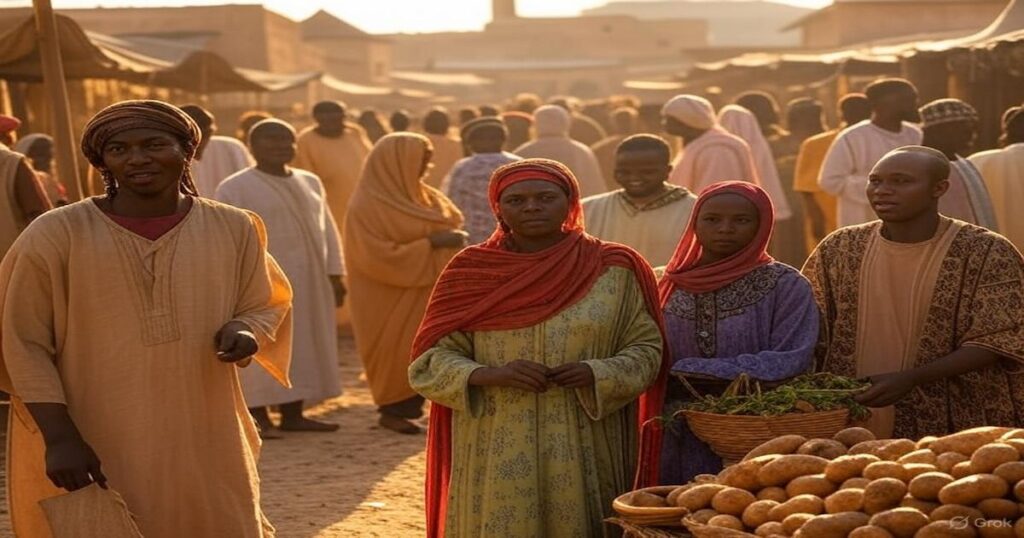
A Vibrant Society: Mali’s mansas ruled with finesse, taxing trade routes that ferried goods across the Sahara. Griots, the empire’s oral poets, wove history into song, their voices rising over drumbeats at royal courts. Markets thrummed with life, traders bartering gold for salt, weavers selling vibrant cloth, the air thick with the scent of spices and leather.
The Twilight: By the 1600s, internal strife and invasions dimmed Mali’s light, giving way to Songhai. But its legacy burns bright in West Africa’s griot traditions and Timbuktu’s enduring fame. Mali was a golden dream, proving Africa was a font of wealth and wisdom, not a land awaiting discovery.
The Songhai Empire: The Riverine Colossus (1464–1591 CE)
As Mali waned, the Songhai Empire rose along the Niger River, its waters reflecting a new titan. From the 15th to late 16th centuries, Songhai stretched across modern Niger, Nigeria, and Mali, its armies and markets a symphony of power and prosperity.
Sunni Ali’s Sword: Songhai’s ascent began with Sunni Ali, a warrior-king (r. 1464–1492) whose conquests forged West Africa’s largest empire. Imagine his cavalry thundering across the savanna, lances gleaming, or his navy gliding down the Niger in sleek canoes. Ali captured Timbuktu and Djenné, turning Songhai into a military machine with a discipline that awed rivals.
Askia’s Golden Age: After Ali, Askia Muhammad (r. 1493–1528) brought Songhai to its zenith. A devout Muslim, he streamlined trade, standardised measures, and made Timbuktu a cultural jewel again. His pilgrimage to Mecca strengthened ties with the Islamic world, while his governors ruled far-flung provinces with loyalty. Picture Askia’s court in Gao, advisors debating policy as griots sang of victories, the river sparkling beyond.
A Cultural Mosaic: Songhai’s cities were melting pots. Djenné’s Great Mosque, its mud-brick towers rising like a desert castle, drew worshippers and artists. Timbuktu’s scholars penned works that reached Cairo and Cordoba. Markets brimmed with kola nuts, slaves, and gold, linking Songhai to North Africa and beyond.
The Fall: In 1591, Moroccan invaders with firearms crushed Songhai’s army at Tondibi, shattering the empire. Yet its systems of governance and trade shaped West Africa for centuries. Songhai was a river of might and culture, showing Africa’s knack for blending strength with sophistication.
Great Zimbabwe: The Stone Jewel of the South (1100–1450 CE)
In Southern Africa, where rolling hills meet endless skies, Great Zimbabwe rose as a monument to ingenuity. From the 11th to 15th centuries, this empire in modern Zimbabwe and Mozambique built stone cities that left the world in awe.
A City of Stone: Great Zimbabwe’s capital was a marvel. Picture massive granite walls, fitted without mortar, curving gracefully around palaces and markets. The Great Enclosure, with its towering walls, and the Conical Tower stood proud, home to 18,000 people, rivalling medieval Paris. At dawn, the stones glowed pink, a silent testament to Shona craftsmanship.
Gold and Global Trade: Great Zimbabwe thrived on trade. Its gold and ivory flowed to Indian Ocean ports, swapped for Chinese porcelain and Persian beads. Imagine traders trekking inland, their packs heavy with goods, as cattle herds, symbols of wealth, grazed nearby. Archaeological finds, like glass from India, reveal a kingdom plugged into global networks.
A Mysterious End: By the 1450s, Great Zimbabwe faded, perhaps due to overgrazing or shifting trade. When Europeans stumbled on its ruins centuries later, some spun tales of foreign builders, unable to believe Africans created such splendour. But the Shona people’s oral histories and archaeology confirm it was theirs.
A Lasting Echo: Great Zimbabwe’s name graces a modern nation, its ruins a UNESCO site. It stands as Southern Africa’s medieval masterpiece, defying myths of a “primitive” continent. Great Zimbabwe was a stone symphony, proving Africa’s brilliance spanned every corner.
The Bigger Picture
These kingdoms, Aksum, Mali, Songhai, and Great Zimbabwe, reveal a medieval Africa that was anything but “dark.” They built cities that rivalled Europe’s, traded with empires across seas, and fostered learning that enlightened the world. Their rulers were visionaries, their people innovators. Timbuktu’s manuscripts, Aksum’s obelisks, Songhai’s mosques, and Great Zimbabwe’s walls still whisper of their glory.
Why These Stories Were Erased
Colonialism cast a long shadow, erasing African achievements to justify domination. Textbooks often skip these empires, leaving gaps in our understanding. But medieval Africa wasn’t a footnote; it was a cornerstone of global history, its trade and ideas shaping the Middle Ages.
Why This Matters Today
Medieval Africa’s legacy lives on. In Ethiopia, churches echo Aksum’s hymns. In Mali, griots sing of Musa’s gold. In Zimbabwe, the Shona honour their stone builders. These stories remind us that Africa’s past is one of resilience and radiance, not just struggle.
Start Your Journey Into African History
Medieval Africa isn’t just history, it’s a mirror, a map, and a muse. In its echoes, we find not only the brilliance of a forgotten world but a compass for the future. The empires of Aksum, Mali, Songhai, and Great Zimbabwe invite us to rethink what history is, and who gets to shape it. This is your beginning. Let the story change you.