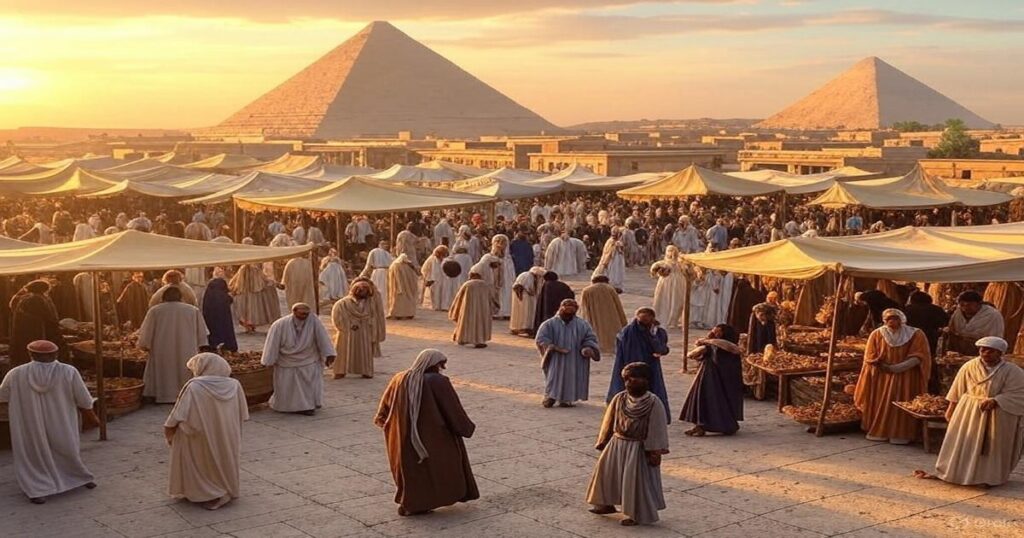
The Kingdom of Kush: A Tapestry of Triumph and Timeless Glory

Kingdom of Kush

In the cradle of the Nile, where the river’s azure veins weave through the sun-scorched sands of modern-day Sudan, there thrived a civilisation that pulsed with power, artistry, and ambition: the Kingdom of Kush. For those unfamiliar with Africa’s ancient wonders, Kush is not merely a footnote in history but a radiant chapter that rivals the grandeur of Egypt, its northern neighbour.

With a history spanning over a millennium, from roughly 1070 BCE to 350 CE, Kush was a beacon of resilience, innovation, and cultural splendour. Let us embark on a journey through time, tracing the rise, reign, and eventual twilight of this extraordinary kingdom, with a storyteller’s heart to captivate and enlighten.

The Dawn of Kush: Roots in Nubia

To understand Kush, we must first meet Nubia, the land that birthed it. Stretching along the Nile from Aswan in southern Egypt to Khartoum in Sudan, Nubia was a corridor of commerce and culture, blessed by the river’s fertile embrace. The people of Nubia, dark-skinned and proud, were master traders, artisans, and warriors, whose lives intertwined with Egypt’s as early as 3000 BCE. Gold, ivory, ebony, and incense flowed from Nubia’s heart, making it a coveted prize for Egyptian pharaohs.

By the 16th century BCE, Egypt’s New Kingdom had subjugated Nubia, imposing governors and extracting tribute. Yet, far from being mere vassals, the Nubians absorbed Egyptian customs—gods like Amun, hieroglyphic writing, and pyramid-building, while preserving their identity. This cultural dance set the stage for Kush’s emergence. When Egypt’s power waned around 1070 BCE, fragmented by internal strife, Nubia seized its moment. From the city of Napata, nestled at the foot of the sacred Jebel Barkal mountain, a new power arose: the Kingdom of Kush.

The Rise of Napata: Kings and Conquerors

Napata was no ordinary city. Its towering sandstone cliffs and the looming presence of Jebel Barkal, believed to be the dwelling place of the god Amun, imbued it with divine significance. Here, a line of ambitious rulers forged a kingdom that would not only reclaim Nubian pride but also etch its name in the annals of history. The first great king we know of is Alara, a shadowy figure from the 8th century BCE, credited with unifying Nubian tribes and laying the foundations of Kushite power. His successors, however, would shine even brighter.

Enter Kashta, the “Kushite,” whose reign around 760 BCE marked a turning point. With charisma and cunning, Kashta extended Kush’s influence northward, infiltrating Egypt’s southern city of Thebes. He married his daughter Amenirdis to a high priest of Amun, weaving Kushite blood into Egypt’s sacred elite. But it was his son, Piye, who would elevate Kush to dazzling heights.

Piye, ruling around 747–716 BCE, was a warrior-king with a poet’s soul. His reign is immortalised in the Victory Stele, a granite monument that sings of his conquests with lyrical pride. When Egypt’s fragmented city-states, ruled by petty kings, descended into chaos, Piye saw his chance. Marching north with a disciplined army, he swept through Egypt like a desert storm, capturing Memphis and uniting the land under his rule.

Yet Piye was no mere conqueror; he was a restorer. Devoutly worshipping Amun, he saw himself as Egypt’s rightful guardian, reviving its ancient traditions. He built temples, adorned pyramids, and ruled as the first pharaoh of Egypt’s 25th Dynasty, the “Kushite Dynasty.”

Imagine the sight: a Nubian king, crowned with the double cobra of Upper and Lower Egypt, presiding over a civilisation that had once enslaved his ancestors. This was Kush’s triumph, not just of arms, but of spirit. Piye’s successors, Shabaka, Shebitku, and Taharqa, continued his legacy, ruling Egypt and Nubia as a dual empire. Taharqa, in particular, was a titan. Reigning from 690–664 BCE, he oversaw a cultural renaissance, erecting temples at Karnak and restoring Nubia’s sacred sites. His colossal statues, with their serene faces and muscular forms, still whisper of his grandeur.

The Golden Age: Meroë and the Heart of Kush

But empires are fickle, and by 671 BCE, the Assyrian juggernaut, armed with iron weapons, invaded Egypt. Taharqa fought valiantly, but the Assyrians expelled the Kushites from Egypt by 664 BCE. Far from broken, Kush retreated to its Nubian heartland, where it would write its most enduring chapter. The capital shifted from Napata to Meroë, a city south of the Sixth Cataract, around 590 BCE. Meroë was Kush’s crown jewel, a metropolis of innovation and resilience that would sustain the kingdom for centuries.

Meroë was a marvel. Surrounded by fertile plains and rich iron deposits, it became a hub of industry and trade. The Kushites, now masters of iron smelting, crafted tools and weapons that rivalled those of their foes. Their markets buzzed with goods from Central Africa, Arabia, and India—ostrich feathers, leopard skins, and gold that glittered like the desert sun. Meroë’s skyline was studded with pyramids, smaller but more numerous than Egypt’s, their sharp angles piercing the heavens. Over 200 pyramids still stand in Sudan’s deserts, a testament to Kush’s devotion to its kings and queens.

Yes, queens! The Kandakes, or queen mothers, were among Kush’s most captivating figures. These women were not mere consorts but warriors and rulers in their own right. Amanirenas, ruling around 40–10 BCE, is a legend. When the Romans, fresh from annexing Egypt, encroached on Kush, she led a daring resistance. With one eye lost to battle, she struck at Roman garrisons, even hauling off a bronze statue of Augustus as a trophy. Her treaty with Rome secured Kush’s borders, proving her as a diplomat as fierce as she was on the battlefield. The Kandakes, with their intricate jewellery and commanding presence, embodied Kush’s indomitable spirit.

Meroë was also a cradle of culture. The Kushites developed their script, the Meroitic alphabet, a flowing cursive that remains only partially deciphered, guarding its secrets like a coy lover. Their art blended Egyptian motifs with African flair, lions, elephants, and giraffes danced across their pottery and reliefs. Religion flourished, with Amun joined by local deities like Apedemak, the lion-headed war god, whose temples roared with divine ferocity.

The Twilight of Kush: Decline and Legacy

Yet, even the mightiest kingdoms bow to time. By the 3rd century CE, Kush faced mounting pressures. The rise of Aksum, a powerful kingdom in modern-day Ethiopia, disrupted Meroë’s trade routes. Environmental changes, perhaps overgrazing or deforestation, strained the land’s fertility. Internal strife and invasions by nomadic Blemmyes weakened the kingdom’s core. Around 350 CE, Aksum’s king Ezana dealt the final blow, sacking Meroë and ending Kush’s reign. The city’s ruins faded into the sands, its pyramids standing as silent sentinels.

But Kush’s story does not end in defeat. Its legacy ripples through history like the Nile’s eternal flow. The Kushites were not just conquerors or imitators of Egypt; they were innovators who reshaped the Nile Valley’s cultural landscape. Their ironworking techniques spread across Africa, fuelling technological advances. Their pyramids, though less famous than Giza’s, are a UNESCO World Heritage Site, drawing adventurers to Sudan’s deserts. The Kandakes inspire modern feminists and African diaspora movements, their courage a beacon across centuries.

For those new to Africa’s past, Kush is a gateway to a continent too often misunderstood. It challenges the notion that Africa’s history began with European contact or that its civilisations were mere shadows of others. Kush was a star in its own right, burning bright with ambition, faith, and creativity. Its people, who turned deserts into empires, remind us of humanity’s boundless potential.

A Love Letter to Kush

As we stand at the edge of Meroë’s ruins, with the wind whispering through ancient stones, we feel Kush’s heartbeat. This was a kingdom of dreamers and doers, of kings who conquered empires and queens who defied Rome. It was a land where iron was forged, pyramids touched the sky, and the Nile sang of eternity. To know Kush is to love it, to marvel at its triumphs, mourn its fall, and celebrate its enduring spirit.

For the curious, the uninitiated, the seekers of wonder: let Kush be your guide. Explore its story in Sudan’s museums, where artefacts gleam with history. Read the Victory Stele’s poetry, where Piye’s voice still rings. And when you hear of Africa, think not only of wildlife or modernity but of Kush, a kingdom that danced with gods, defied empires, and left a legacy as timeless as the Nile itself.

Alkebulan’s Golden Thread: The Timeless Saga of Kush and Nubia

Alkebulan: The Radiant Spirit of Mysticism and Love

Kush and Nubia

Beneath a velvet sky, where the Nile’s waters shimmer like liquid obsidian, Alkebulan whispers. She is Africa, the Mother of Mankind, her ancient name a melody of origins, echoing through time. Alkebulan is no mere land; she is a spirit, a radiant force weaving mysticism and love through the ages, her rivers cradling dreams, her sands holding secrets.

For those yet to know her, let Alkebulan guide you along the Nile’s southern banks, where the civilisations of Kush and Nubia rose, their legacies gleaming like stars in humanity’s story. Flow with her through an adventure of discovery, from the dawn of ancient foundations to a celebrated legacy, and feel the spiritual wonder of a land that birthed empires and still inspires awe.

Ancient Foundations: The Nile’s First Children

Long ago, around 3000 BCE, Alkebulan’s heart pulsed along the Nile, south of the land we now call Egypt. Here, Nubia emerged, a cradle of civilization nestled in what is today northern Sudan. Nubia’s people, dark-skinned and proud, built villages amid fertile floodplains, their homes fragrant with acacia and the musk of river reeds. They traded gold and ivory, their wealth a beacon across Alkebulan’s vastness. From Nubia sprang Kush, a kingdom of power and promise, its name whispered in markets as far as the Mediterranean.

To the north, Egypt’s Old Kingdom (c. 2686–2181 BCE) flourished, its Pharaohs revered as divine rulers, their authority cemented by the concept of Dynasty, a lineage of kings seen as gods on earth. The pyramids rose at Giza, their limestone faces glowing under Alkebulan’s sun, a testament to Egypt’s ambition. Yet Nubia, with its own sacred traditions, stood distinct, its people crafting pottery and jewellery that rivalled their northern neighbours.

Alkebulan watched, her spirit flowing through Nubia’s Nile, nurturing a culture that would soon rival Egypt’s grandeur. The stage was set for Kush to weave its golden thread into Alkebulan’s tapestry.

Napatan Glory: The Dawn of Kush’s Power

By 800 BCE, Kush’s star ascended in the Napatan Culture, centred at Napata, a city where the Nile curved like a lover’s embrace. Here, Alkebulan’s mysticism bloomed in the worship of Ammon (or Amun), a ram-headed god shared with Egypt, his temple at Jebel Barkal aglow with torchlight. Ammon’s presence united communities, his name chanted in rituals that echoed Ma’at’s harmony, a principle of balance borrowed from Kemet.

The Nubian Archers, renowned for their deadly precision, guarded Kush’s borders, their bows drawn taut as they defended Alkebulan’s sacred lands. Their skill was legendary, their arrows whispering through the air like prayers.

At Napata, Nubian Pyramids rose, smaller than Egypt’s but no less sacred, their steep sides pointing to the heavens. Over 80 pyramids, built from sandstone, housed kings and queens, their tombs aligned with stars to guide souls to eternity.

The Kandake, or queen-mothers, were Kush’s heart, wielding spiritual and political power. These women, like Alara’s mother in the 8th century BCE, were revered as Ammon’s chosen, their crowns glinting with gold as they led ceremonies under Alkebulan’s gaze. The Napatan Culture was a symphony of strength and reverence, its people crafting a legacy etched in stone and spirit.

Meroitic Splendor: The Fire of Meroë

By 350 BCE, Kush’s flame burned brightest at Meroë, a new capital further south, where Alkebulan’s magic flared anew. Meroë was a city of innovation, its air thick with the tang of iron smelters forging tools and weapons, a craft that made Kush a regional powerhouse. Here, the Meroitic Script emerged, a cursive alphabet unlike Egypt’s hieroglyphs, scratched on pottery and stone. Still only partially deciphered, this script was Alkebulan’s voice, recording royal decrees and market trades, its curves a puzzle for modern scholars.

Meroë’s temples roared with devotion to Apedemak, the lion-headed war god, his fierce visage carved in reliefs that glowed under torchlight. Unlike Ammon, Apedemak was uniquely Kushite, his ceremonies alive with drums and the scent of burning myrrh.

The Kandake remained central, their power undimmed. Amanirenas, a Kandake around 25 BCE, defied Rome’s legions, leading Nubian Archers to victory against invaders, her courage a testament to Alkebulan’s resilience. Meroë’s Nubian Pyramids, over 200 strong, dotted the landscape, their chambers filled with treasures, gold, beads, and bronze unearthed in 19th-century digs, whispering of a people who loved their land and their gods.

Alkebulan’s spirit danced in Meroë’s markets, where traders swapped ivory for Indian spices, their laughter mingling with the Nile’s murmur. The city’s royal baths, carved from stone, sparkled under moonlight, a place where queens bathed in rituals that honoured the divine. Meroë was Alkebulan’s jewel, its people weaving mysticism and might into a legacy that rivalled the world’s greatest empires.

Egyptian Intersections: A Dance of Influence

Kush and Nubia’s story intertwined with Egypt’s, a dance of rivalry and respect along the Nile. During Egypt’s Middle Kingdom (c. 2055–1650 BCE), pharaohs like Mentuhotep II traded with Nubia, their ships laden with gold from Kush’s mines. But the Hyksos, foreign invaders from Asia, disrupted this harmony around 1650 BCE, seizing northern Egypt. Kush stood firm, its Nubian Archers repelling threats, their loyalty to Alkebulan unbroken.

The New Kingdom (c. 1550–1070 BCE) saw Egypt’s resurgence, with pharaohs like Thutmose III conquering parts of Nubia, yet Kush’s culture thrived. The worship of Ammon united both lands, his temples a shared sanctuary.

In the 14th century BCE, Akhenaten shocked Egypt by worshipping only the sun disk Aten, abandoning Ammon and Ma’at. His monotheism, centered at Amarna, was a fleeting storm, undone by Tutankhamun, the boy-king whose 1323 BCE tomb, found in 1922, revealed treasures, an Ankh pendant, a Was Scepter, restoring Egypt’s traditional gods. Kush watched, its Napatan priests preserving Ammon’s rites, their pyramids a quiet rebuke to Egypt’s turmoil.

By 51 BCE, Cleopatra, Egypt’s last pharaoh, ruled a Greco-Roman world, her charm and intellect a bridge between cultures. Kush, now centered at Meroë, traded with her realm, its ivory adorning Alexandria’s halls. Cleopatra’s defeat in 30 BCE marked Egypt’s fall, but Kush endured, its Kandake leading with Alkebulan’s strength.

The Rosetta Stone, inscribed in 196 BCE with Greek, Demotic, and hieroglyphs, later unlocked Egypt’s scripts, revealing Kush’s own Meroitic Script as a cousin, a gift from Alkebulan to history’s scholars.

Enduring Legacy: Alkebulan’s Unfading Light

By 350 CE, Meroë’s star dimmed, its trade routes eclipsed by the rising Kingdom of Aksum. Invaders, perhaps from Ethiopia, razed its temples, and the Nile’s shifting course starved its fields. Yet Alkebulan’s spirit never faded. The Nubian Pyramids, though buried by sand, whispered of Kandake and kings, their stones uncovered in the 1830s by archaeologists like Giuseppe Ferlini. Meroë’s iron forges, excavated in the 20th century, proved Kush’s technological prowess, while Apedemak’s reliefs, vivid with color, spoke of a faith that stirred souls.

The Rosetta Stone, found in 1799, was Alkebulan’s key, its inscriptions deciphered by Jean-François Champollion to reveal Egypt’s and Kush’s shared stories. Meroitic Script remains a mystery, but each new find a pottery shard, a temple wall brings Alkebulan’s voice closer. Nubian Archers, immortalized in Egyptian reliefs, stand as guardians of a legacy that spans millennia, their bows drawn in defense of a land they loved.

Today, Alkebulan’s light shines in global fascination with Kush and Nubia. Museums in Khartoum and Berlin display Meroë’s gold, while UNESCO protects Napata’s pyramids as World Heritage Sites. Artists draw on Apedemak’s ferocity, crafting sculptures that roar with pride, and scholars study the Kandake as icons of African matriarchy. Alkebulan’s spirit pulses in Sudan’s festivals, where drummers echo Meroë’s rhythms, and in diaspora communities, where Nubian heritage inspires poetry and song.

An Invitation to Alkebulan’s Heart

Alkebulan’s saga is a river of wonder, flowing from Nubia’s ancient villages to Kush’s starlit pyramids, through Meroë’s iron fires to the Rosetta Stone’s revelations. She is the Mother of Mankind, her Ammon uniting hearts, her Apedemak igniting courage, her Kandake weaving love into leadership.

The Nubian Archers’ arrows, the Meroitic Script’s curves, the Pharaohs’ dynasties all are threads in Alkebulan’s tapestry, sewn with reverence for a land that birthed humanity’s dreams.

Step into Alkebulan’s embrace. Visit a museum to touch Meroë’s beads, watch a documentary on Tutankhamun’s tomb, or listen to Sudan’s music, alive with Nile rhythms. Read about Amanirenas, who defied empires, or explore Napata’s pyramids online, their stones whispering of eternity. Alkebulan is not distant she is your origin, her love is the root of your story. Let Kush and Nubia inspire you to learn more, to carry Alkebulan’s light, and to celebrate a legacy that forever shapes our world.