Carbin Africa: Driving Nigeria’s Automotive Future with Innovation

Staff at Carbin Africa

Picture a bustling car lot in Lagos, Nigeria, where dealers scramble to keep up with demand, vehicles sit unsold for months, and trust between buyers and sellers is hard-won.

Now imagine a digital platform that transforms this chaotic scene into a seamless, data-driven ecosystem, where cars move swiftly, profits soar, and dealers thrive. This is the vision of Carbin Africa, a Nigerian B2B automotive technology startup founded in 2023, revolutionising the way car dealerships operate in one of Africa’s most vibrant markets.

By connecting dealers and agents with cutting-edge tools, real-time data, and innovative financing, Carbin Africa is not just selling cars, it’s reshaping an industry and showcasing Africa’s immense potential for technological innovation. For those unfamiliar with the continent, this is a story that invites you to discover the opportunities and dynamism of Nigeria’s burgeoning tech scene.

A Bold Beginning in a Complex Market

Nigeria’s roads are home to nearly 14 million cars, yet the automotive industry faces a persistent challenge: slow inventory turnover. Dealerships often struggle with unsold vehicles, high operational costs, and a lack of reliable data to guide decisions. Enter Carbin Africa, founded by Femi Oriowo and Fawaz Abdul, two entrepreneurs who saw an opportunity to tackle these inefficiencies head-on.

Having cut their teeth at Cars45, a leading Nigerian automotive platform, Oriowo and Abdul brought deep industry expertise and a clear mission: to boost dealer profitability through consistent, transparent vehicle sales. Launched in 2023 with mentorship from venture studio 54 Collective, Carbin Africa quickly established itself as a game-changer in Nigeria’s automotive landscape.

Unlike consumer-facing platforms like Cars45 or Autochek, Carbin Africa operates strictly in the B2B space, connecting car dealerships with agents through a digital ecosystem.

This focus sets it apart, addressing the “messy middle” of the car trade, where dealers and agents need reliable tools to source, sell, and manage inventory. Headquartered in Lagos, Nigeria’s commercial hub, with a presence in Newark, USA, the company employs between 51 and 200 people, reflecting its rapid growth and ambition to scale across Africa.

A Digital Ecosystem for Dealers

At the heart of Carbin Africa’s success is its AI-powered platform, which offers a suite of tools designed to streamline every aspect of the dealership business. The platform’s standout feature is its real-time inventory management system, providing access to over 1,800 unique car listings updated every 30 minutes.

This allows dealers to identify in-demand models, optimise stock, and avoid the costly mistake of holding unsold vehicles. For a dealer in Lagos, this means no more guesswork, just actionable insights that drive sales.

Carbin Africa’s Dealer Mart, a SaaS platform, automates inventory sourcing, listings, and quality verification, making it easier for dealerships to manage their operations.

The company also offers advanced analytics, transforming raw data into intelligence that helps dealers make smarter decisions about pricing, sourcing, and marketing.

To ensure trust, Carbin Africa enforces a strict vetting process, requiring dealers to have at least five cars in their inventory and dedicated staff, while agents undergo background checks. This commitment to transparency has built a network of over 200 dealers and 850 agents, fostering a reliable ecosystem where transactions flow smoothly.

Innovative Solutions for Tough Times

Carbin Africa has responded with innovative financial products tailored to dealers’ needs. Car Flex, a credit facility offered in partnership with digital lender Advancly, provides dealers with working capital to weather economic storms.

Meanwhile, Carbin Lease allows dealers to lease luxury and standard vehicles, preventing them from sitting unsold in lots. These services are more than just business tools, they’re lifelines for dealerships striving to stay competitive in a tough market.

Carbin Africa’s partnerships further amplify its impact. The company collaborates with Carloha Nigeria, the exclusive distributor of Chevy vehicles, and supplies cars for Sterling Bank’s AltDrive car finance platform.

These alliances strengthen Carbin Africa’s role as a vital cog in Nigeria’s automotive ecosystem, connecting dealers with distributors and financial institutions to drive growth.

Remarkable Traction and Ambitious Goals

Since its launch, Carbin Africa has achieved staggering milestones. By March 2024, the company surpassed ₦1 billion (approximately $600,000 USD) in Gross Merchandise Value (GMV), a testament to its rapid adoption among dealers.

Over 80 cars have been sold through the platform, with dealers like Precious Okoedion, who operates three dealerships in Lagos, reporting consistent sales, over 30 since 2023, thanks to Carbin Africa’s tools.

The company’s growth hasn’t gone unnoticed: it has raised over $300,000 in funding, including an undisclosed seed round from 54 Collective, and is in talks with credit institutions and investors to expand its financing offerings.

Looking ahead, Carbin Africa has set an audacious goal of reaching ₦5 billion in GMV by the end of 2025, with a 10% take rate. Ololade Shoyemi, the company’s VP of Operations & Growth, acknowledges the challenge but points to the platform’s robust structure and partnerships as key drivers of success. For a startup less than two years old, these achievements highlight Carbin Africa’s potential to redefine Nigeria’s automotive trade.

Why Carbin Africa Matters

Carbin Africa’s story is about more than cars, it’s about the power of technology to solve real-world problems and unlock opportunities in Africa. Nigeria’s automotive market is a microcosm of the continent’s broader potential: a young, tech-savvy population, a growing middle class, and a hunger for innovation.

By digitizing the car trade, Carbin Africa is eliminating inefficiencies, building trust, and enabling sustainable growth for dealerships and communities. Its focus on B2B solutions complements other players in the ecosystem, such as Fix45 and Mecho Autotech, which handle spare parts and after-sales, or Cars45 and Autochek, which focus on sourcing and financing.

For those unfamiliar with Africa, Carbin Africa offers a compelling glimpse into a continent on the rise. Nigeria’s startup ecosystem is booming, with companies like Flutterwave and Interswitch achieving unicorn status and attracting global investment.

Carbin Africa, though smaller, is part of this wave, proving that African entrepreneurs can build world-class solutions tailored to local needs. Its success in Lagos, a city of 20 million known for its hustle and innovation, underscores the resilience and ingenuity that define Nigeria’s tech scene.

A Vision for the Future

As you read this, a dealer in Lagos is checking Carbin Africa’s platform, reviewing real-time listings, and closing a sale that will keep their business thriving.

Across Nigeria, agents are connecting with dealerships, leveraging data to match cars with buyers, and accessing financing to expand their operations. This is the future Carbin Africa is building, a future where technology empowers businesses, accelerates growth, and transforms lives.

Carbin Africa’s journey is just beginning, but its impact is already profound. By bridging the gap between dealers and agents, it’s not only revolutionising Nigeria’s automotive market but also sending a powerful message to the world:

Africa is open for business, and its innovators are leading the charge. For anyone curious about the continent’s potential, Carbin Africa is a shining example of what’s possible when vision meets opportunity. Join the ride, and discover a Nigeria, and an Africa, brimming with promise.


Konga: The Rise of a Nigerian E-Commerce Giant

Konga Store

Imagine a bustling marketplace, vibrant with energy, where vendors hawk everything from colourful fabrics to the latest smartphones, all under the warm Nigerian sun. Now, picture that same marketplace transported online, accessible with a single click, delivering goods to doorsteps across a nation of over 200 million people.

This is the story of Konga, a Nigerian e-commerce platform that has transformed the way Nigerians shop, carving out a remarkable legacy in Africa’s fast-evolving digital economy. Since its founding in 2012, Konga has grown from a Lagos-based start-up to a national powerhouse, overcoming challenges, embracing innovation, and redefining what’s possible in African retail. This is a tale of ambition, resilience, and the power of technology to connect people and products in one of the world’s most dynamic markets.

The Birth of a Vision

Konga was born in July 2012, the brainchild of Sim Shagaya, a Nigerian entrepreneur with a bold vision to bring e-commerce to a country where online shopping was still a novelty. Nigeria, with its youthful, tech-savvy population and rapidly growing mobile phone penetration, was ripe for disruption, but it wasn’t an easy landscape.

Internet access was patchy, logistics were a nightmare, and many Nigerians were sceptical about paying for goods they couldn’t see or touch. Undeterred, Shagaya launched Konga in Lagos, Nigeria’s commercial capital, focusing initially on baby products, beauty items, and personal care, categories that appealed to urban families.

From the start, Konga stood out for its ambition. Unlike traditional retailers, it aimed to be a one-stop shop, offering convenience and variety. The company operated as a first-party retailer, sourcing and selling its inventory, which allowed it to control quality and build trust with cautious customers. Within months, Konga’s sleek website and promise of doorstep delivery began to turn heads, and the company set its sights on expanding beyond Lagos to Nigeria’s diverse regions.

A Marketplace Revolution

By 2013, Konga made a pivotal shift that would define its growth. Recognising the limitations of managing its inventory, the company launched “Konga Mall,” a marketplace model that invited third-party merchants to sell directly to customers through its platform. This was a game-changer. Suddenly, Konga wasn’t just a retailer; it was a digital bazaar, hosting thousands of sellers offering everything from electronics to fashion.

By the end of 2014, the rebranded “Marketplace” boasted over 8,000 merchants, far surpassing the company’s initial targets, and offered a dizzying array of products. For Nigerians, this meant more choices and competitive prices, while small businesses gained access to a nationwide customer base.

The marketplace model also showcased Konga’s ability to adapt to Nigeria’s unique market. In a country where small-scale traders are the backbone of the economy, empowering merchants to join the digital revolution was both strategic and inclusive.

Shop owners who once relied on physical stalls could now reach customers in distant cities, while shoppers in remote areas gained access to goods previously out of reach. Konga was no longer just selling products; it was building an ecosystem.

Fuelling Growth with Funding

Konga’s rapid rise didn’t go unnoticed by investors. The company secured significant funding to fuel its expansion, starting with a $10 million Series A round in 2012, followed by $25 million in Series B in 2013, and a whopping $40 million in Series C in 2014.

These investments, from global players like Naspers and Kinnevik, made Konga one of Africa’s best-funded startups at the time, with a valuation hovering around $200 million. The cash infusion allowed Konga to scale its operations, improve its technology, and tackle one of Nigeria’s biggest e-commerce hurdles: logistics.

Unlike developed markets where delivery networks are well-established, Nigeria’s infrastructure posed constant challenges. Poor roads, unreliable addresses, and a fragmented transport system made last-mile delivery a logistical puzzle.

Konga’s response was Kxpress, its in-house logistics arm. With a large fleet of vehicles and a focus on efficiency, Kxpress gave Konga an edge over competitors like Jumia, which relied heavily on third-party logistics. Customers began to associate Konga with reliable, timely deliveries, a critical factor in winning trust in a market where scepticism about online shopping lingered.

The Rivalry with Jumia

No story of Konga is complete without mentioning its fierce rivalry with Jumia, Nigeria’s other e-commerce giant. Often dubbed the “Amazon of Africa,” Jumia was Konga’s biggest competitor, and the two companies engaged in a high-stakes battle for market dominance. They competed on pricing, product variety, and customer experience, with each trying to outmanoeuvre the other. At one point, merger talks surfaced, but they ultimately fell through, leaving both companies to carve their paths.

While Jumia often led in product variety and aggressive discounts, Konga differentiated itself through quality control and customer service. Counterfeit products were a persistent issue in Nigeria’s e-commerce space, but Konga’s rigorous vetting of merchants and focus on authenticity earned it a reputation for reliability.

Customers knew that when they shopped on Konga, they were less likely to receive knockoffs or subpar goods. This trust became a cornerstone of Konga’s brand, even as it faced challenges like the 2015 Nigerian Naira crisis, which strained the economy and forced the company to restructure.

A New Chapter with Zinox

By 2018, Konga faced mounting pressures, including financial strain and intense competition. That year, Zinox Technologies, a Nigerian tech conglomerate, acquired Konga and merged it with its retail chain, Yudala. The acquisition marked a turning point, injecting fresh energy into the company.

Under new management, Konga streamlined its operations, doubled down on its marketplace model, and continued to innovate. The merger also expanded Konga’s offline presence, blending physical retail with its online platform to reach even more customers.

One of Konga’s standout innovations during this period was KongaPay, a mobile payment system launched in 2015 but revitalised post-acquisition. In a country where cash-on-delivery remained king, KongaPay made online transactions smoother and more secure, encouraging more Nigerians to embrace digital payments. This focus on adapting to local needs, whether through logistics, payments, or merchant support, kept Konga relevant in a rapidly changing market.

Konga Today: A Pillar of Nigerian E-Commerce

Today, Konga remains a cornerstone of Nigeria’s e-commerce landscape, serving millions of customers and supporting thousands of merchants. Its journey reflects the broader story of Africa’s digital transformation, where technology is bridging gaps and creating opportunities in ways unimaginable a decade ago.

Konga’s emphasis on quality, reliable logistics, and customer trust has made it a beloved brand, even as it competes with global giants like Amazon, which has yet to fully penetrate Nigeria’s market.

For the average person unfamiliar with Africa, Konga’s story is a window into a continent brimming with potential. Nigeria’s e-commerce market is projected to grow exponentially, driven by a young population, increasing internet access, and a burgeoning middle class.

Konga’s ability to navigate challenges, from currency crises to logistical hurdles, shows the ingenuity and resilience that define African entrepreneurship. It’s not just a company; it’s a movement, proving that African businesses can compete on a global stage.

Why Konga Matters

Konga’s story is more than a business case study; it’s a testament to the power of vision and adaptability. From its humble beginnings in Lagos to its status as a national e-commerce leader, Konga has shown that African companies can innovate, scale, and thrive in complex markets.

For those curious about Africa’s future, Konga offers a compelling reason to pay attention. It’s a reminder that behind the headlines of challenges lie stories of triumph, where entrepreneurs like Sim Shagaya and companies like Konga are building a brighter, more connected tomorrow.

As you read this, someone in a bustling Lagos neighbourhood or a quiet village in northern Nigeria is browsing Konga’s website, adding items to their cart, and awaiting a delivery that will arrive right on time. That’s the magic of Konga, a platform that’s not just selling products but delivering dreams, one package at a time.

Takealot.com: A Beacon of African Innovation and Prosperity

Takealot.com Management

If you’ve ever pictured Africa as a continent defined by struggle, poverty, instability, or underdevelopment, let me invite you to a different story, one that sparkles with possibility. Meet Takealot.com, South Africa’s largest online retailer, a homegrown success that’s rewriting what Africa can achieve.

Launched in 2011 in the vibrant city of Cape Town, Takealot started as a small e-commerce venture in a country where online shopping was a novelty. Today, it serves millions, employs thousands, and competes with global giants, all while navigating the unique challenges of an African market.

Its journey is a testament to resilience, innovation, and a customer-first mindset that’s transforming lives. We dive into Takealot’s story, from its humble beginnings to its market dominance and show how it embodies Africa’s potential for growth and modernity. By the end, you’ll see Africa not as a place of hardship, but as a land brimming with opportunity, where companies like Takealot are building a future that inspires the world. Let’s start this journey together.

The Birth of Takealot and Its African Roots

Imagine opening a shop in a small town with patchy roads, limited electricity, and customers who prefer cash over cards. That’s the kind of challenge

Takealot’s founders faced when they launched in South Africa. In June 2011, entrepreneurs Kim Reid and Willem van Biljon, backed by U.S.-based investment firm Tiger Global Management, acquired an existing e-commerce platform called Take2 and rebranded it as Takealot.com. Headquartered in Cape Town,

Takealot entered a market where e-commerce was barely a blip, internet access was limited, logistics were tricky due to South Africa’s vast geography, and many consumers were wary of buying online. Yet, Reid and van Biljon saw potential in South Africa’s growing middle class and their appetite for convenience. Their vision wasn’t to copy Western giants like Amazon but to create a platform tailored to local needs, offering everything from books to electronics with a focus on trust and accessibility.

This was no small feat. South Africa’s e-commerce sector was underdeveloped, with only 29% of consumers shopping online as late as 2020, according to Nielsen. But Takealot’s founders embraced the challenge, much like countless African entrepreneurs who turn obstacles into opportunities. They prioritised user-friendly interfaces, secure payments, and reliable delivery, building trust in a sceptical market.

Their decision to focus on South Africa, rather than chasing premature global expansion, mirrored the resourcefulness seen across the continent, where businesses thrive by understanding their communities. Takealot’s early days reflect Africa’s entrepreneurial spirit: bold, adaptive, and deeply rooted in solving local problems. For you, the reader, it’s a reminder that Africa isn’t just a place of challenges; it’s a cradle of innovation, where visionaries like Takealot’s founders see potential where others see barriers.

Key Milestones in Takealot’s Growth

Takealot’s rise from a startup to South Africa’s e-commerce leader is a story of smart moves and bold leaps, each milestone showcasing Africa’s capacity to build world-class businesses. Let’s walk through its journey chronologically. In 2014, Takealot merged with Kalahari.com, a major competitor owned by Naspers, South Africa’s media and tech giant.

This merger was a game-changer, combining Kalahari’s customer base and product range with Takealot’s tech-savvy platform, creating a one-stop shop for South Africans. That same year, Takealot acquired Mr Delivery, rebranded as Mr D Food, entering the booming on-demand food delivery market. This move showed Takealot’s ability to diversify, a trait of African businesses that adapt to changing consumer habits.

Also in 2014, Takealot expanded into fashion by acquiring Superbalist.com, targeting millennials with trendy apparel. Though it sold Superbalist in 2024 to a South African consortium led by Blank Canvas Capital to refocus on core operations, this acquisition highlighted Takealot’s knack for tapping into new markets.

In 2016, Takealot introduced same-day delivery in select areas, a feat that rivalled global standards and made online shopping more convenient in a country where logistics can be a nightmare.

By 2018, Naspers increased its stake to 96%, injecting funds to scale warehouses, delivery fleets, and technology. Each milestone tackled African-specific challenges, like building an in-house delivery network to navigate rural roads, proving that resilience and innovation can thrive here. For you, it’s like watching a local café grow into a national chain, overcoming every hurdle with grit and creativity. Takealot’s milestones aren’t just business wins; they’re proof that Africa can produce companies that rival the best in the world.

Takealot’s Operations and Impact on South Africa

Today, Takealot is a powerhouse, its operations a testament to the scale and influence an African company can achieve. Picture a bustling marketplace, not in a town square, but online, where millions shop for everything from laptops to groceries.

As of 2019, Takealot’s marketplace platform hosted over 2,500 third-party sellers, serving more than 1.8 million shoppers. It directly employs over 2,000 people and supports thousands more through its Takealot Delivery Team, a logistics network that delivers to urban centres and remote villages alike. This is no small achievement in a country with diverse terrain and infrastructure challenges.

Takealot’s innovations are equally impressive. In 2024, it invested $1 million in 54 robotic machines for its Johannesburg distribution centre, boosting efficiency and showing that African companies can embrace cutting-edge technology.

Financially, the Takealot Group reported an 85% year-on-year increase in Gross Merchandise Value (GMV) in the first half of 2022, reaching €346 million, outpacing many African peers like Jumia. Its marketplace empowers small businesses, letting local entrepreneurs reach nationwide customers, while its pickup points, over 100 by 2024, make shopping accessible even for those without home addresses.

For you, it’s like a hometown store that grows to serve an entire country, creating jobs and making life easier. Takealot has made South Africa a leader in African e-commerce, contributing billions to the GDP and challenging the idea that Africa can’t compete globally. Its success is a beacon of what’s possible when African ingenuity meets opportunity.

Facing Challenges and Global Competition

No success story is without hurdles, and Takealot’s ability to navigate them highlights African resilience. The e-commerce landscape grew fiercer in 2024 with global giants like Amazon and Chinese retailers Temu and Shein entering South Africa.

These competitors brought low prices and global infrastructure, increasing costs and pressure. Yet, Takealot remains the top e-commerce website in South Africa as of March 2025, with 62% of surveyed consumers recently shopping there, per Statista. How? By doubling down on local understanding. Its 2024 Personal Shopper initiative, hiring thousands to assist non-tech-savvy consumers in townships and rural areas, shows a commitment to inclusivity that global players struggle to match.

Financially, Takealot faced a $12 million loss in 2024, partly due to Superbalist’s disposal, but this was a strategic pivot to focus on profitable core businesses, Takealot.com and Mr D Food. Think of it as a family business streamlining to stay strong against new rivals. Takealot also launched TakealotMORE, a subscription offering unlimited free deliveries, enhancing customer loyalty.

These moves show that African companies can compete globally while staying rooted in their communities, countering the narrative that the continent is always outpaced by the West or Asia. Takealot’s resilience is a powerful reminder that Africa’s businesses can hold their own on the world stage.

Takealot as a Symbol of Africa’s Potential

Takealot’s journey is more than a business story; it’s a mirror of Africa’s own rise. Starting in a market with low e-commerce penetration and logistical nightmares, Takealot grew through innovation, determination, and a focus on its people. South Africa’s e-commerce sector, which Takealot helped shape, grew 29% to $3.96 billion in 2023 and is projected to hit 10% of total retail by 2026, per World Wide Worx.

This growth isn’t just numbers, it’s jobs, opportunities, and a new way of life for millions. Takealot’s success has inspired other African businesses, from Nigerian fintechs to Kenyan agritech start-ups, showing that the continent can produce leaders, not just followers.

Globally, Takealot’s impact is undeniable. Amazon’s 2024 entry into South Africa was spurred by the market potential Takealot helped create, as industry experts note. It’s like a small-town athlete making it to the Olympics, putting their hometown on the map.

Takealot’s story is one of many across Africa, where a young, tech-savvy population, over 60% under 25, is driving growth in tech, agriculture, and more. By employing thousands, empowering small businesses, and innovating relentlessly, Takealot challenges outdated stereotypes of Africa as a place of lack. Instead, it paints a picture of a continent on the rise, where companies are building a future that benefits Africans and inspires the world.

Conclusion

From its 2011 launch in Cape Town to its dominance as South Africa’s largest online retailer, Takealot.com has shown what Africa can achieve. Its milestones, the Kalahari merger, Mr D Food acquisition, and robotic warehouses, reflect a blend of ingenuity and resilience that thrives despite challenges.

Employing thousands, serving millions, and competing with global giants, Takealot is a beacon of African innovation, rooted in a commitment to its people. Its story invites you to let go of negative stereotypes and see Africa through a new lens: a place where challenges spark creativity, and businesses uplift communities while reaching for the stars.

Takealot is just one chapter in Africa’s bright future, with countless stories of success waiting to be discovered. Share this story, explore African businesses, or visit South Africa yourself, and help spread a vision of a continent defined not by its past struggles, but by its boundless potential.

Jumia: Pioneering E-Commerce and Shaping Africa’s Digital Future

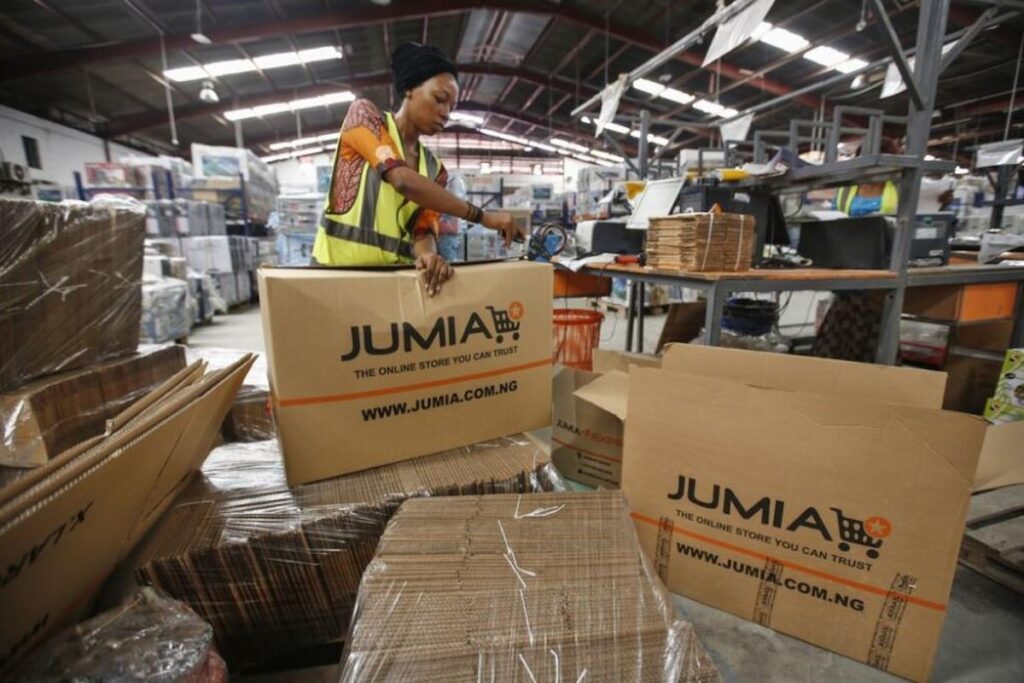
Jumia Worker

Africa, a continent of vibrant cultures, vast potential, and resilient people, is rapidly emerging as a global hub of innovation and opportunity. At the forefront of this transformation is Jumia, a Nigerian-founded e-commerce platform that has redefined online shopping across the continent since its launch in 2012. From its humble beginnings in Lagos to its expansion into 14 African countries, Jumia has become a symbol of African ingenuity, resilience, and ambition.

By connecting millions of consumers with over 100,000 sellers, offering innovative services like JumiaPay, and building a logistics network that rivals global giants, Jumia has not only transformed commerce but also showcased Africa’s ability to lead in the digital age. This essay explores Jumia’s journey, its impact on Africa’s economy, and its role in promoting the continent’s boundless prospects to the world.

The Birth of a Vision in Lagos

Jumia was born in 2012 in Lagos, Nigeria, a bustling metropolis known for its entrepreneurial spirit. Founded by Jeremy Hodara, Sacha Poignonnec, Tunde Kehinde, and Raphael Afaedor, the platform emerged at a time when e-commerce was still in its infancy in Africa. Internet penetration was low, logistical infrastructure was underdeveloped, and consumer trust in online transactions was minimal. Yet, the founders saw an opportunity to bridge these gaps and create a platform that would empower African businesses and consumers alike.

Inspired by global e-commerce giants like Amazon, Jumia tailored its model to suit Africa’s unique challenges and opportunities. The platform began as an online retailer, selling electronics, fashion, and household goods directly to consumers. However, the founders quickly realised that Africa’s diverse markets required innovative solutions. This vision led to the creation of a marketplace model, robust logistics services, and secure payment systems, all designed to overcome barriers like unreliable delivery networks and limited banking access.

Expanding Across the Continent

Jumia’s ambition extended far beyond Nigeria. By 2018, the platform had expanded to 14 African countries, including Egypt, Morocco, Kenya, South Africa, Ghana, Algeria, Tunisia, Uganda, Senegal, Côte d’Ivoire, Cameroon, Tanzania, Rwanda, and the Democratic Republic of Congo. Each market presented unique challenges, from language barriers to varying levels of infrastructure development. Yet, Jumia adapted with remarkable agility, localizing its offerings and building trust with consumers and sellers.

The platform’s expansion was not just geographical but also operational. In 2013, Jumia launched Jumia Travel, a hotel booking service, and Jumia Food, a food delivery platform, diversifying its portfolio to meet the growing needs of African consumers. These services tapped into Africa’s burgeoning tourism and urban food delivery markets, further solidifying Jumia’s role as a one-stop digital solution.

A Marketplace for All

In 2014, Jumia transitioned from a direct retail model to a marketplace model, allowing third-party vendors to sell their products on the platform. This pivot was a game-changer, enabling small and medium-sized enterprises (SMEs) across Africa to reach a broader customer base without the need for physical stores or complex logistics. By 2023, Jumia connected over 100,000 sellers to millions of consumers, empowering entrepreneurs in cities and rural areas alike.

The marketplace model democratized commerce in Africa, giving artisans, farmers, and small business owners access to national and international markets. For example, a fashion designer in Nairobi could sell handmade clothing to customers in Lagos, while a farmer in Ghana could offer organic produce to urban consumers in Accra. This inclusivity has been a cornerstone of Jumia’s mission, fostering economic growth and showcasing the diversity of African products.

Overcoming Challenges with Innovation

Africa’s e-commerce landscape is fraught with challenges, from unreliable road networks to low banking penetration. Jumia tackled these hurdles head-on with innovative solutions. The company built a logistics network that reportedly surpasses DHL’s fleet in Africa, with warehouses, delivery hubs, and last-mile solutions tailored to each market. In rural areas, where addresses are often informal, Jumia’s delivery agents use GPS and local knowledge to ensure packages reach their destinations.

Payment barriers were another obstacle. Many Africans lacked access to credit cards or bank accounts, and cash-on-delivery became a popular option. However, to promote digital payments and enhance security, Jumia launched JumiaPay in 2017. This secure payment system allows users to pay for goods and services using mobile money, bank cards, or other digital methods. By 2023, JumiaPay had processed millions of transactions, contributing to financial inclusion and reducing reliance on cash.

A Tech Unicorn and Global Recognition

Jumia’s success did not go unnoticed. In 2016, the company became Africa’s first tech unicorn, achieving a valuation of over $1 billion. This milestone was a testament to Africa’s growing influence in the global tech ecosystem and a signal to investors that the continent was ripe for innovation. In April 2019, Jumia made history again by going public on the New York Stock Exchange (NYSE), raising $196 million in its initial public offering (IPO). The listing was a landmark moment, showcasing African businesses’ ability to compete on the global stage.

Strategic partnerships further strengthened Jumia’s offerings. Collaborations with global brands like Carrefour brought high-quality groceries to African consumers, while partnerships with telecom providers like MTN and financial institutions like Mastercard enhanced digital access and payment solutions. These alliances underscored Jumia’s role as a catalyst for economic integration and modernization.

Resilience Amid Competition and Challenges

Jumia’s journey has not been without setbacks. The company faced fierce competition, notably from Konga in Nigeria, as well as global players like Amazon and Alibaba eyeing African markets. Infrastructural challenges, such as unreliable electricity and internet connectivity, posed ongoing hurdles. Additionally, banking complexities and consumer scepticism about online shopping required continuous education and trust-building efforts.

To remain competitive, Jumia made strategic decisions to streamline operations. Between 2019 and 2022, the company suspended services in less profitable markets like Cameroon, Tanzania, and Rwanda to focus on core markets such as Nigeria, Kenya, and Egypt. This restructuring allowed Jumia to optimize resources and strengthen its presence in high-growth regions. By 2022, when Jumia celebrated its 10th anniversary in Nigeria, it had solidified its position as a market leader, demonstrating resilience and adaptability.

Impact on Africa’s Digital Economy

Jumia’s contributions to Africa’s digital economy are profound. The platform has created thousands of jobs, from delivery agents and warehouse staff to tech developers and customer service representatives.

It has also empowered entrepreneurs, particularly women and youth, by providing them with a platform to grow their businesses. According to a 2021 report, SMEs on Jumia’s platform generated significant revenue, contributing to local economies and reducing unemployment.

Beyond economics, Jumia has driven behavioral change. By making online shopping accessible and reliable, the platform has encouraged millions of Africans to embrace digital solutions. In rural areas, where access to physical stores is limited, Jumia’s delivery services have brought essential goods like school supplies, healthcare products, and electronics to communities. During the COVID-19 pandemic, Jumia played a critical role in ensuring access to essentials, highlighting the importance of e-commerce in crisis response.

Jumia’s logistics and payment innovations have also set a benchmark for other African businesses. By proving that e-commerce can thrive despite infrastructural challenges, Jumia has inspired a wave of startups in fintech, agritech, and edtech, further diversifying Africa’s tech ecosystem. The platform’s success has attracted global investment, with venture capital flowing into African start-ups at unprecedented rates. In 2022 alone, African tech start-ups raised over $3 billion, with e-commerce and logistics among the top sectors.

Promoting Africa’s Prospects to the World

Jumia’s story is a powerful narrative for promoting Africa’s prospects. It challenges stereotypes of Africa as a continent defined by challenges, instead showcasing its potential for innovation, growth, and global leadership. Jumia’s ability to operate in diverse markets, from the deserts of Morocco to the rainforests of Ghana, demonstrates Africa’s adaptability and resilience. Its IPO on the NYSE sent a clear message: African companies can compete with the best in the world.

For audiences unaware of Africa’s achievements, Jumia serves as a gateway to understanding the continent’s dynamic economies. Nigeria, where Jumia was founded, is Africa’s largest economy, with a GDP of over $400 billion in 2023. Kenya, another key market, is a global leader in mobile money through platforms like M-Pesa.

Morocco and Egypt are hubs for manufacturing and tourism, while Ghana and South Africa boast robust financial sectors. Jumia’s presence in these markets highlights its diversity and interconnectedness, inviting the world to invest in Africa’s future.

Moreover, Jumia’s focus on sustainability and inclusion resonates with global values. The platform promotes eco-friendly products, supports local artisans, and invests in digital literacy programs to bridge the digital divide. By empowering women entrepreneurs and rural communities, Jumia aligns with global goals for equitable growth, making it a model for socially responsible business.

Looking Ahead: Jumia’s Vision for Africa

As of 2025, Jumia continues to innovate and expand its impact. The platform is exploring artificial intelligence to personalise shopping experiences, drones for last-mile delivery in remote areas, and blockchain for secure transactions. These advancements position Jumia at the cutting edge of global e-commerce while addressing Africa’s unique needs.

Jumia’s vision extends beyond commerce. By fostering digital inclusion, creating jobs, and building infrastructure, the platform is laying the foundation for a connected, prosperous Africa. Its success inspires young Africans to pursue careers in tech, entrepreneurship, and innovation, ensuring that the continent’s digital revolution is driven by its people.

Conclusion

Jumia is more than an e-commerce platform; it is a testament to Africa’s ability to innovate, overcome challenges, and lead in the global economy. From its launch in Lagos in 2012 to its status as a tech unicorn and NYSE-listed company, Jumia has transformed how Africans shop, sell, and connect. By building a robust logistics network, launching JumiaPay, and empowering SMEs, the platform has driven economic growth and digital adoption across 14 countries. Its resilience in the face of competition and infrastructural hurdles showcases the determination and ingenuity of African entrepreneurs.

For the world, Jumia is an invitation to discover Africa’s prospects, a continent where innovation thrives, diversity fuels growth, and opportunity knows no bounds. As Jumia continues to shape Africa’s digital future, it stands as a beacon of what is possible when vision meets resilience. Africa is open for business, and Jumia is leading the way.